
The Great Sphinx, Pyramids of Gizeh [Giza]. July 17th, 1839. — History & Facts
Did the painter know this moment would outlive them? The ancient visage of the Great Sphinx stands resolute against the shifting sands of time, a monument to transformation that invites contemplation of both permanence and impermanence. Look to the left at the Sphinx, its majestic head peering out with an expression that seems to shelter millennia of secrets. Notice the delicate interplay of light and shadow created by the midday sun, which accentuates the weathered stone and reveals the contours of its form. The pyramids loom in the background, their triangular profiles sharply defined against a sky that shifts from azure to soft gold, echoing the eternal dance between earth and sky, past and present. A deeper layer unfolds through the contrast between the monumental Sphinx and the fleeting clouds above, suggesting a dialogue between stability and change.
The wear on the stone bears witness to centuries of weathering, while the pyramids symbolize the aspirations of a civilization that sought immortality. Each grain of sand carries the weight of history, a reminder that the passage of time reshapes all things, yet some remain steadfast. David Roberts meticulously captured this scene during his travels in Egypt, between 1846 and 1849. At the time, Europe was engulfed in Romanticism, a movement that sought to explore the sublime in nature and history.
Roberts was part of this artistic wave, and his travels allowed him to bridge the gap between the ancient and the contemporary, providing a glimpse into a world where the past is ever-present, inviting the viewer to reflect on their own place within the continuum of time.
More Artworks by David Roberts
Browse all →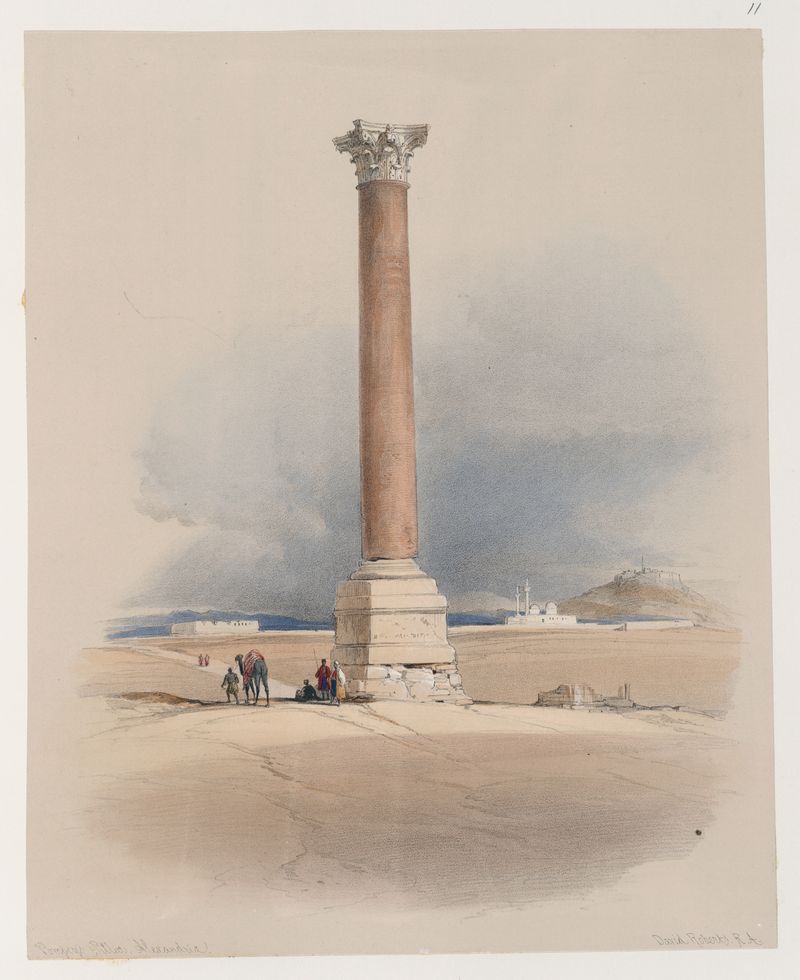
Pompey’s Pillar, Alexandria.
David Roberts

Approach to the Fortress of Ibrim.
David Roberts

Karnac [Karnak]. Nov. 29th, 1838.
David Roberts
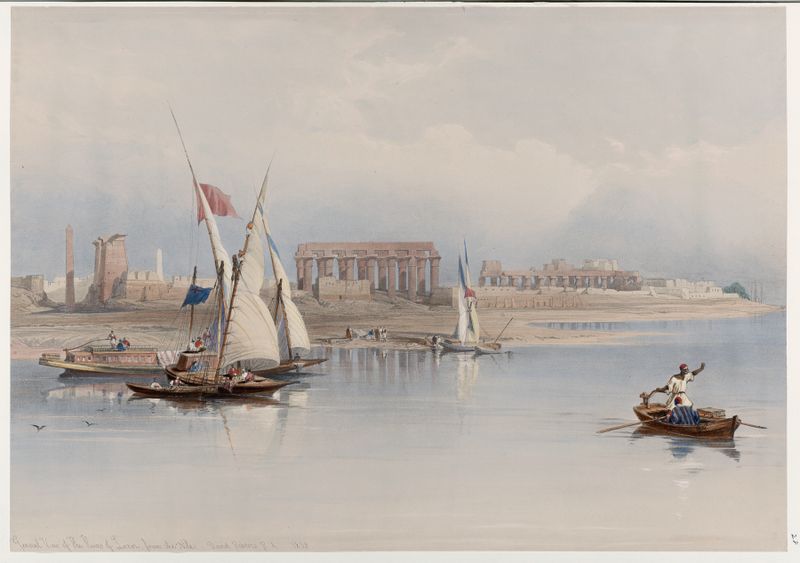
General view of the ruins of Luxor, from the Nile. 1838.
David Roberts

Statues of Memnon at Thebes, during the inundation.
David Roberts

Entrance to the tombs of the kings of Thebes. Bab-el-Malouk [Bîbân al-Mulûk].
David Roberts

The Fortress of the Alhambra, Granada
David Roberts
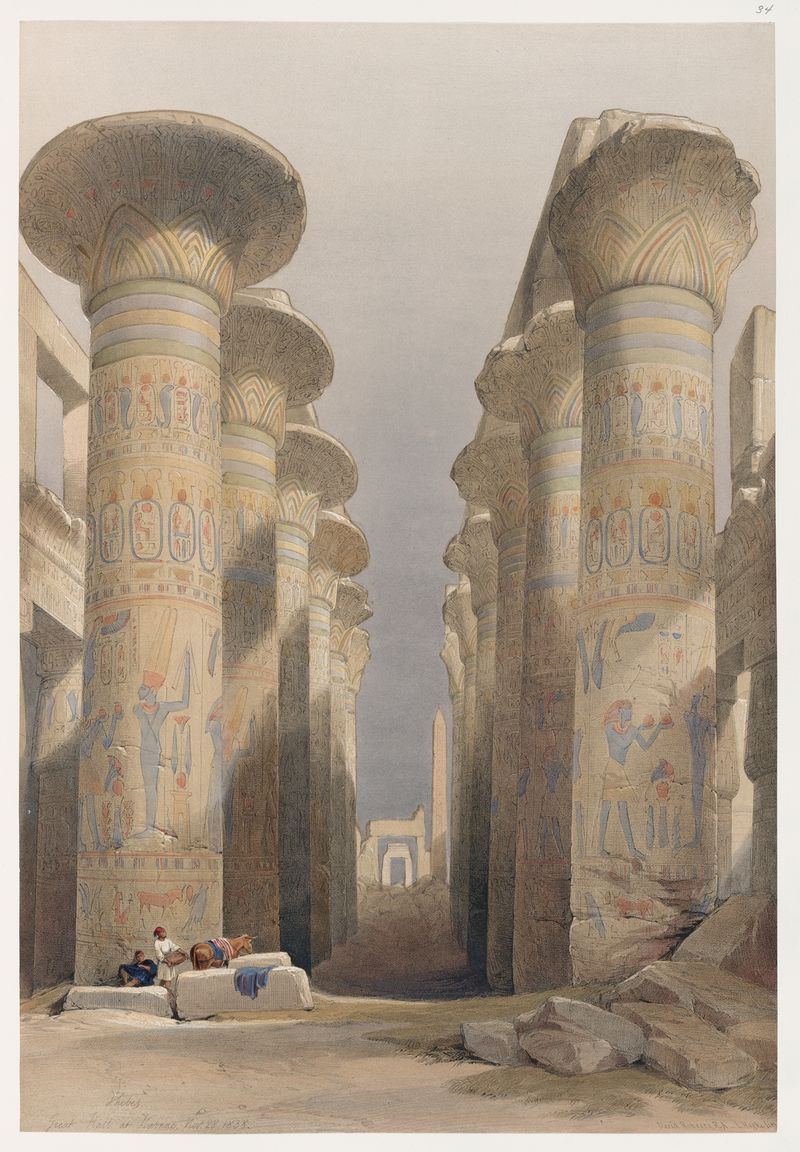
Thebes. Great Hall at Karnak. Nov. 28, 1838.
David Roberts
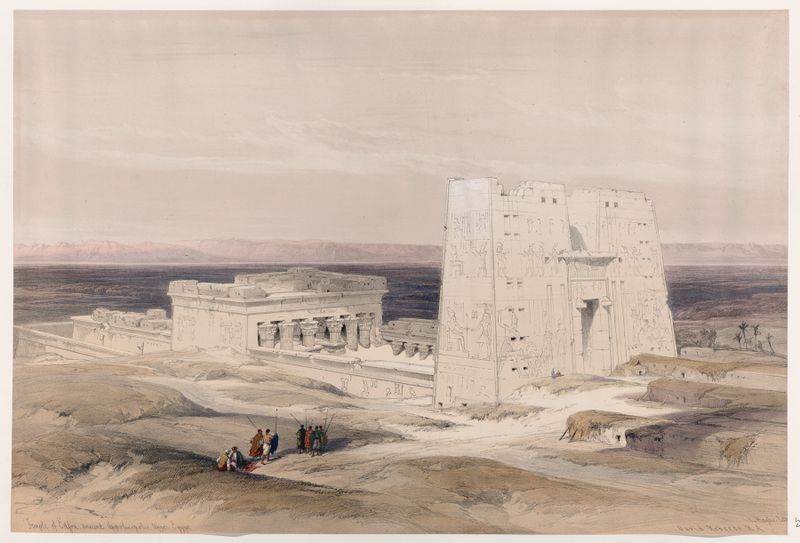
Temple of Edfou [Idfû], ancient Appolinopolis, Upper Egypt.
David Roberts

Temple of Kalabshee [Kalabsha, Kalâbishah], Nubia. Nov. 1838.
David Roberts





