
The Great Temple of Amon Karnak, The Hypostyle Hall — History & Facts
Who listens when art speaks of silence? In the grand expanse of the Hypostyle Hall, every towering column and intricate hieroglyph whispers echoes of history, inviting reflection on the passage of time and the echoes of revolution. Look to the left where the sunlight filters through the gaps in the massive stone pillars. Notice how the warm golden hues play across the carved surfaces, highlighting the meticulous details of ancient gods and their stories. The composition draws the eye upward, inviting you to explore the soaring heights of the hall, a testament to both artistic ambition and architectural brilliance.
The muted palette, dominated by ochres and earthy tones, enhances the solemnity of the space, creating a reverent atmosphere that seems to hold its breath. Delve into the juxtaposition of grandeur and decay; each column stands proud yet bears the marks of time. The faded hieroglyphs speak of a civilization long past, while the sheer scale of the hall evokes both admiration and a sense of loss. This balance between reverence and abandonment hints at the revolutions that reshaped not only this sacred site but the very essence of Egyptian culture, a reminder that even the mightiest structures are subject to the relentless march of history. The artwork emerged during a period of great exploration and fascination with Egypt in the early 19th century.
David Roberts captured this monumental scene while traveling through Egypt in the 1830s, where he documented the remnants of ancient civilizations against a backdrop of Western interest in Egyptology. His work serves as both an artistic triumph and a historical record, reflecting the interplay between admiration and the colonial gaze prevalent at the time.
More Artworks by David Roberts
Browse all →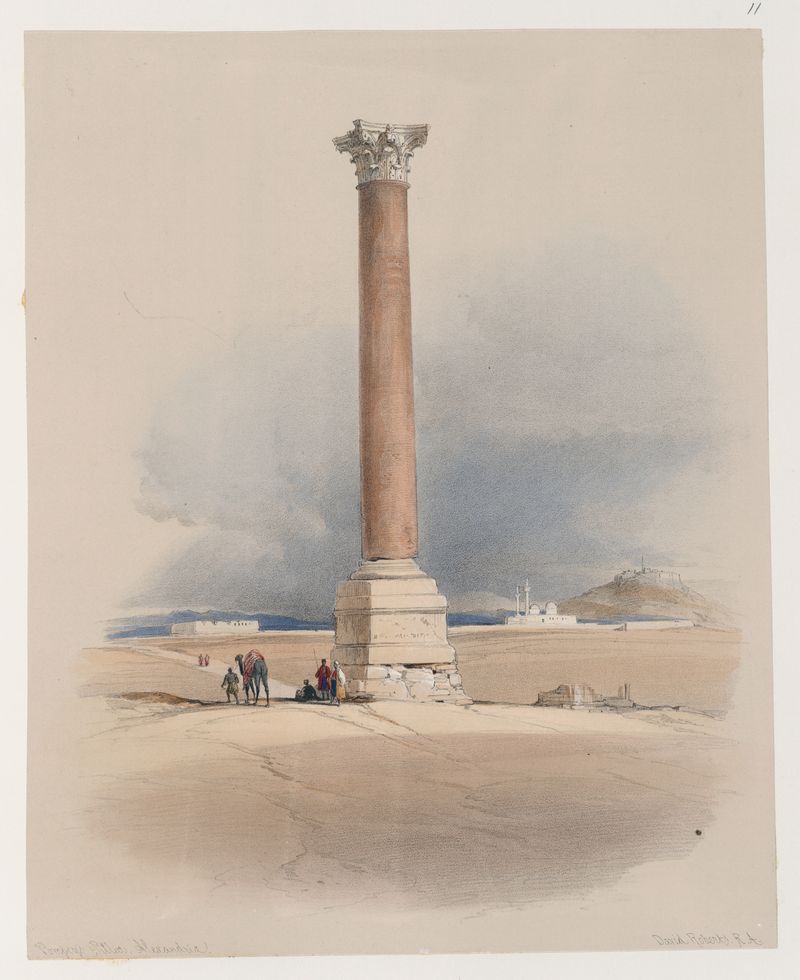
Pompey’s Pillar, Alexandria.
David Roberts

Approach to the Fortress of Ibrim.
David Roberts

Karnac [Karnak]. Nov. 29th, 1838.
David Roberts
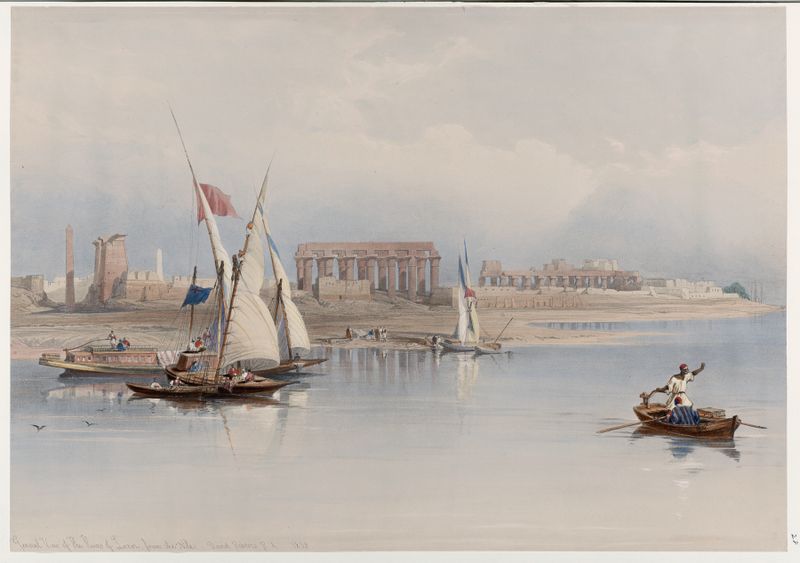
General view of the ruins of Luxor, from the Nile. 1838.
David Roberts

Statues of Memnon at Thebes, during the inundation.
David Roberts

Entrance to the tombs of the kings of Thebes. Bab-el-Malouk [Bîbân al-Mulûk].
David Roberts

The Fortress of the Alhambra, Granada
David Roberts
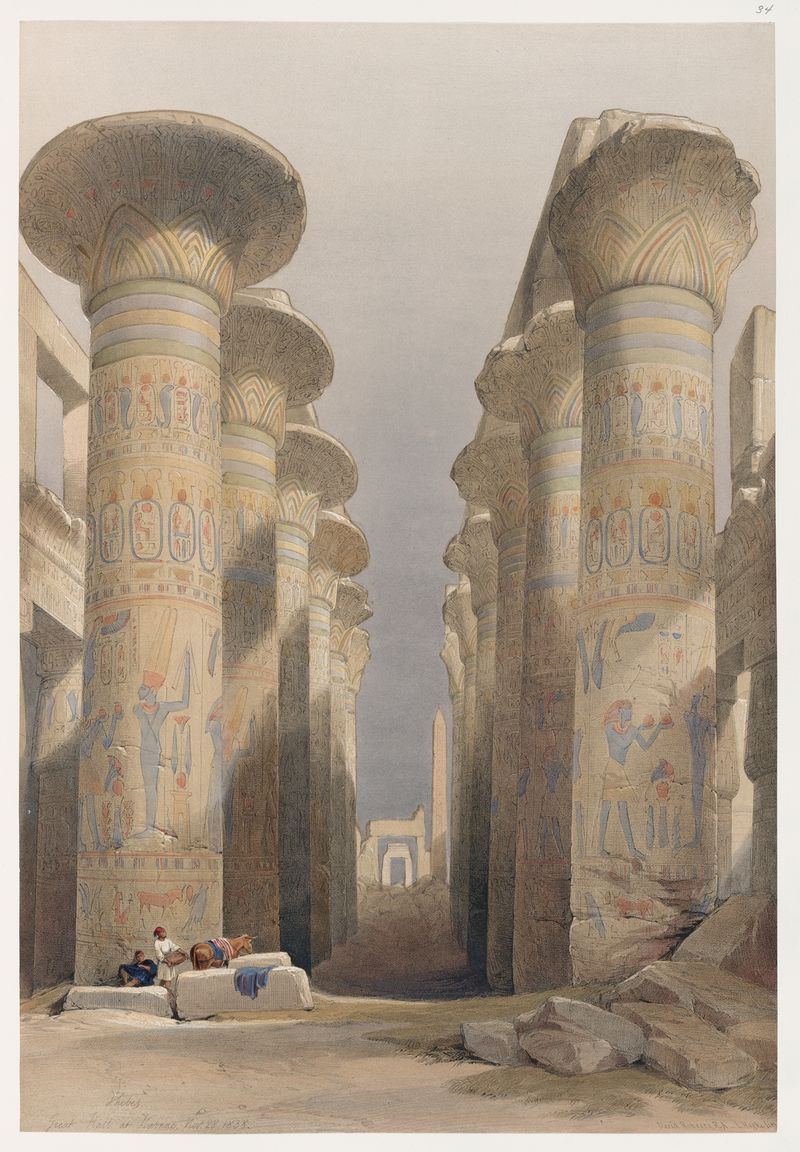
Thebes. Great Hall at Karnak. Nov. 28, 1838.
David Roberts
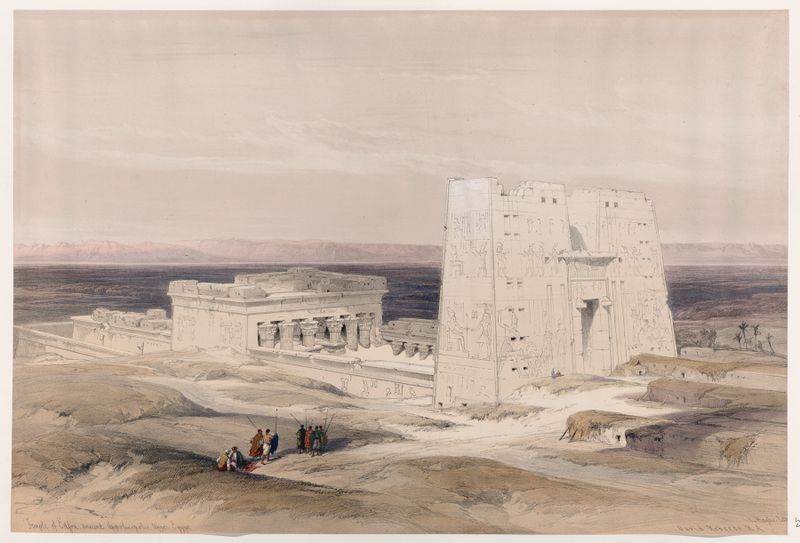
Temple of Edfou [Idfû], ancient Appolinopolis, Upper Egypt.
David Roberts

Temple of Kalabshee [Kalabsha, Kalâbishah], Nubia. Nov. 1838.
David Roberts
More Architecture Art
Browse all →
The statue of Liberty
Frédéric Auguste Bartholdi

View of Houses in Delft, Known as ‘The Little Street’
Johannes Vermeer

View of Houses in Delft, Known as ‘The Little Street’
Johannes Vermeer

The Cathedral in Rouen. The portal, Grey Weather
Claude Monet

The yellow house
Vincent van Gogh

The Church in Auvers-sur-Oise, View from the Chevet
Vincent van Gogh