The Hawk — History & Facts
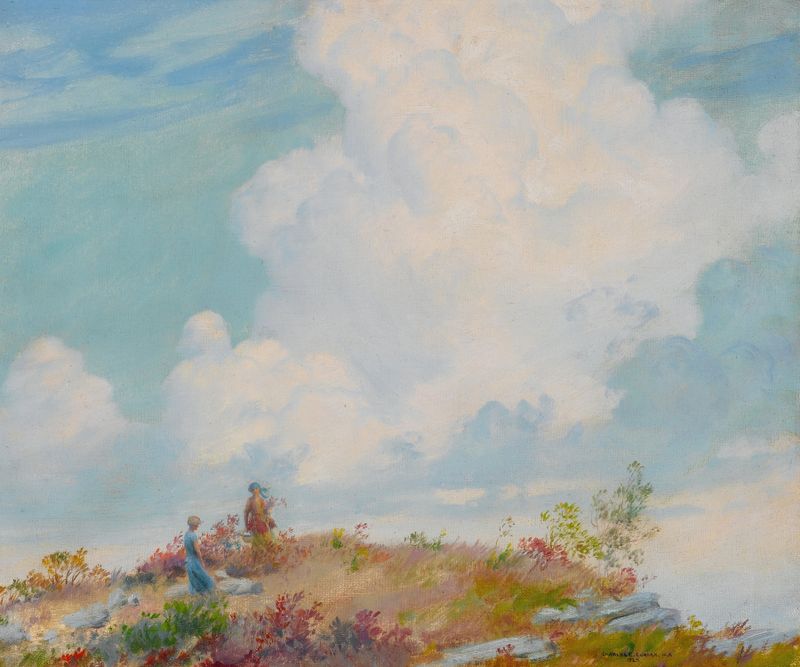
Where does light end, and longing begin? In The Hawk, that question flutters on the edge of a delicate tension between aspiration and reality, as light dances with the promise of rebirth. Look to the center of the canvas, where a young woman stands poised on a sunlit precipice. Her figure is framed by a wash of warm golden hues, contrasting sharply with the cool, distant landscape. Notice how her outstretched arms mimic the gentle arch of the hawk soaring above, embodying a yearning for freedom.
The soft brushstrokes around her face create an ethereal glow, inviting the viewer to feel the weight of her contemplation amidst a backdrop of earthy greens and dusky blues. The hawk itself is a potent symbol of aspiration, its wings spread wide as if to embrace the horizon. This dynamic interplay between the woman and the bird hints at inner conflict — the longing for liberation against the pull of earthly ties. The horizon line, painted with a subtle blend of twilight colors, suggests a transition, a moment where dreams might take flight.
This nuanced contrast between the vibrancy of the foreground and the muted background signifies the struggle between hope and the confines of reality. In 1909, Curran painted this work during a time of personal and artistic exploration in his life. Based out of New York, he was immersed in a movement that sought to capture modern American life, influenced by both Impressionism and the burgeoning Art Nouveau style. The world was rapidly changing around him, marked by new ideas in art and society, and The Hawk reflects his quest to merge beauty with the deep yearnings of the human spirit.