The Hay Wain, Granby, Connecticut — History & Facts
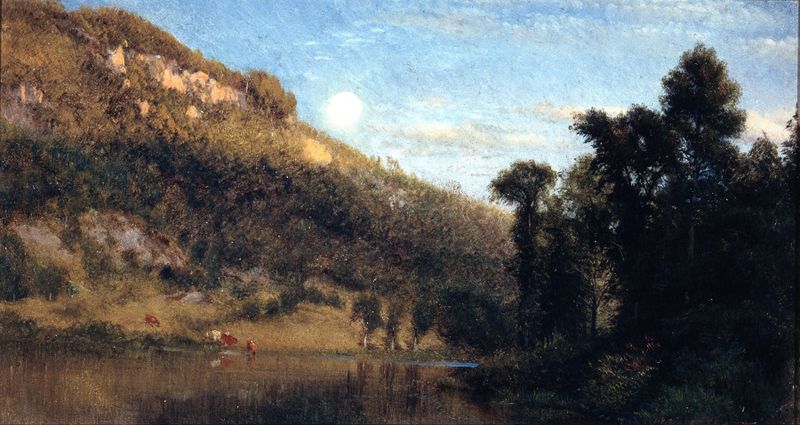
In the quiet repose of The Hay Wain, the weight of unspoken truths hangs in the air, where beauty conceals a sense of betrayal. Look to the center of the canvas, where a hulking cart, laden with hay, rests against the shimmering waters of a gentle stream. The artist’s brushwork creates a stunning interplay between light and shadow, illuminating the lush greenery with vibrant greens and golds. Notice how the reflections dance upon the water’s surface, embodying a world both serene and unsettling.
The horizon, a soft blend of blues and earth tones, beckons the viewer deeper into this pastoral narrative. Yet, as idyllic as the scene appears, one can sense a disquieting tension beneath the surface. The cart’s stilled momentum suggests a pause—an ominous moment before a choice is made or a truth revealed. The light filtering through the trees hints at the duality of nature: both nurturing and indifferent.
In the soft whispers of the landscape, one can almost hear the echoes of betrayal, a reminder that tranquility often masks deeper conflicts. During the summer of 1870, Shattuck painted this piece in Granby, Connecticut, a time when he was embracing the beauty of American landscapes while grappling with his artistic identity. The nation was emerging from the Civil War, a tumultuous period influencing many artists who sought solace in the pastoral yet faced the complexities of their reality. In this serene tableau, Shattuck captures not just nature but the fragile veneer of harmony amidst underlying truths.