The Hill Range — History & Facts
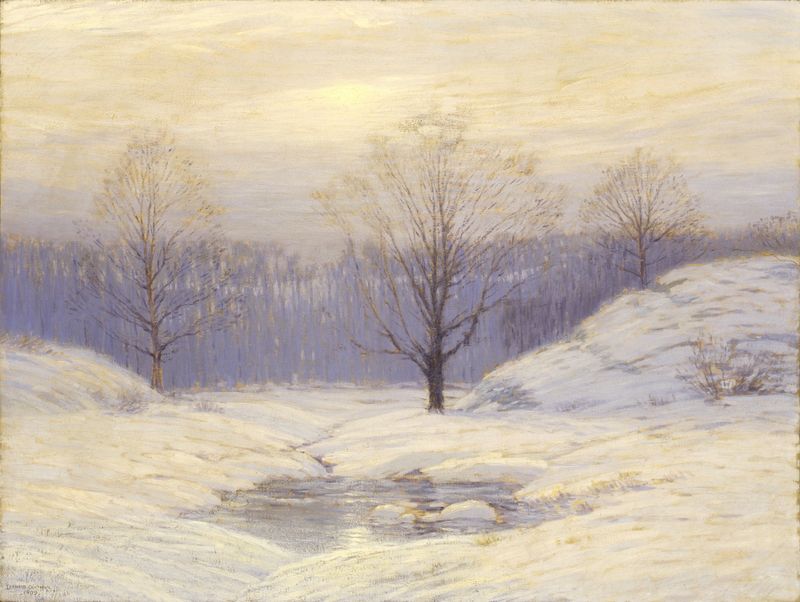
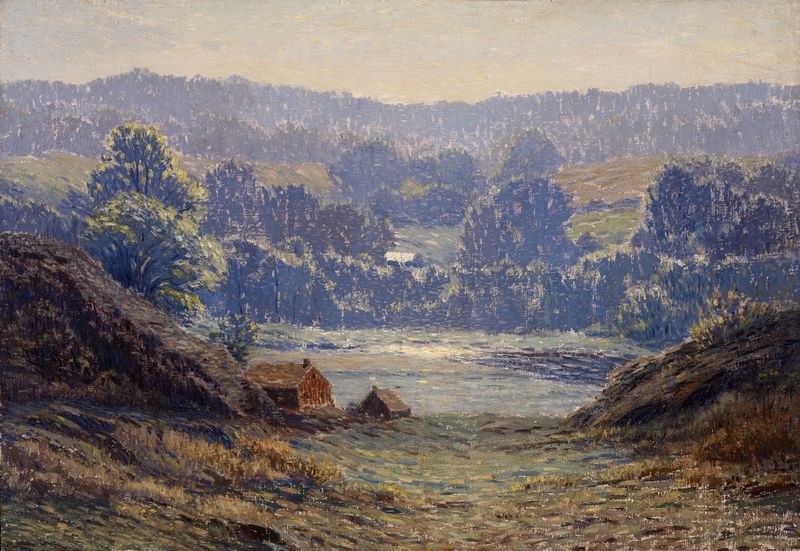
What if silence could speak through light? The Hill Range captures an ethereal stillness, inviting reflection on the void that lies between the known and the uncharted. Look to the horizon, where soft hues of blue and green meld into one another, creating a tranquil gradient that suggests both depth and distance. Notice how the brushstrokes are delicate yet purposeful, forming the gentle undulations of the hills. The fading light casts an almost magical glow, illuminating the foreground while leaving the background cloaked in mystery.
The composition evokes a sense of serenity, drawing the viewer's eye through a landscape that whispers secrets rather than shouts. Within this quiet expanse, contrasts emerge—between light and shadow, between the sharpness of the hills and the softness of the sky. The absence of figures amplifies the feeling of isolation, inviting contemplation. Each subtle transition in color evokes emotional resonance, suggesting that what is not depicted—the void of humanity—holds its own profound significance.
The painting speaks to the delicate balance between presence and absence, hinting at the unfulfilled yearnings that often accompany solitude. Leonard Ochtman, an American impressionist, created this work during a time when the art world was increasingly embracing natural landscapes infused with light. Although the exact date is unknown, his career flourished in the late 19th to early 20th century, a period marked by a fascination with capturing the ephemeral qualities of nature. Ochtman’s technique, characterized by loose brushwork and a keen sensitivity to light, reflects the broader movement towards an impressionistic celebration of the world around him.