The Hornberg — History & Facts
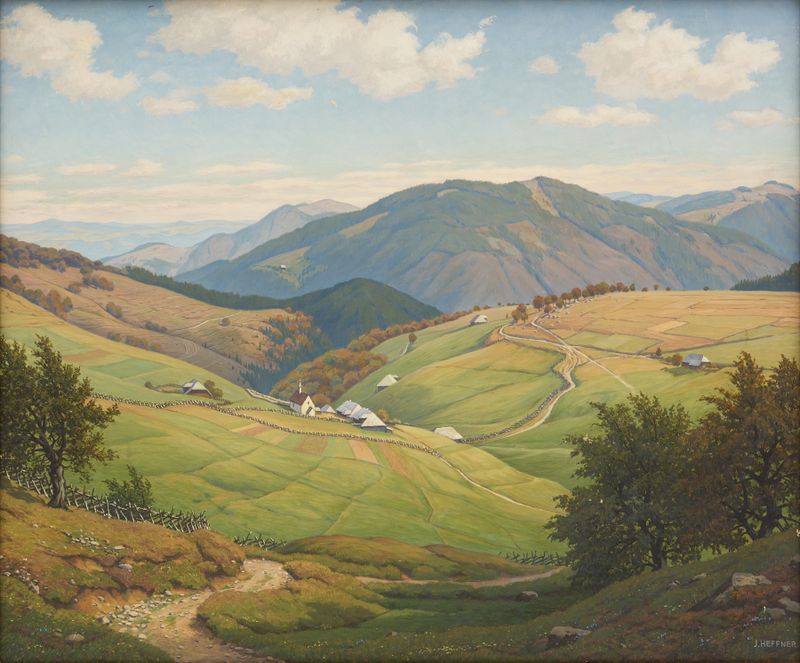
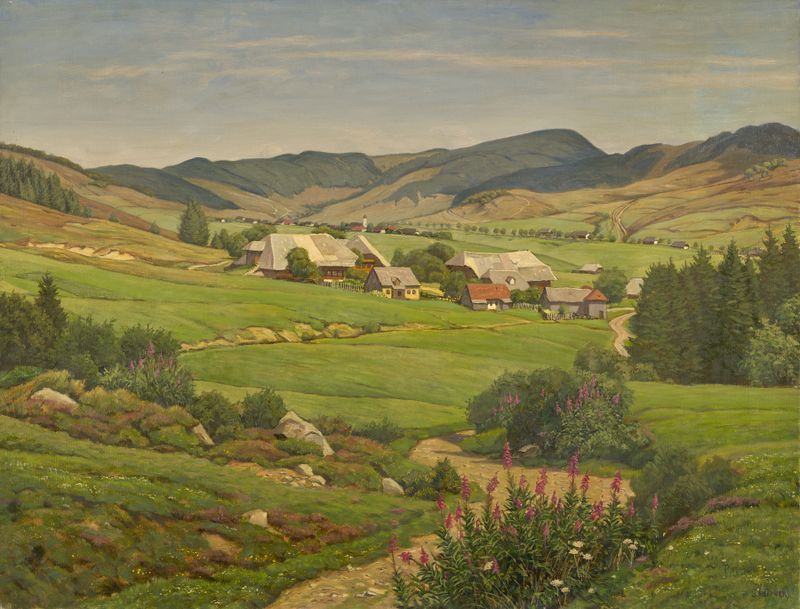
Could beauty survive in a century of chaos? In The Hornberg, a serene landscape emerges, inviting us to explore the fragility of tranquility amid turbulent times. Look to the foreground where a gentle brook winds its way through lush greenery. Notice how the light falls upon the water's surface, creating ripples that dance like fleeting moments of joy. The deep greens and soft browns blend harmoniously, while the distant mountains loom in a cool blue, establishing a tranquil contrast.
The composition draws the eye to the horizon, where the sky's delicate hues transition from gold to lavender, hinting at the hope of a new dawn. Beneath this peaceful surface lies an emotional tension, as the delicate balance of nature seems poised on the brink. The calmness of the scene stands in stark opposition to the chaos that loomed in the world during the era. Each detail, from the intricate foliage to the distant peaks, serves as a reminder of life's resilience amid uncertainty, urging the viewer to cherish fleeting moments of beauty. Heffner painted The Hornberg in a period characterized by political and social upheaval, just before the outbreak of World War II.
Living in Germany, he bore witness to the changes in the art world as it moved away from traditional forms towards expressionism. During this time, the artist sought solace in landscapes, finding in them a refuge from the turbulence of contemporary life.