
The Hunting Castle — History & Facts
Is this a mirror — or a memory? In The Hunting Castle, the boundaries between reality and imagination blur into a dreamy panorama, inviting contemplation on the balance between nature and human endeavors. Look to the center where a grand castle stands, its imposing structure framed by lush, verdant trees that seem to cradle it in a protective embrace. Notice how the artist employs a palette of earthy greens and rich browns, bringing to life the vibrancy of the surrounding landscape. The gentle play of light dappling across the castle's stone façade evokes a sense of warmth, suggesting that this place is not just a mere structure, but a sanctuary imbued with history and stories waiting to be discovered. Delve deeper into the scene and observe the interplay between the castle and its environment.
The harmonious composition speaks to a theme of balance, where the human-made is delicately intertwined with the wild. The castle’s reflection might prompt thoughts of grandeur and nostalgia, while the surrounding nature challenges its dominance, whispering of the inevitable return to earth. This duality evokes feelings of transience and permanence, urging viewers to confront their own relationships with the spaces they inhabit. In the late 1860s, the artist created this work during a period marked by a growing interest in romanticism and landscape painting within Europe.
This was a time when the art world was moving toward a greater emphasis on emotional expression and a connection to nature. Makart, known for his opulent style and historical themes, sought to capture the essence of a time when such grand castles were symbols of both power and fragility, echoing the broader currents of change in society and art.
More Artworks by Hans Makart
Browse all →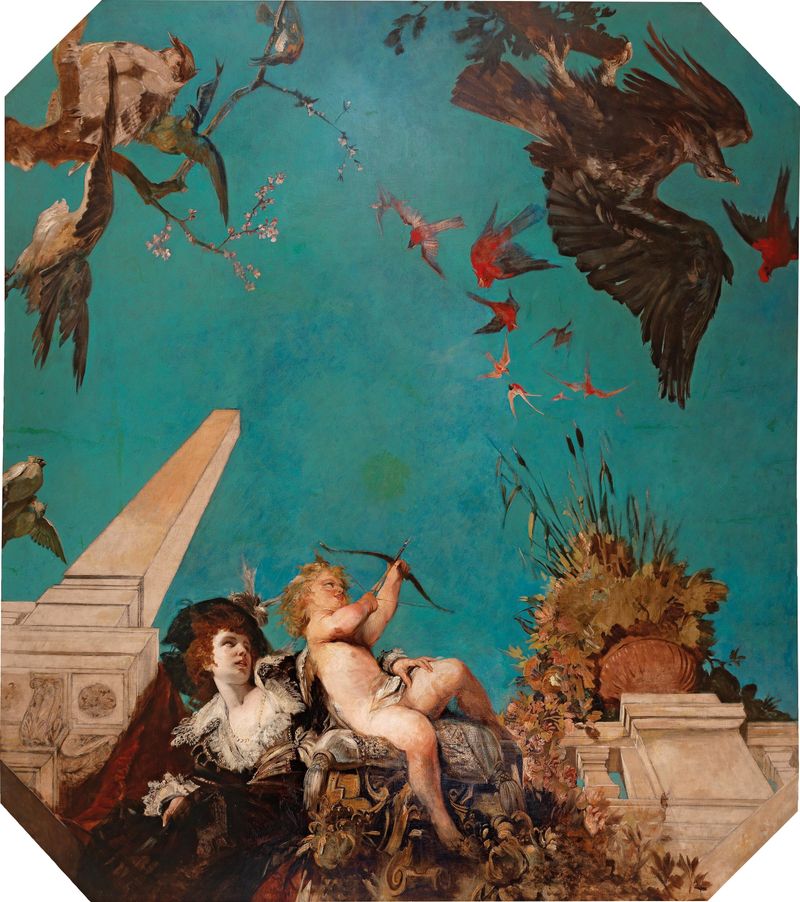
A Ceiling Painting, Society Lady With Cupid In A Garden Landscape
Hans Makart

Treasures of the Sea
Hans Makart

Entwurf für einen Palast; Fassade
Hans Makart
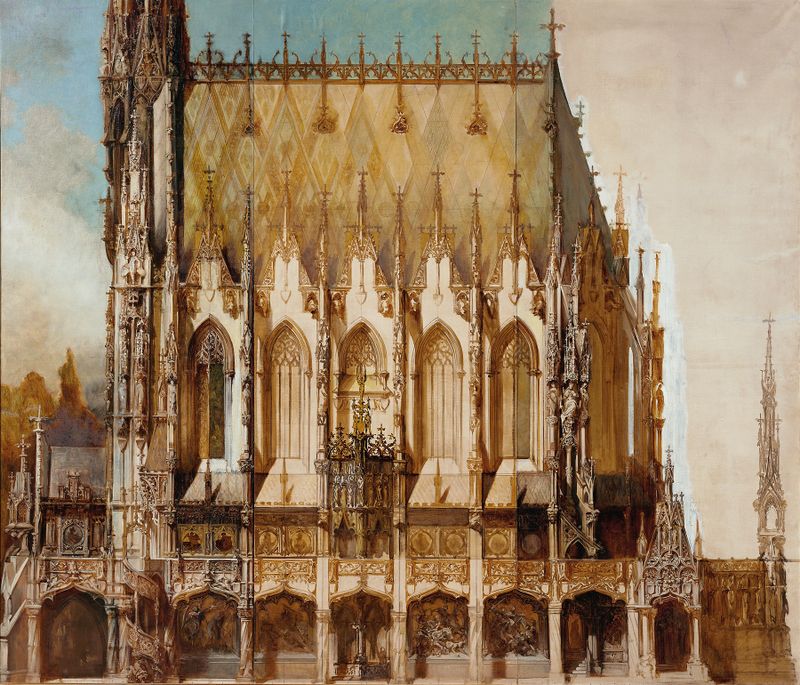
Gotische Grabkirche St. Michael, Seitenansicht
Hans Makart
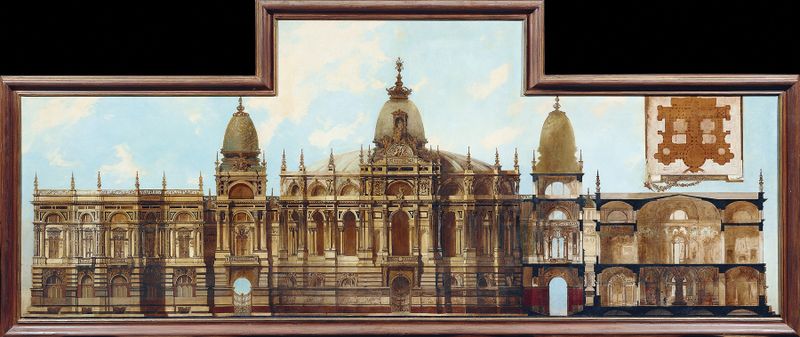
Entwurf für einen Palast; Rückseite und Grundriss
Hans Makart
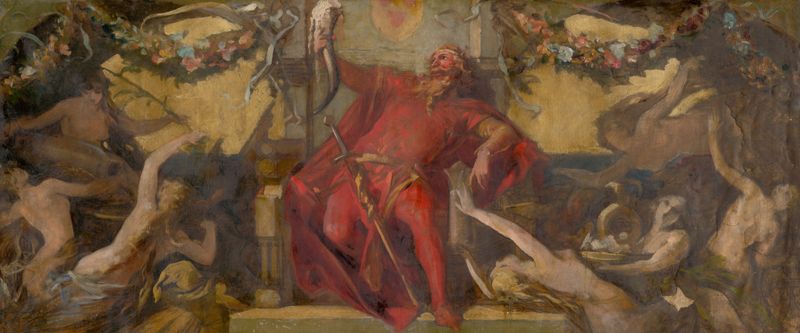
(Study for the Decorative Panel) Gambrinus
Hans Makart

Gotische Grabkirche St. Michael, Turmfassade
Hans Makart





