
The Hypostyle Hall of the Great Temple at Abu Simbel, Egypt — History & Facts
Could a single brushstroke hold eternity? In The Hypostyle Hall of the Great Temple at Abu Simbel, the artist captures not just a structure, but a timeless testament to human ambition and divine reverence. Focus first on the colossal figures that dominate the scene, towering over the viewer with their austere expressions and intricate hieroglyphics. Notice how the light cascades through the soaring columns, casting elongated shadows that play across the textured stone, accentuating the grandeur of the architecture. The warm ochres and soft sepias vibrate with a sense of history, inviting us to traverse the millennia and feel the weight of the past. Beneath the surface, the painting holds layers of meaning—the juxtaposition of man’s ingenuity against the eternal landscape of Egypt, where civilization has risen and fallen.
The silent giants seem to whisper stories of devotion and power, evoking a profound sense of spirituality. This work mirrors the struggle between human aspiration and the relentless passage of time, suggesting that while structures may stand for ages, their creators are but fleeting shadows. David Roberts painted this work in 1849 during his travels through Egypt, a period marked by a burgeoning fascination with ancient cultures and the Romantic movement's ideals. At this time, Europe was awakening to the beauty of non-Western artistic traditions, and Roberts was pivotal in documenting these wonders.
His journey illuminated not only the architecture of the past but also reflected growing global interests in archaeology and the history of human achievement.
More Artworks by David Roberts
Browse all →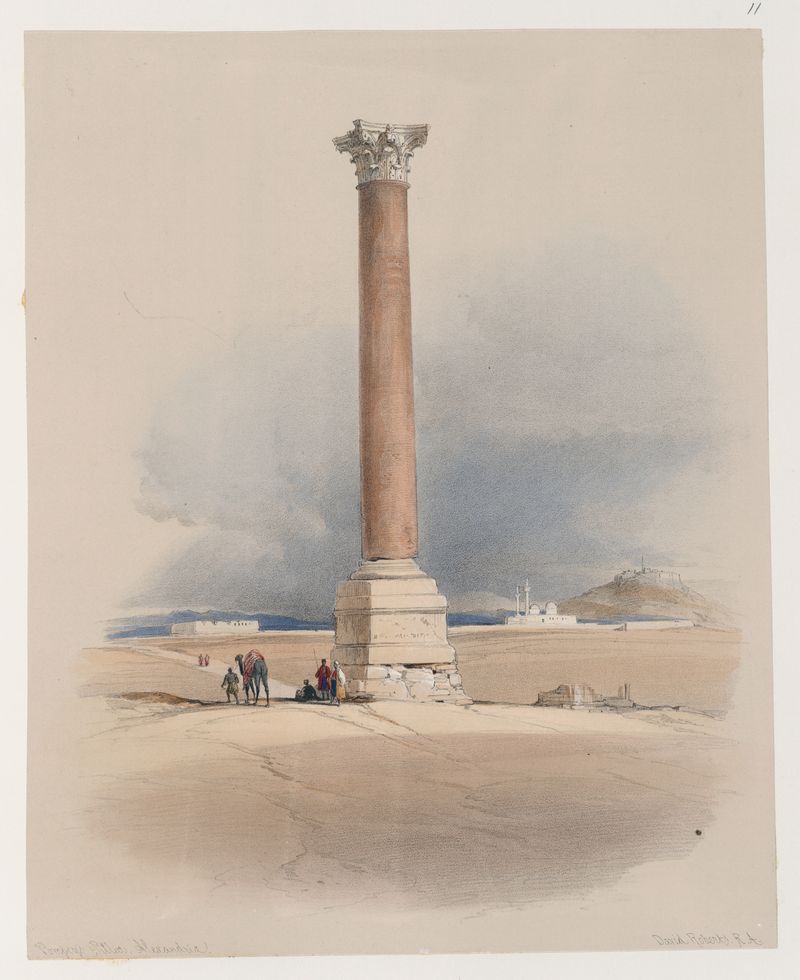
Pompey’s Pillar, Alexandria.
David Roberts

Approach to the Fortress of Ibrim.
David Roberts

Karnac [Karnak]. Nov. 29th, 1838.
David Roberts
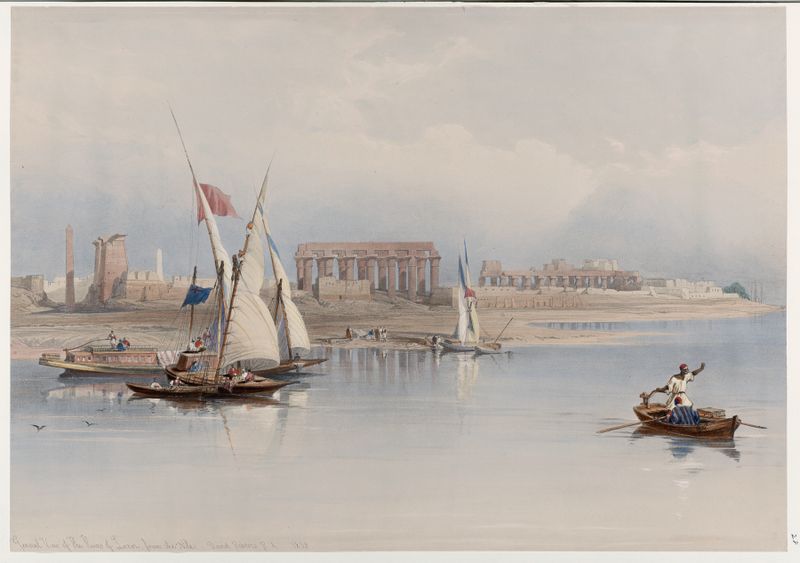
General view of the ruins of Luxor, from the Nile. 1838.
David Roberts

Statues of Memnon at Thebes, during the inundation.
David Roberts

Entrance to the tombs of the kings of Thebes. Bab-el-Malouk [Bîbân al-Mulûk].
David Roberts

The Fortress of the Alhambra, Granada
David Roberts
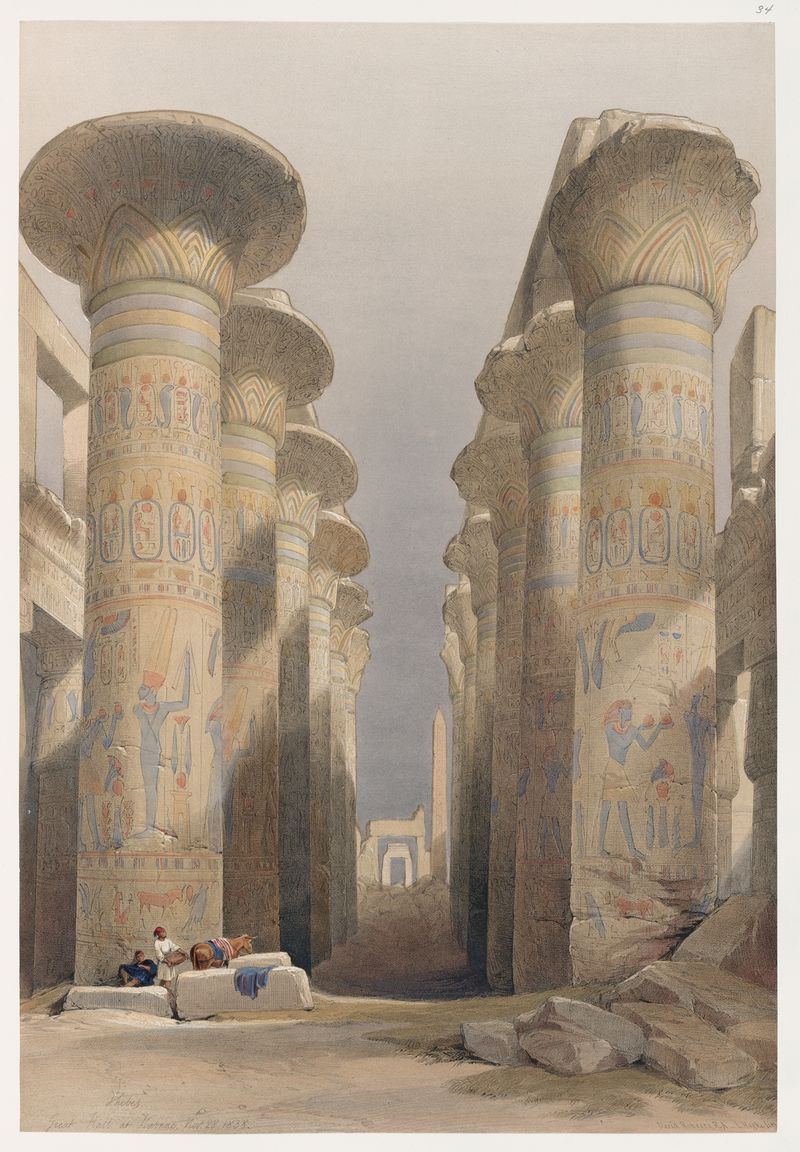
Thebes. Great Hall at Karnak. Nov. 28, 1838.
David Roberts
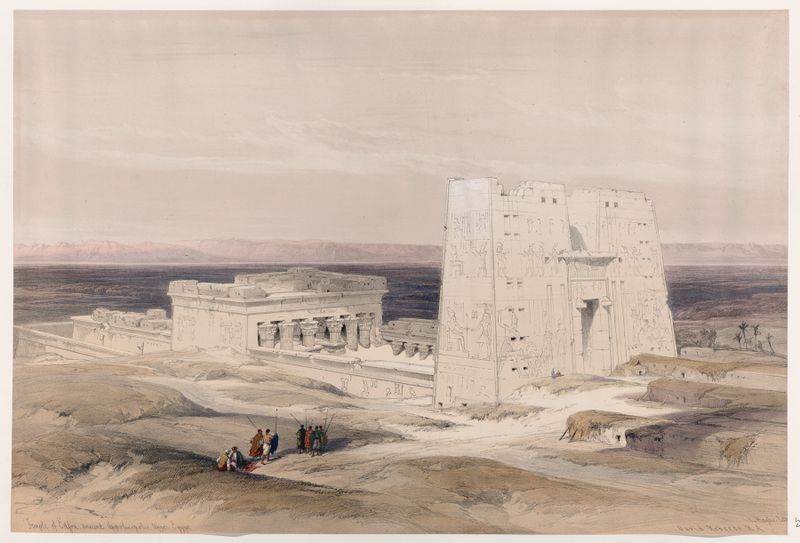
Temple of Edfou [Idfû], ancient Appolinopolis, Upper Egypt.
David Roberts

Temple of Kalabshee [Kalabsha, Kalâbishah], Nubia. Nov. 1838.
David Roberts
More Architecture Art
Browse all →
The statue of Liberty
Frédéric Auguste Bartholdi

View of Houses in Delft, Known as ‘The Little Street’
Johannes Vermeer

View of Houses in Delft, Known as ‘The Little Street’
Johannes Vermeer

The Cathedral in Rouen. The portal, Grey Weather
Claude Monet

The yellow house
Vincent van Gogh

The Church in Auvers-sur-Oise, View from the Chevet
Vincent van Gogh