
The hypæthral temple at Philæ called the Bed of Pharaoh. — History & Facts
In a world inundated with the ephemeral, the act of capturing a moment becomes an act of hope, a reminder of the enduring essence of human spirit. Focus on the intricately rendered columns that rise majestically in the background. Notice how the light softly bathes the ancient stone, highlighting the textures and shadows that evoke a sense of reverence. The composition draws the eye through the open expanse of the hypæthral temple, inviting you to explore the sacred space where nature and architecture intertwine.
Each brushstroke seems to breathe life into the remnants of a glorious past, creating a dialogue between the viewer and the echo of an ancient civilization. Delve deeper into the contrasts presented in this work. The stillness of the temple juxtaposes the vibrant life of the Nile, symbolizing the resilience of human creativity against the relentless passage of time. The surrounding vegetation not only frames the structure but also hints at the cyclical nature of life, where growth and decay coexist in harmony.
This interplay of elements conveys a profound sense of hope, suggesting that even as time erases tangible memories, the spirit of past civilizations continues to resonate. During the years 1846 to 1849, David Roberts was in Egypt, immersing himself in its history while documenting its monumental architecture. This period marked a significant renaissance of interest in ancient cultures within the art world, as explorers and artists sought to capture the exotic and the sublime. Roberts’ meticulous attention to detail and romantic vision rendered this piece a lasting testament to both the beauty of ancient Egyptian civilization and the enduring allure of its mysteries.
More Artworks by David Roberts
Browse all →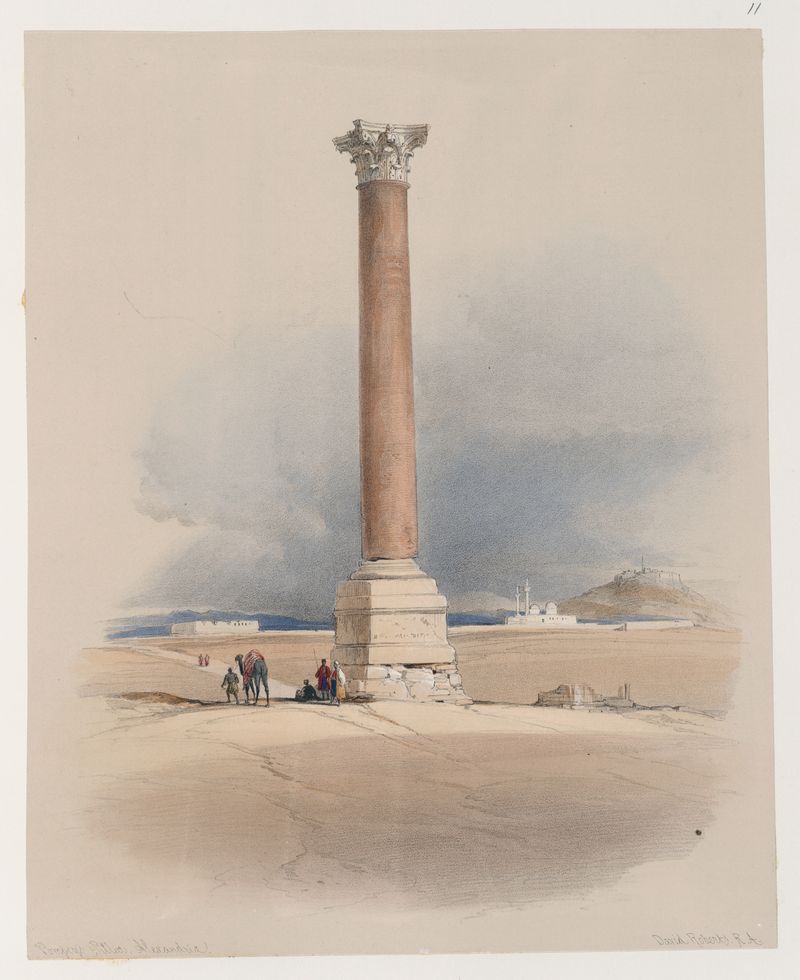
Pompey’s Pillar, Alexandria.
David Roberts

Approach to the Fortress of Ibrim.
David Roberts

Karnac [Karnak]. Nov. 29th, 1838.
David Roberts
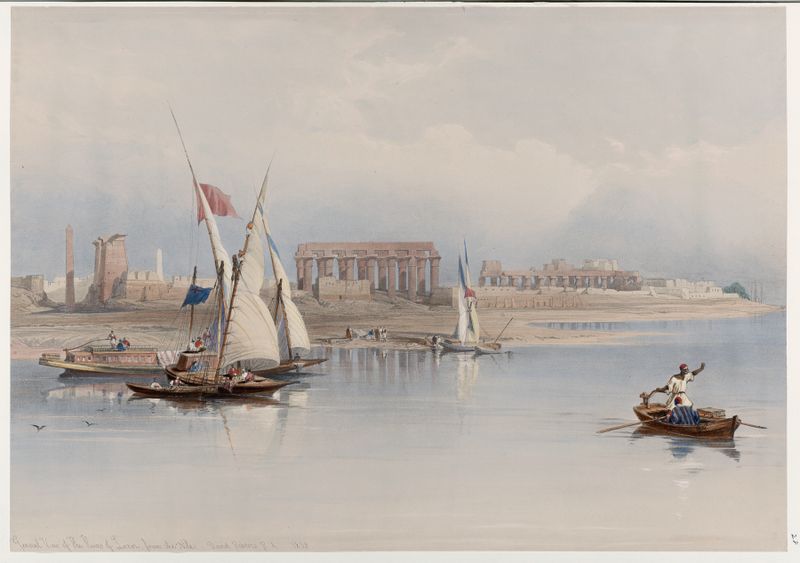
General view of the ruins of Luxor, from the Nile. 1838.
David Roberts

Statues of Memnon at Thebes, during the inundation.
David Roberts

Entrance to the tombs of the kings of Thebes. Bab-el-Malouk [Bîbân al-Mulûk].
David Roberts

The Fortress of the Alhambra, Granada
David Roberts
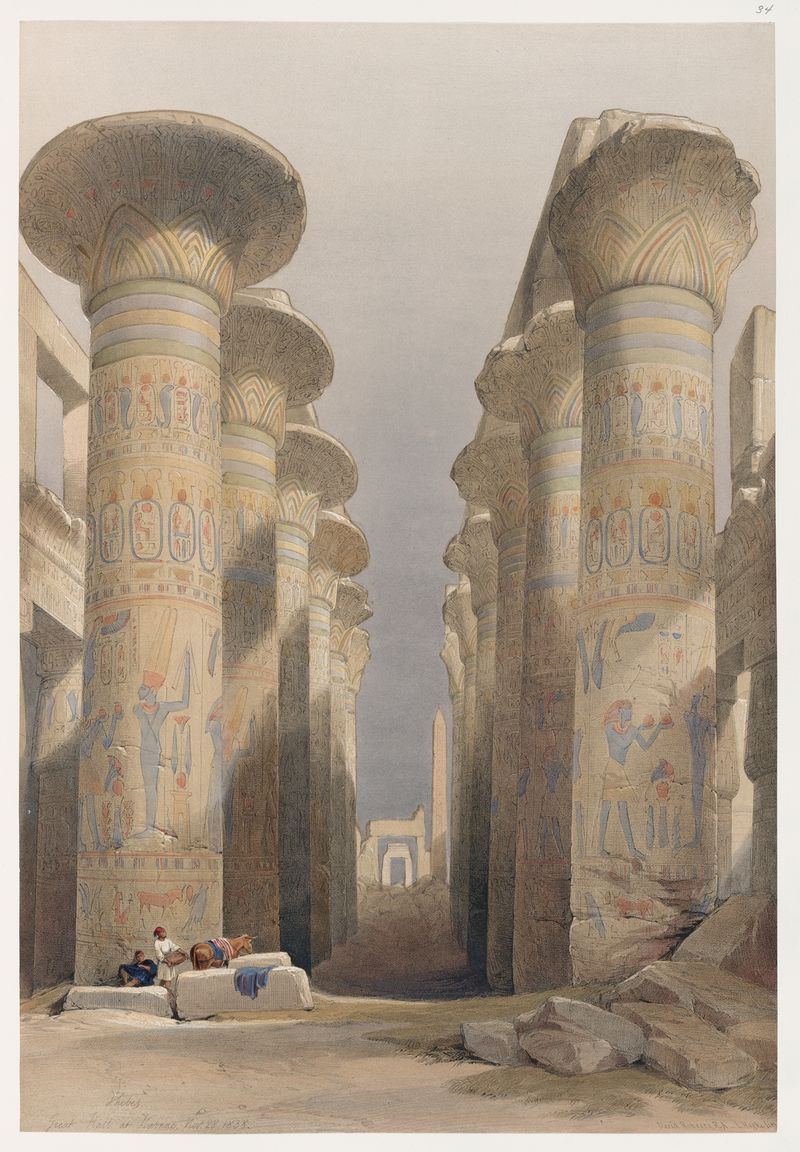
Thebes. Great Hall at Karnak. Nov. 28, 1838.
David Roberts
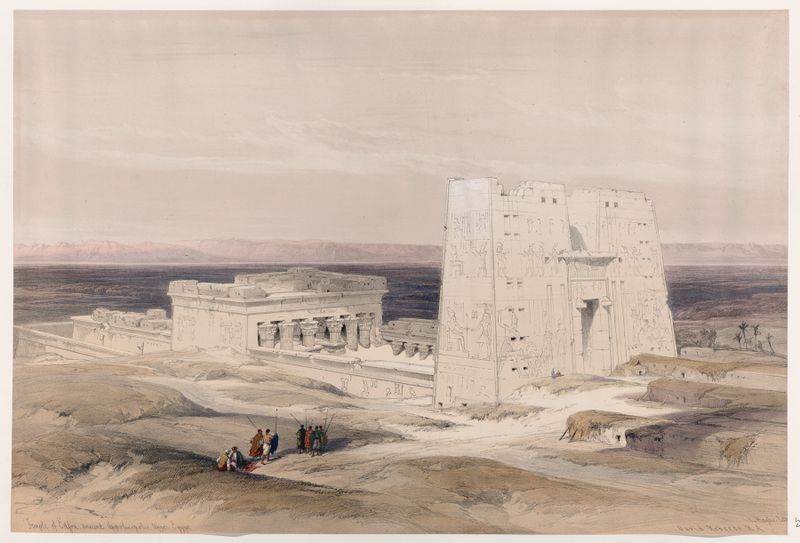
Temple of Edfou [Idfû], ancient Appolinopolis, Upper Egypt.
David Roberts

Temple of Kalabshee [Kalabsha, Kalâbishah], Nubia. Nov. 1838.
David Roberts
More Architecture Art
Browse all →
The statue of Liberty
Frédéric Auguste Bartholdi

View of Houses in Delft, Known as ‘The Little Street’
Johannes Vermeer

View of Houses in Delft, Known as ‘The Little Street’
Johannes Vermeer

The Cathedral in Rouen. The portal, Grey Weather
Claude Monet

The yellow house
Vincent van Gogh

The Church in Auvers-sur-Oise, View from the Chevet
Vincent van Gogh