
The Jewish Bride: story and meaning
In 1828 a London auction catalogue listed this canvas as Jephthah and his Daughter. The name The Jewish Bride came later, after the Amsterdam collector Van der Hoop, who acquired the painting in 1833, read the scene as a Jewish father hanging a necklace round his daughter’s neck on her wedding day. The Rijksmuseum now calls it Isaac and Rebecca, Known as ‘The Jewish Bride’, a portrait of a couple. Rembrandt van Rijn (1606–1669) painted it c. 1665–1669, in the Dutch Golden Age.
- The embrace: the man lays his right hand on the woman’s chest and his left arm across her shoulders; she places her left hand on his hand and holds her right hand in front of her belly. They stand knee-length before a wall.
- A story from Genesis: the Rijksmuseum reads the couple as Isaac and Rebecca. Isaac, afraid of being killed because of his wife, had passed her off as his sister; King Abimelech, looking out of a window, saw Isaac caressing Rebecca and realised she was his wife.
- Unnamed sitters: the museum describes a portrait of a couple as Isaac and Rebecca or other Old Testament figures. The Getty’s catalogue record adds that the faces look like portraits but the clothes were unusual for the time, so contemporaries of Rembrandt may have posed as biblical characters.
- Scratched paint: Rembrandt works here with exceptional freedom, laying the paint on thickly and scratching into it with the butt end of his brush. The Rijksmuseum finds the contrast between the subtle mood and the bold execution of the clothes remarkable.
- A famous admirer: after three days in Amsterdam in October 1885, Vincent van Gogh wrote to his brother Theo that the picture was intimate and that Rembrandt, free to idealise rather than copy a sitter, was a poet in it; he also admired its hands.
- From Van der Hoop to the Rijksmuseum: the London dealer John Smith bought the canvas in Amsterdam in 1825 and Adriaan van der Hoop (1778–1854) acquired it in 1833. He bequeathed his collection to the City of Amsterdam in 1854; the painting hung in the Museum Van der Hoop until 1885 and has been on loan from the city to the Rijksmuseum since.
Sources: Rijksmuseum: collection record SK-C-216 · Rijksmuseum: One hundred masterpieces, story on the painting · Getty CONA record 700001919 · National Gallery, Rembrandt: The Late Works, supplement (2014), cat. 92 · Wikidata Q766782 · Genesis 26:6–11 (JPS Tanakh, Sefaria) · Van Gogh to Theo, 10 or 11 October 1885 (webexhibits.org) · Van Gogh to Theo, October 1885 (webexhibits.org)
Questions and answers about the painting
What is the meaning of The Jewish Bride?
Rembrandt shows a couple in the roles of Isaac and Rebecca, the husband and wife of the Book of Genesis, in a tender moment; the Rijksmuseum adds that they may also be other Old Testament figures. In the Bible story, Isaac, afraid of being killed because of his wife, passed Rebecca off as his sister, but their closeness gave them away when they thought no one was watching. The nickname by which the painting is famous dates from the early nineteenth century.
Source: Rijksmuseum: collection record SK-C-216 · Genesis 26:6–11 (JPS Tanakh, Sefaria) · Getty CONA record 700001919
When did Rembrandt paint the portrait of a couple as Isaac and Rebecca?
The Rijksmuseum dates the painting to c. 1665–c. 1669, in the last years of Rembrandt’s life. The museum’s record transcribes the signature and date as ‘Rembrandt f. 16...’, which gives no complete year. Other datings exist: the supplement to the 2014–15 exhibition catalogue Rembrandt: The Late Works says about 1665, and an entry of the Rembrandt Database listed in the museum’s bibliography gives 1662–1666.
Source: Rijksmuseum: collection record SK-C-216 · National Gallery, Rembrandt: The Late Works, supplement (2014), cat. 92 · Wikidata Q5598 (died 4 October 1669)
Why does the Rijksmuseum call Rembrandt’s couple Isaac and Rebecca?
The museum’s current title names Isaac and Rebecca, the Old Testament reading of the scene, while ‘The Jewish Bride’ is an early-nineteenth-century nickname. According to the Getty’s catalogue record, it arose after the Amsterdam collector Van der Hoop took the man for a Jewish father hanging a necklace round his daughter’s neck on her wedding day. A London sale catalogue of 1828 had listed the canvas as Jephthah and his Daughter. In Dutch it is Het Joodse bruidje.
Source: Getty CONA record 700001919 · National Gallery, Rembrandt: The Late Works, supplement (2014), cat. 92 · Rijksmuseum: collection record SK-C-216
Do we know who the couple in Rembrandt’s painting are?
No: the Rijksmuseum’s record names no sitters. It describes a portrait of a couple as Isaac and Rebecca or other Old Testament figures. The Getty’s catalogue record adds that the faces appear to be portraits but the clothes were unusual for the time, so the pair may have been contemporaries of Rembrandt posing as biblical characters. It also notes that no one now sees the man as the woman’s father, the reading that gave the painting its nickname.
Source: Rijksmuseum: collection record SK-C-216 · Getty CONA record 700001919
Where can you see Rembrandt’s painting of Isaac and Rebecca today?
Rembrandt’s couple hangs in the Gallery of Honour of the Rijksmuseum in Amsterdam, according to the museum’s online record as of November 2026; displays change, so check with the museum before a visit. The canvas (SK-C-216) is on loan from the City of Amsterdam (A. van der Hoop Bequest) and has been lent to the Rijksmuseum since 1885. It measures 121.5 × 166.5 cm and is painted in oil on canvas.
Source: Rijksmuseum: collection record SK-C-216 · National Gallery, Rembrandt: The Late Works, supplement (2014), cat. 92
Is Rembrandt’s Isaac and Rebecca in the public domain?
Yes. Rembrandt died in 1669, so his paintings are free of copyright everywhere. A faithful photograph of a public-domain painting adds no new copyright in the United States or the European Union, so you can download this image and use it in personal or commercial projects. Public Domain Images for Commercial Use explains how.
More Artworks by Rembrandt van Rijn
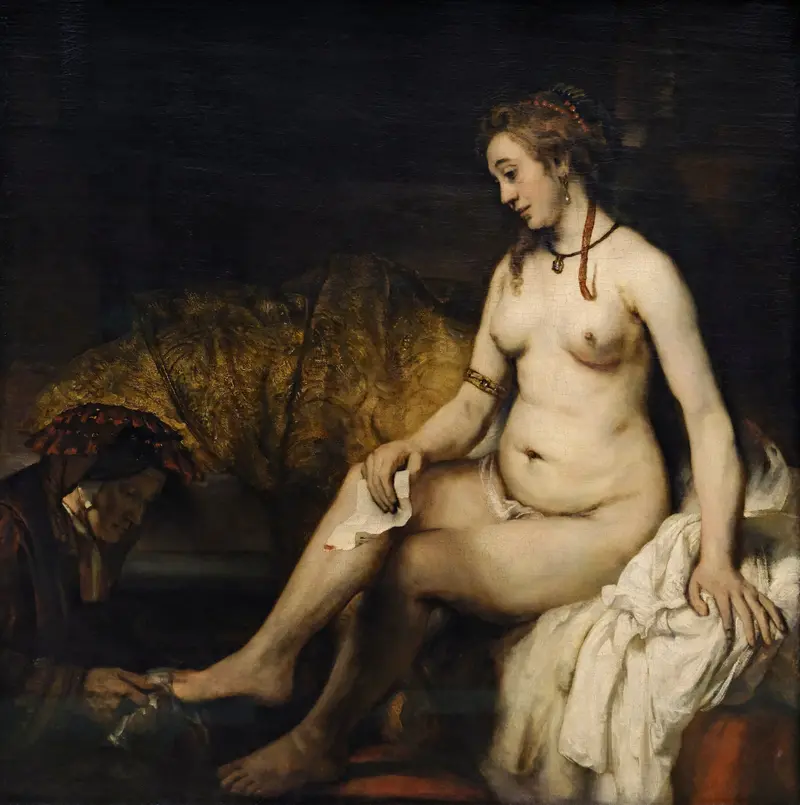
Bathsheba at Her Bath
Rembrandt van Rijn
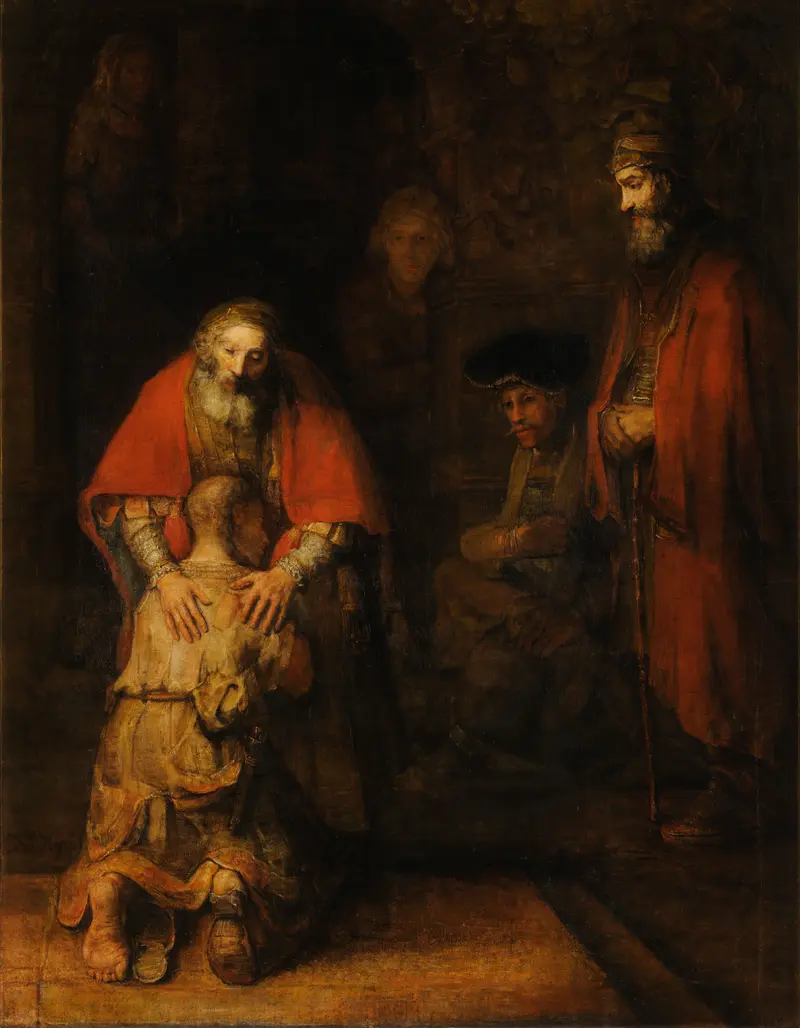
The Return of the Prodigal Son
Rembrandt van Rijn

Self-Portrait with Two Circles
Rembrandt van Rijn
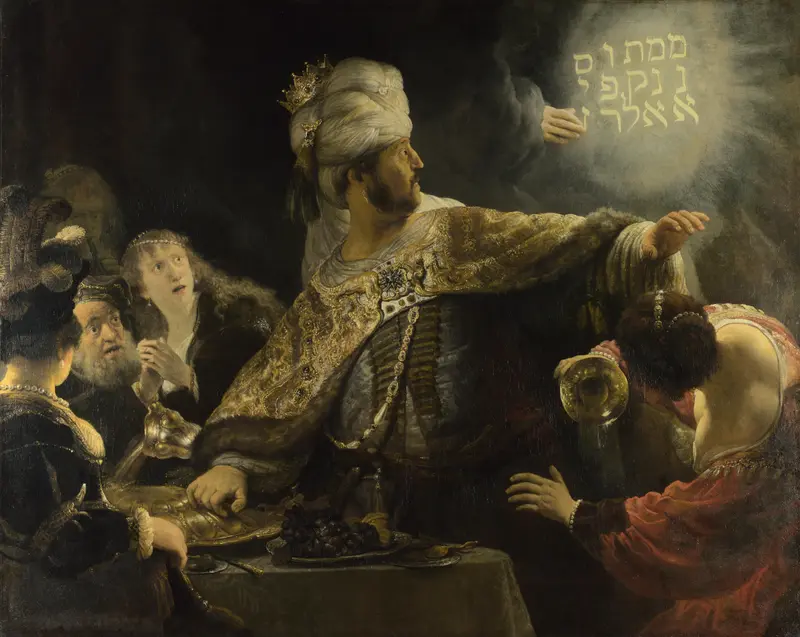
Belshazzar’s Feast
Rembrandt van Rijn
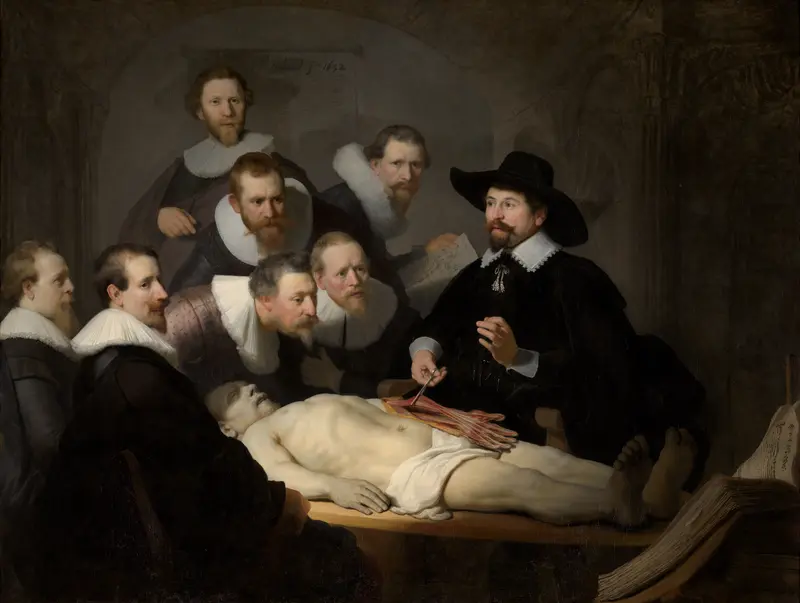
The Anatomy Lesson of Dr Nicolaes Tulp
Rembrandt van Rijn
Portrait of Oopjen Coppit
Rembrandt van Rijn
Self-Portrait at the Age of 63
Rembrandt van Rijn

The Prodigal Son in the Tavern
Rembrandt van Rijn
A Woman Bathing in a Stream
Rembrandt van Rijn
Aristotle with a Bust of Homer
Rembrandt van Rijn





