The Last Ray of Sunshine — History & Facts
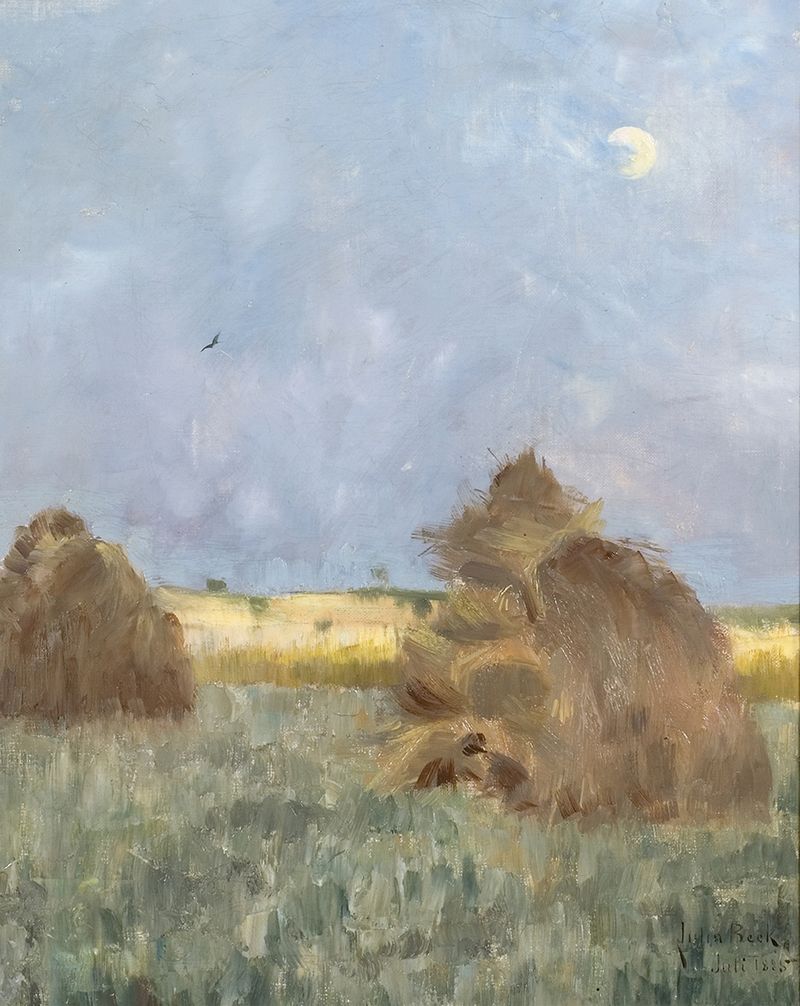
What if beauty was never meant to be finished? Instead, it lingers like the elusive taste of summer, forever yearning for one last glimpse of light. Look to the center, where a single ray spills across the canvas, illuminating a landscape drenched in twilight hues. Beck’s deft brushstrokes create a tapestry of golds and soft purples that dance together, framing the horizon in a gentle embrace. The shimmering light contrasts with the deepening shadows, inviting us to explore the emotional landscape that unfolds.
Each stroke reveals a tender connection between the natural world and the viewer's longing, hinting at the fragile transience of beauty. The interplay of light and darkness serves as a metaphor for desire — the delicate balance between hope and despair. In the lower left corner, the wilted flowers whisper of fleeting moments, their vibrant colors fading as night approaches. This tension embodies the bittersweet essence of aspiration, suggesting that beauty exists in both its presence and absence.
Each element within the composition echoes the yearning for something just out of reach, reminding us that desire is as much about the chase as it is about fulfillment. Julia Beck painted this evocative piece amidst a shifting art world, where the late 19th century was witnessing a blend of Realism and Impressionism. Working in a time when personal expression began to take precedence, she sought to capture the ephemeral nature of life and beauty. The painting reflects her experiences and observations, channeling both her inner desires and the changing landscape of artistic thought.