
The Mosque at Cordova — History & Facts
In the haunting stillness of historical remnants, beauty and decay intertwine, whispering tales of a time long past. Guide your gaze to the left, where the grand arches soar, their intricate designs a stark contrast to the soft shadows that cradle the crumbling walls. The warm, dusty hues of ochre and sienna envelop the scene, invoking a sense of both reverence and nostalgia. Notice how the light filters through the narrow openings, illuminating fragments of faded mosaics, each a memory of the life that once thrived within these walls. The juxtaposition of opulence and ruin permeates the canvas.
Each archway stands as a monument to architectural brilliance, yet they also evoke a profound sense of loss, a reminder of the cultural shifts that led to such decay. The delicate traces of nature reclaiming stone serve not only as a testament to the passage of time but also as a symbol of the resilience inherent in the landscape. Here, history is alive, yet it mourns its own shadows. David Roberts painted this work in 1833, during a period of heightened interest in Orientalism and historical architecture.
Traveling through Spain, he sought to capture the essence of places like Cordova, where Moorish influences met the decline of imperial glory. At this time, his career was flourishing, and his explorations reflected the broader European fascination with the exotic, while also hinting at the inevitable deterioration of such monuments.
More Artworks by David Roberts
Browse all →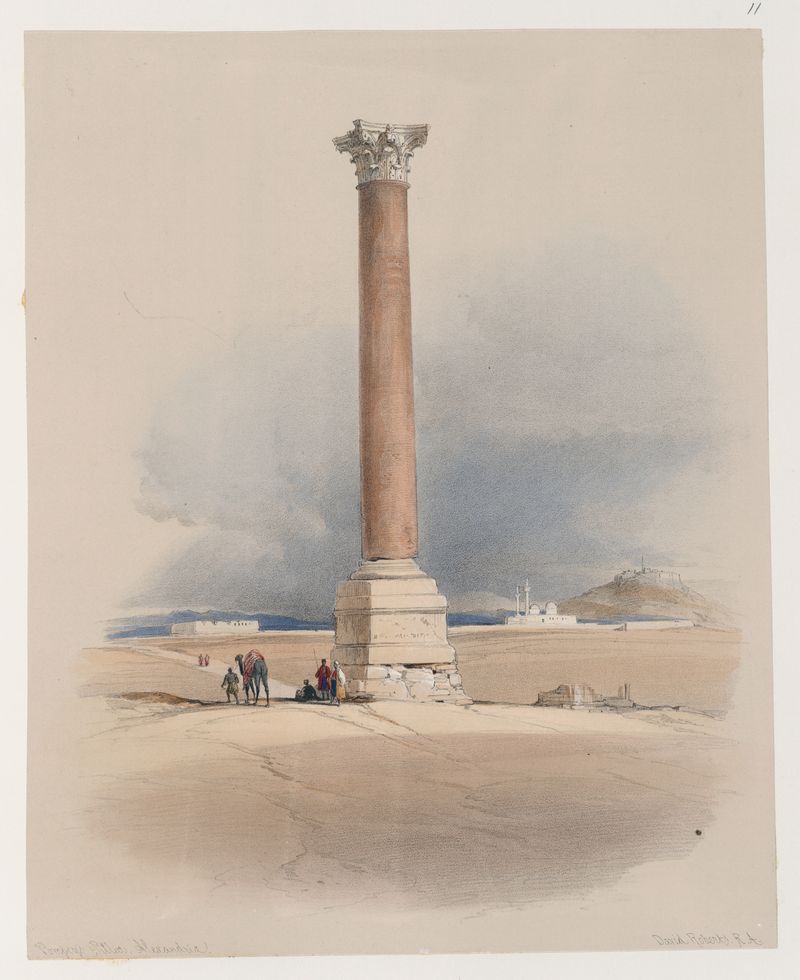
Pompey’s Pillar, Alexandria.
David Roberts

Approach to the Fortress of Ibrim.
David Roberts

Karnac [Karnak]. Nov. 29th, 1838.
David Roberts
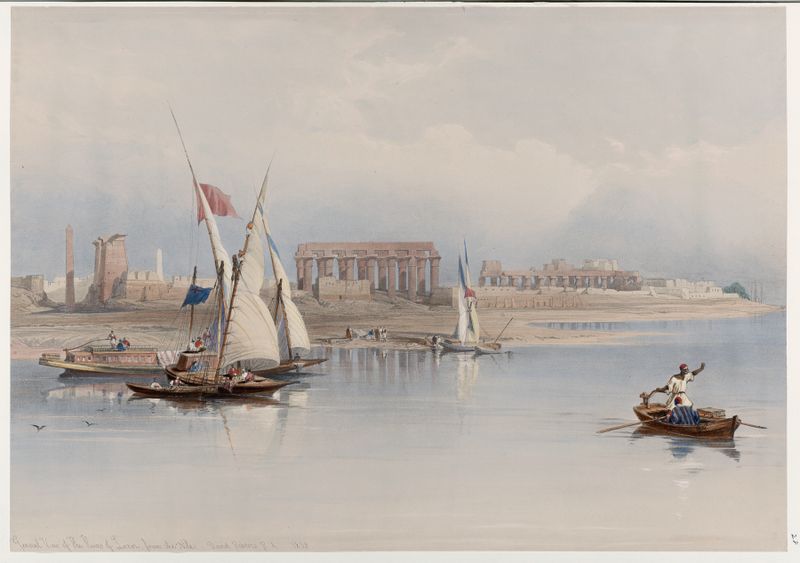
General view of the ruins of Luxor, from the Nile. 1838.
David Roberts

Statues of Memnon at Thebes, during the inundation.
David Roberts

Entrance to the tombs of the kings of Thebes. Bab-el-Malouk [Bîbân al-Mulûk].
David Roberts

The Fortress of the Alhambra, Granada
David Roberts
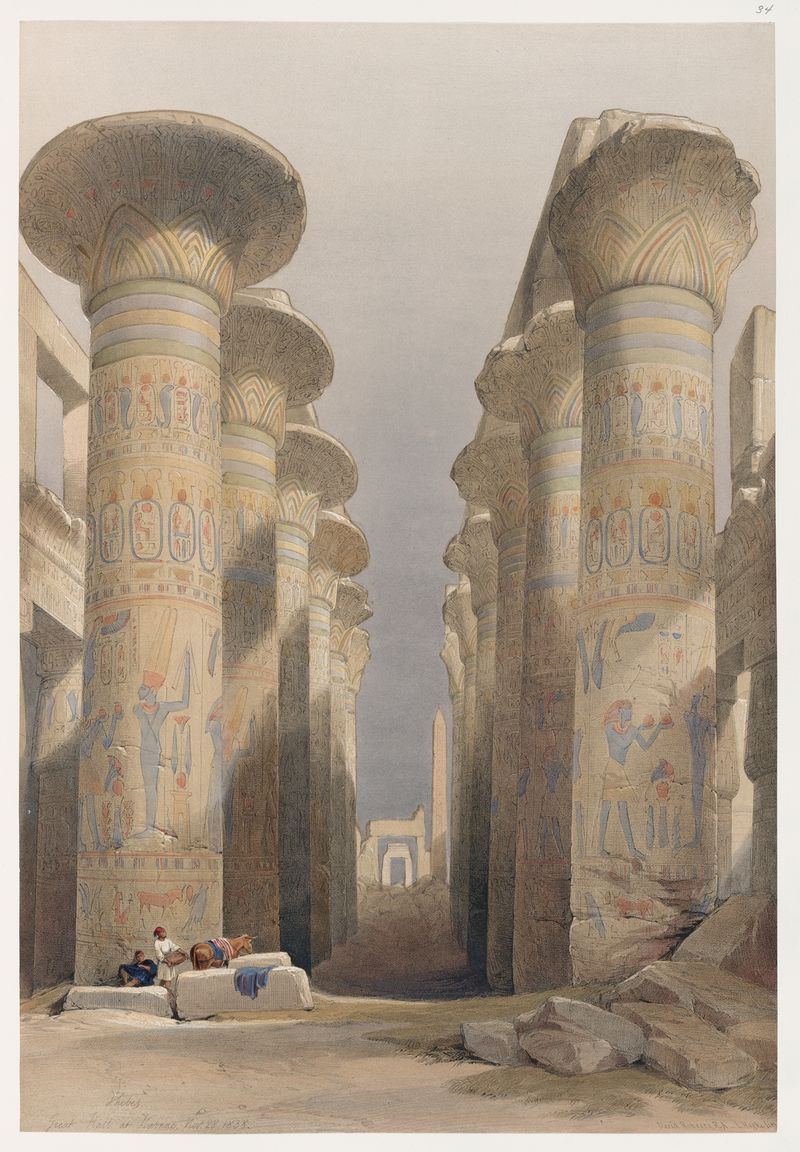
Thebes. Great Hall at Karnak. Nov. 28, 1838.
David Roberts
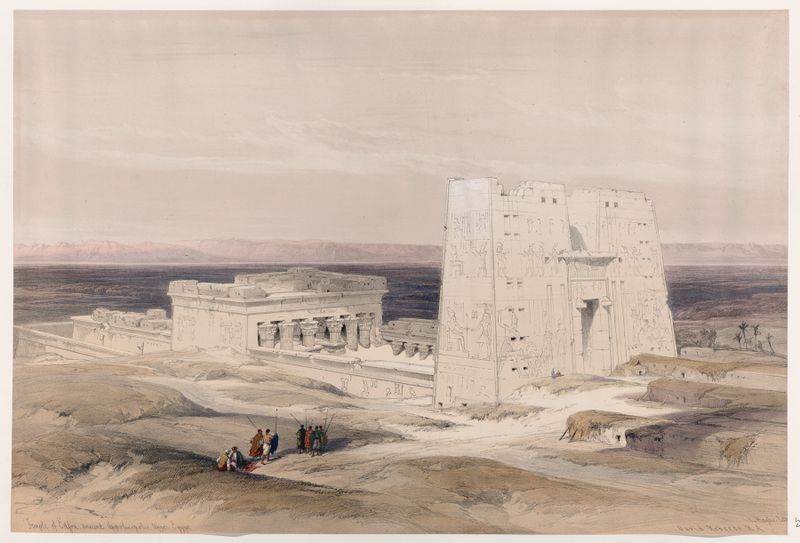
Temple of Edfou [Idfû], ancient Appolinopolis, Upper Egypt.
David Roberts

Temple of Kalabshee [Kalabsha, Kalâbishah], Nubia. Nov. 1838.
David Roberts
More Architecture Art
Browse all →
The statue of Liberty
Frédéric Auguste Bartholdi

View of Houses in Delft, Known as ‘The Little Street’
Johannes Vermeer

View of Houses in Delft, Known as ‘The Little Street’
Johannes Vermeer

The Cathedral in Rouen. The portal, Grey Weather
Claude Monet

The yellow house
Vincent van Gogh

The Church in Auvers-sur-Oise, View from the Chevet
Vincent van Gogh