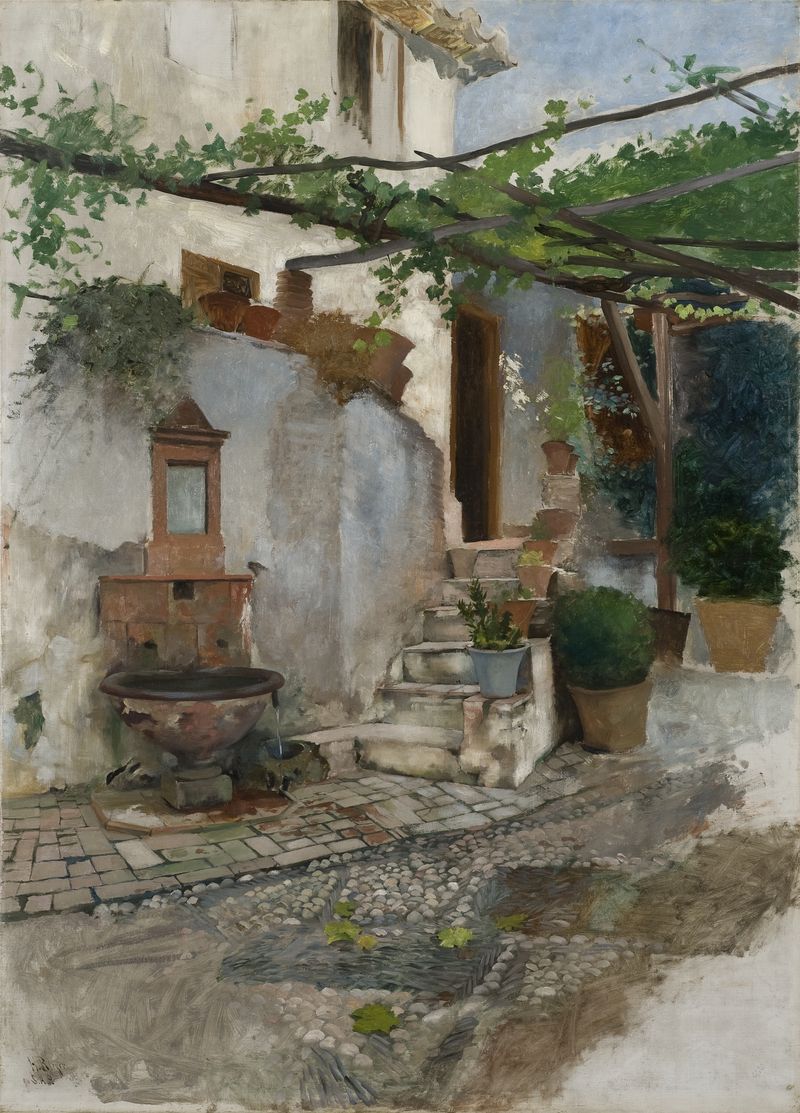
The Murillo Gardens, Seville — History & Facts
The sun gently bathes the sprawling gardens, its golden light glinting off the dew-kissed leaves. A figure stands silently in the distance, contemplating the vast emptiness that surrounds them, enveloped by the vibrant greens and soft floral hues. The air is thick with the scent of blossoming flowers, yet an unsettling stillness lingers, as if time itself has paused to witness a moment of introspection. Focus your gaze on the figure, positioned slightly to the left, seemingly lost within the lush surroundings.
Notice the delicate interplay of light and shadow that dances along the pathways, guiding you through the scene. The artist employs a rich palette of verdant greens and pastel blooms that evoke a sense of both tranquility and alienation, as if nature invites the viewer into its embrace while simultaneously emphasizing the isolation felt by the solitary presence. The contrast is striking: the riotous life of the garden juxtaposed against the profound solitude of the figure. Each petal and leaf vibrates with color and vitality, representing the vibrance of existence, while the figure’s stillness speaks to a deeper emptiness.
This tension between the garden's abundant life and the stark solitude experienced by the individual encapsulates the delicate balance between external beauty and internal desolation. Hugo Birger created The Murillo Gardens, Seville in 1882 during a period of personal and artistic exploration. Living in Spain, he was influenced by both the romanticism of nature and the emerging realism of the time. This piece reflects his engagement with the lush landscapes that surrounded him while simultaneously revealing a contemplative perspective on human existence amidst nature’s grandeur.