
The Nileometer, Island of Rhoda. — History & Facts
In the midst of grandeur, beauty often whispers its truths, revealing deeper layers beneath the surface of serene landscapes. Look to the foreground, where the intricately detailed Nileometer stands resolute against the lush backdrop of the Island of Rhoda. The warm earth tones of the ancient stone structure contrast beautifully with the vibrant greens, capturing the essence of this sacred location. Notice how the light dances across the water, illuminating the gentle ripples that reflect the sky's soft blues and whites.
The composition draws the eye inward, inviting viewers to explore the harmonious relationship between man-made structures and the natural world. Yet, the painting conveys more than just the physical beauty of its subject. The calmness of the scene belies an underlying tension; the Nileometer, a symbol of measurement and control, stands as a reminder of humanity's desire to harness nature. This juxtaposition evokes a contemplative mood, prompting reflections on the fragile balance between civilization and the environment.
The stillness of the landscape contrasts starkly with the tumultuous history of the region, suggesting the weight of stories untold. During the years 1846 to 1849, the artist created this work while traveling through Egypt, capturing the landscape that fascinated many European artists of the time. The period was marked by a growing interest in Orientalism, as well as a personal exploration of identity amid the exotic allure of the East. This painting emerged as part of a broader narrative of cultural exchange, highlighting both admiration and the complexities of Western perspectives on Eastern beauty.
More Artworks by David Roberts
Browse all →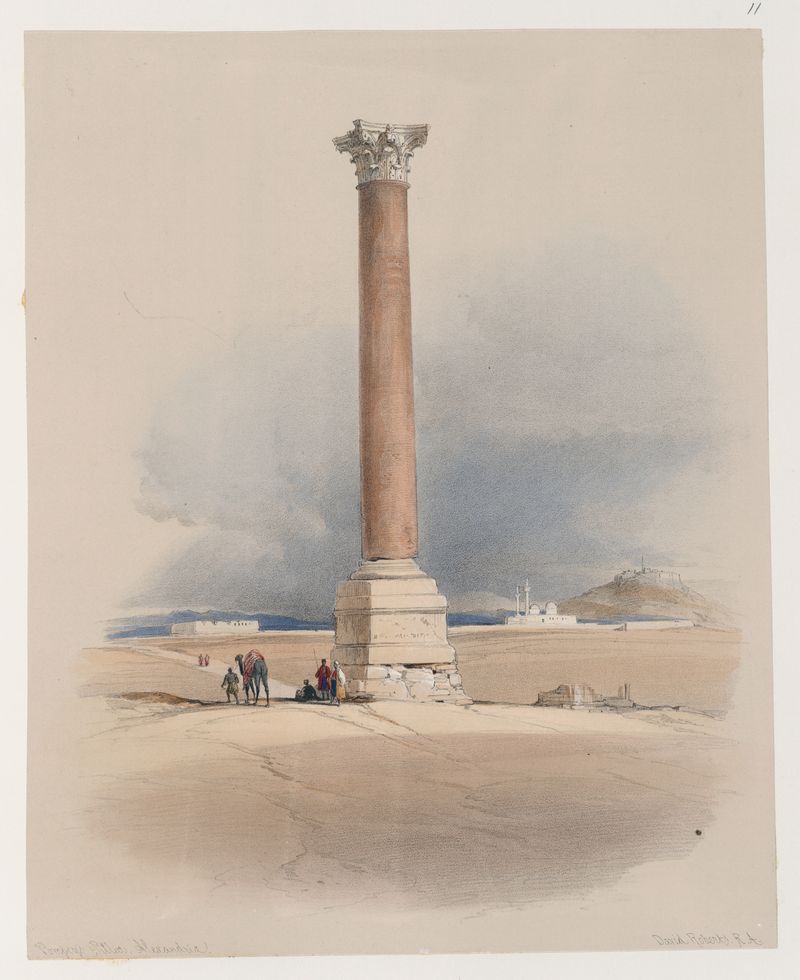
Pompey’s Pillar, Alexandria.
David Roberts

Approach to the Fortress of Ibrim.
David Roberts

Karnac [Karnak]. Nov. 29th, 1838.
David Roberts
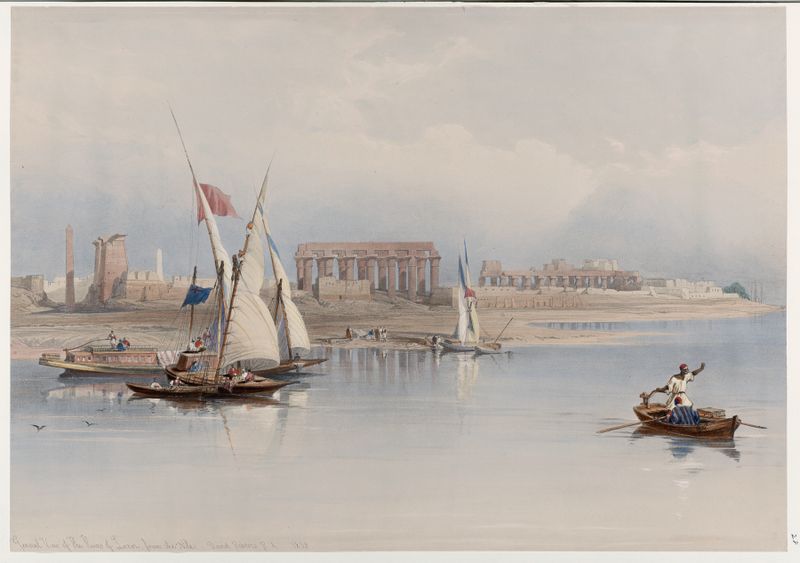
General view of the ruins of Luxor, from the Nile. 1838.
David Roberts

Statues of Memnon at Thebes, during the inundation.
David Roberts

Entrance to the tombs of the kings of Thebes. Bab-el-Malouk [Bîbân al-Mulûk].
David Roberts

The Fortress of the Alhambra, Granada
David Roberts
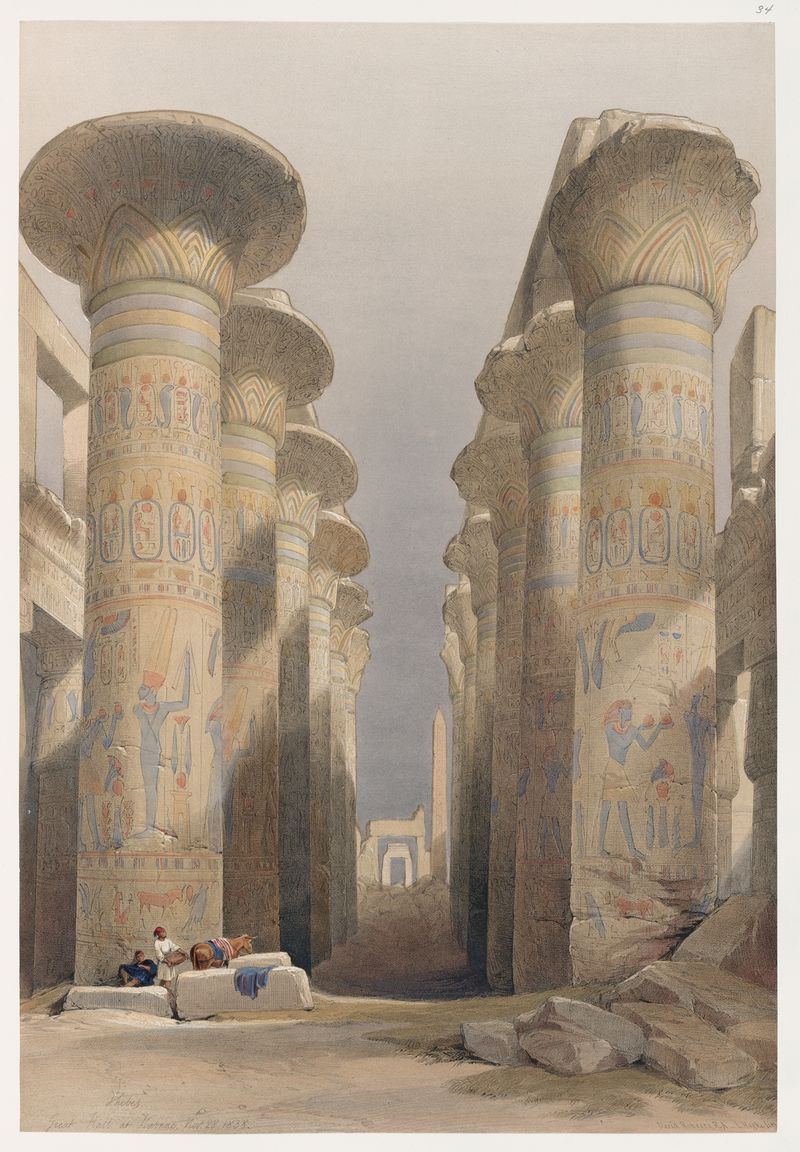
Thebes. Great Hall at Karnak. Nov. 28, 1838.
David Roberts
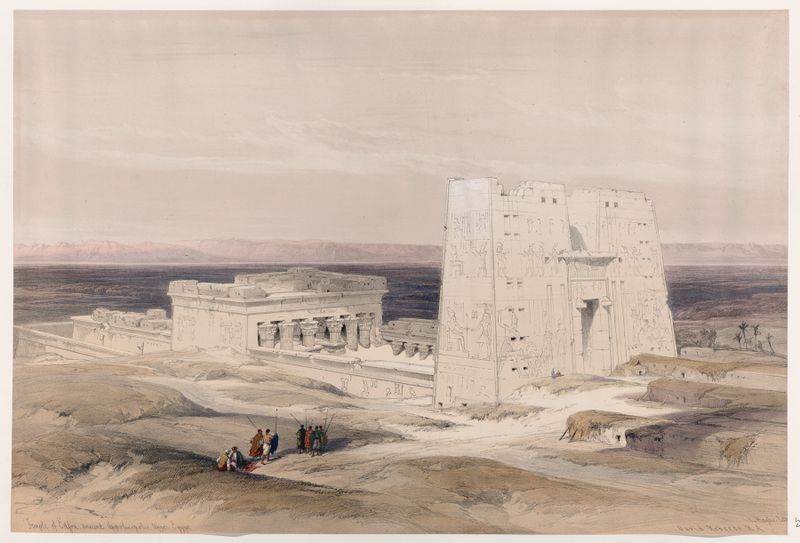
Temple of Edfou [Idfû], ancient Appolinopolis, Upper Egypt.
David Roberts

Temple of Kalabshee [Kalabsha, Kalâbishah], Nubia. Nov. 1838.
David Roberts
More Architecture Art
Browse all →
The statue of Liberty
Frédéric Auguste Bartholdi

View of Houses in Delft, Known as ‘The Little Street’
Johannes Vermeer

View of Houses in Delft, Known as ‘The Little Street’
Johannes Vermeer

The Cathedral in Rouen. The portal, Grey Weather
Claude Monet

The yellow house
Vincent van Gogh

The Church in Auvers-sur-Oise, View from the Chevet
Vincent van Gogh