The Old Watermill — History & Facts
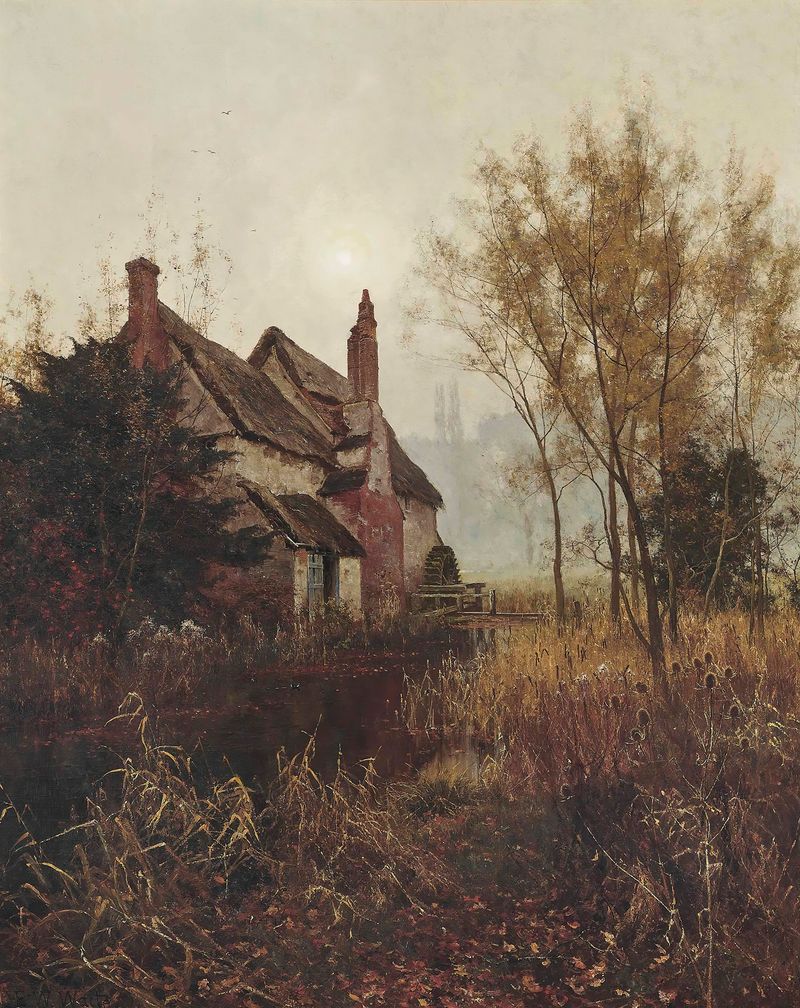
In The Old Watermill, the quietude of the natural world whispers secrets that beckon the viewer to listen closely. To fully appreciate the piece, look to the left where the water gently cascades over the mill's wheel, shimmering with hints of blue and silver. Notice how the artist employs soft, muted greens and browns to create a serene atmosphere, inviting you to wander deeper into the rustic landscape. The deft brushstrokes capture the play of light filtering through the trees, creating a dance of shadows that enhances the tranquility of the scene—a moment suspended in time. Yet, beneath this idyllic charm lies an emotional depth.
The stillness of the water suggests a reflection on the passage of time, while the mill, a relic of industry, hints at the inevitable encroachment of modernity. The contrast between the lively flow of nature and the stillness of the structure evokes a tension between progress and preservation, urging contemplation of what is lost in the face of change. During the period when this work was created, Edward Wilkins Waite was active in England, often inspired by the rural landscape around him. The late 19th century witnessed a growing interest in the pastoral and the nostalgia for simpler times, as industrialization transformed the countryside.
This context may have influenced the artist's choice to capture the watermill, symbolizing both a celebration of nature and a poignant reminder of the transient beauty of the world.