The Oxbow Seen from Mount Holyoke — History & Facts
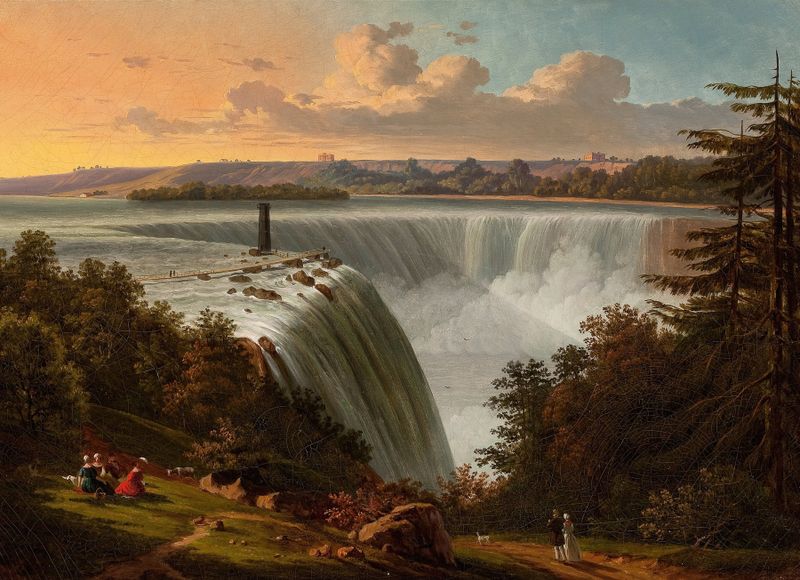
Is this a mirror — or a memory? In the ethereal embrace of The Oxbow Seen from Mount Holyoke, we are drawn into a realm where nature’s grandeur transcends mere representation, inviting us to ponder our place within its vastness. Look to the left, where a tumultuous sky battles with the serene landscape below. The artist employs a striking interplay of dark, brooding clouds and warm sunlight breaking through, creating a dramatic contrast that pulls the viewer’s gaze across the canvas. The river, like a silken ribbon of reflection, weaves through the scene, its cool blues and greens mirroring the chaotic beauty above.
The delicate brushwork evokes both the tranquility of the valley and the overwhelming power of nature, guiding us into a contemplative state. Delve deeper into the details, where the tension between civilization and wilderness unfolds. On the right, the encroaching cultivation hints at human ambition, while the untouched wildness on the left symbolizes nature’s enduring spirit. This juxtaposition stirs a sense of nostalgia and a longing for a harmonious existence, evoking questions about progress and preservation.
In this dialogue between the elements, the painting becomes not just an image, but a profound reflection on the human experience. Painted after 1840, The Oxbow Seen from Mount Holyoke emerged during a pivotal moment in American art when Romanticism began to embrace the sublime qualities of the landscape. Victor de Grailly, inspired by the changing perceptions of nature, sought to capture the sublime beauty of his surroundings. As the nation grappled with industrialization, his work resonates with a longing for connection to the natural world amidst the transformations of modern life.