The Plum Garden at Kameido Shrine — History & Facts
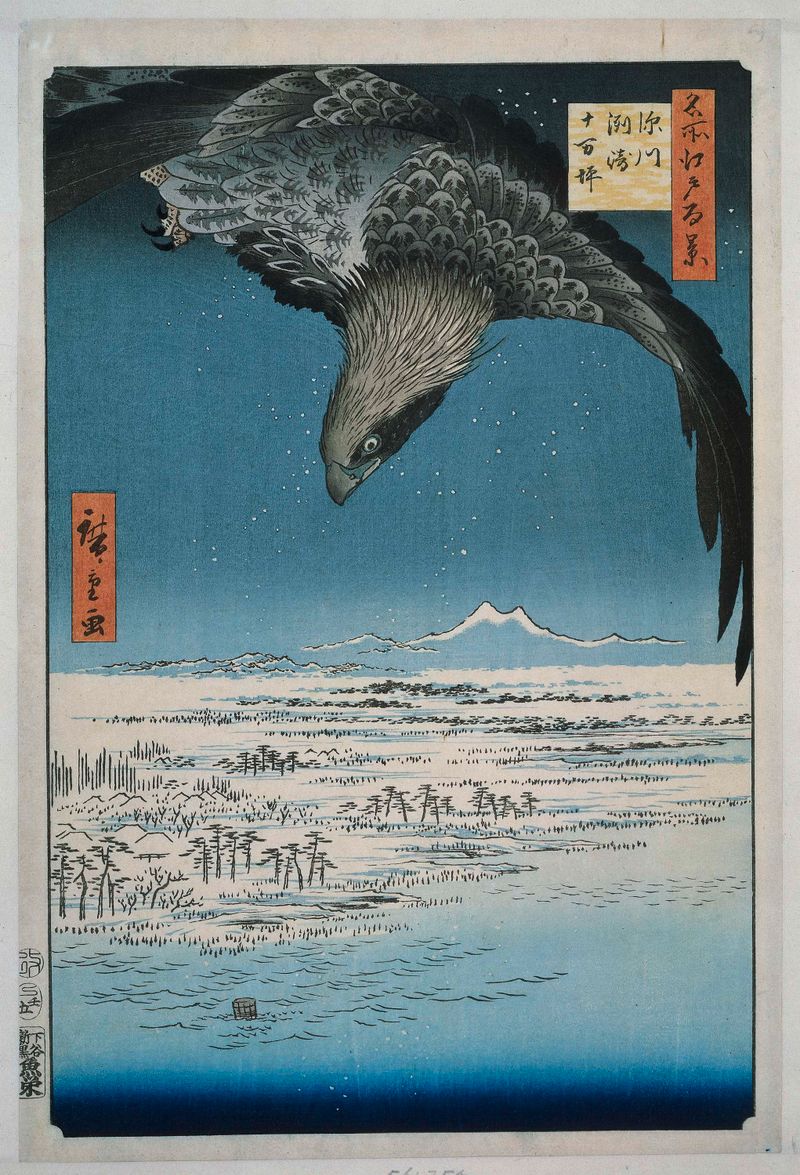
A gentle breeze rustles the delicate branches, releasing a flurry of soft pink petals that dance through the air. Beneath the arching boughs of the plum trees, figures meander in quiet reverie, their silhouettes softened by the dappled light filtering through the blossoms. The scene is one of serenity, a moment suspended in time, as nature’s beauty envelops all who are present. Look to the left at the burst of plum blossoms, their lush hues of pink and white almost palpable against the serene backdrop.
Notice how the artist's use of layered color creates depth, inviting you to step into the garden’s embrace. The composition draws the eye towards the gracefully curved bridge that arches over a tranquil body of water, its reflection mirroring the vibrancy of the trees above. Here, the palette shifts subtly, blues and greens emphasizing the coolness of the water, contrasting with the vibrant warmth of the blooms. Delve deeper into the scene, and you’ll discover the interplay of presence and absence.
The figures, though engaged in their quiet pursuits, remain elusive and faceless, suggesting a universal experience of solitude and connection with nature. The juxtaposition of the transient beauty of the blossoms and the permanence of the shrine in the background raises questions about the nature of truth and the fleeting moments of joy in life. Created in 1857, this work emerged during a period of significant change in Japan, as the country opened up to the West. Amidst this transition, Utagawa Hiroshige found solace in the natural landscape, capturing ephemeral beauty while reflecting the intricacies of human emotion.
His mastery of color and form during this time solidified his legacy as one of Japan's most revered ukiyo-e artists.