
The Raampoortje in Amsterdam — History & Facts
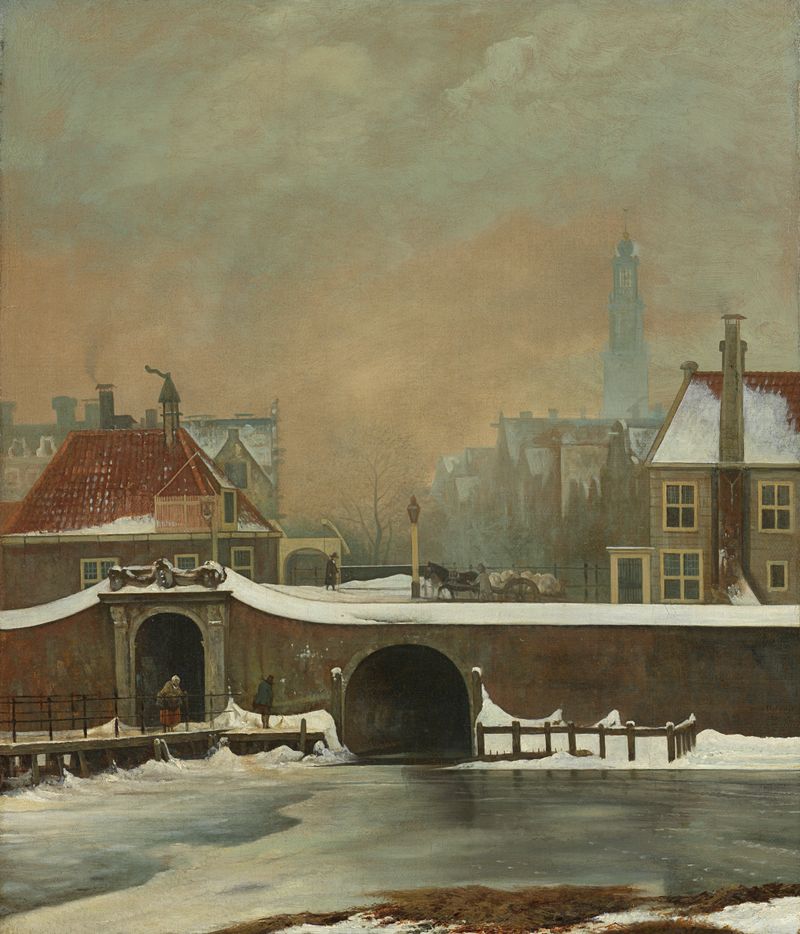
What if beauty was never meant to be finished? In The Raampoortje in Amsterdam, Wouter Johannes van Troostwijk captures a fleeting moment, inviting us to ponder the obsession with perfection in both nature and architecture. Focus on the intricate archway at the center; its delicate stonework draws the eye, embodying a bridge between human ingenuity and the natural world. Notice how the soft light bathes the scene, highlighting the textures of the weathered stones while casting gentle shadows that dance along the cobblestones. The cool blues and warm earth tones create a harmonious balance, evoking tranquility despite the passage of time. Beneath the surface lies a tension between the man-made and the organic—the archway stands resilient against encroaching foliage, a symbol of humanity’s struggle to impose order on nature.
This interplay of elements suggests not only a physical barrier but also a metaphorical one, as the relentless growth of ivy hints at nature's persistence in reclaiming its territory. The painting whispers of transience; architecture may stand strong, but time will inevitably leave its mark. In 1809, van Troostwijk was building his reputation as a landscape painter while navigating the shifting artistic currents of his time in the Netherlands. The era was marked by a growing appreciation for the picturesque, where artists sought to intertwine natural beauty with architectural splendor.
As he painted this scene, the artist was part of a broader movement that celebrated the Romantic ideal, reflecting a burgeoning obsession with the sublime beauty found in impermanence.
More Artworks by Wouter Johannes van Troostwijk
Browse all →

More Architecture Art
Browse all →
The statue of Liberty
Frédéric Auguste Bartholdi

View of Houses in Delft, Known as ‘The Little Street’
Johannes Vermeer

View of Houses in Delft, Known as ‘The Little Street’
Johannes Vermeer

The Cathedral in Rouen. The portal, Grey Weather
Claude Monet

The yellow house
Vincent van Gogh

The Church in Auvers-sur-Oise, View from the Chevet
Vincent van Gogh