
The Rear Courtyard of Charlottenborg Palace — History & Facts
The quiet elegance of a courtyard can hold the weight of untold sadness, a truth that unfolds in stillness and shadow. Look to the left at the soft, muted greens of the foliage, a gentle contrast to the stark architecture that defines the space. Notice how the light filters through the leaves, casting dappled patterns on the cobblestone floor, inviting your gaze deeper into the scene. The symmetry of the surrounding buildings creates a sense of order, yet the subtle disarray of nature bursts forth, suggesting a tension between human design and the wildness of life.
Each brushstroke reveals an interplay of shadow and luminescence, drawing the eye like a siren’s call. As you delve deeper, consider the juxtaposition of the man-made and the organic. The crisp lines of the palace stand resolute against the encroaching vines, hinting at the inevitable passage of time and the melancholy inherent in beauty. This space, while tranquil, evokes a sense of nostalgia and longing; it feels as though it holds memories of laughter and sorrow within its walls.
The stillness of the courtyard resonates with a bittersweet atmosphere, where every element whispers stories of what once was. Frederik Sødring painted this work between 1827 and 1828 while living in Copenhagen. At the time, he was part of a burgeoning movement that sought to capture the essence of the Danish landscape and architecture with a romantic lens. His exploration of the interplay between nature and structure reflects the broader artistic currents of early 19th-century Europe, where artists began to embrace emotional depth and personal expression amid the societal shifts of the era.
More Artworks by Frederik Sødring
Browse all →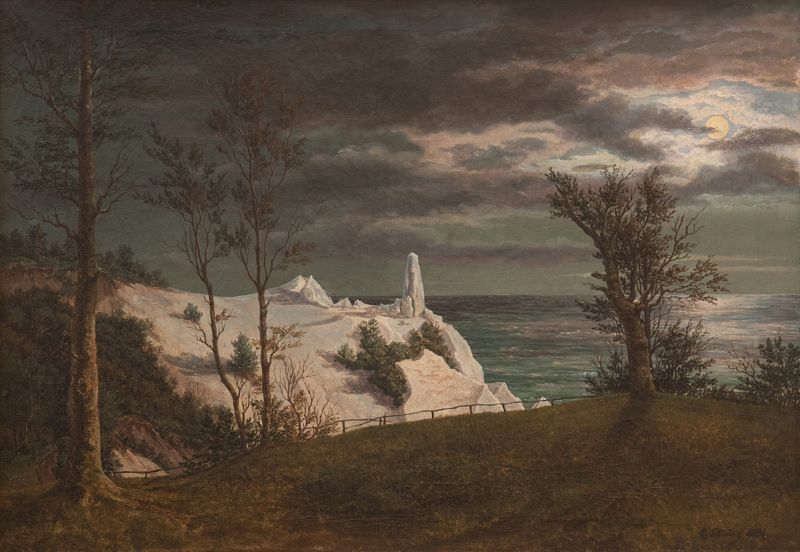
The ‘Summer Spire’ on the Chalk Cliffs of the Island Møn. Moonlight
Frederik Sødring
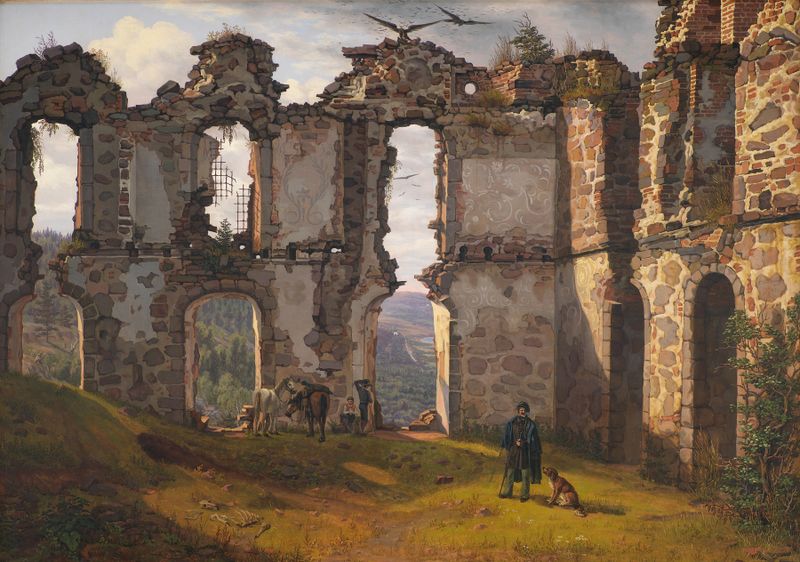
The Ruins of Brahehus near Jönköping, Sweden
Frederik Sødring
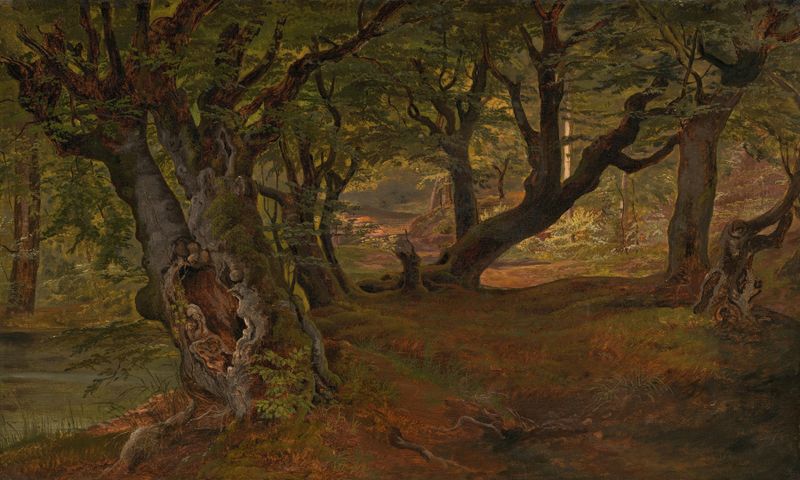
View of Bregentved Forest, Sjaeeland
Frederik Sødring
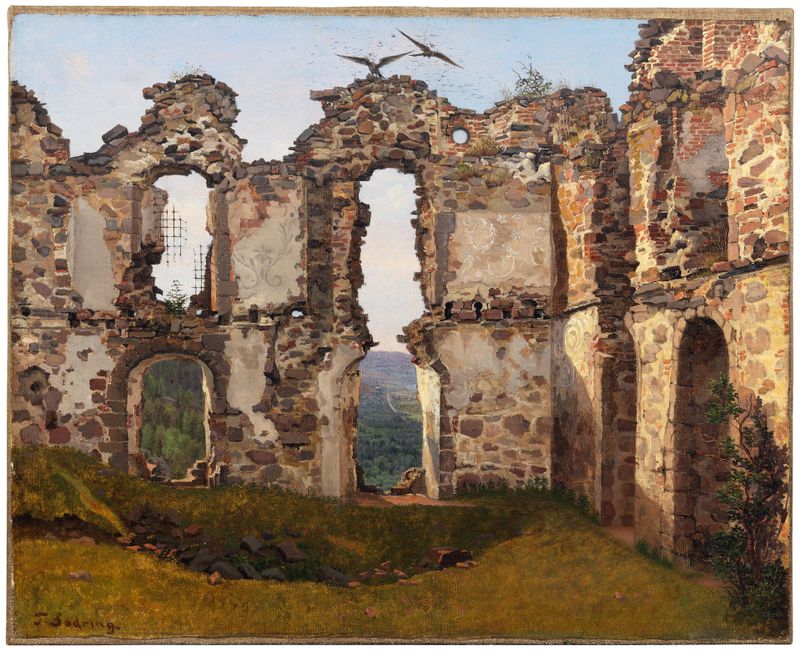
The Ruins of Brahehus near Jönköping, Sweden. Study
Frederik Sødring
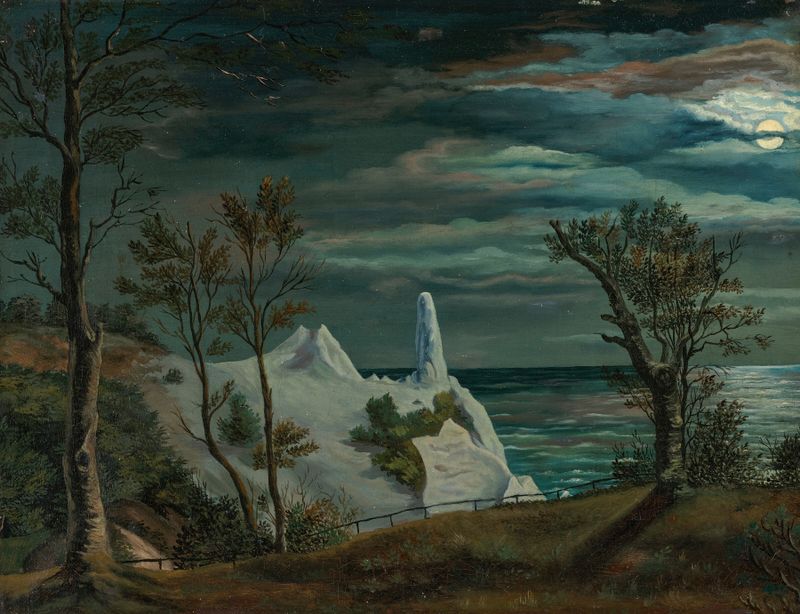
Moonlit Møns Klint with Sommerspiret
Frederik Sødring
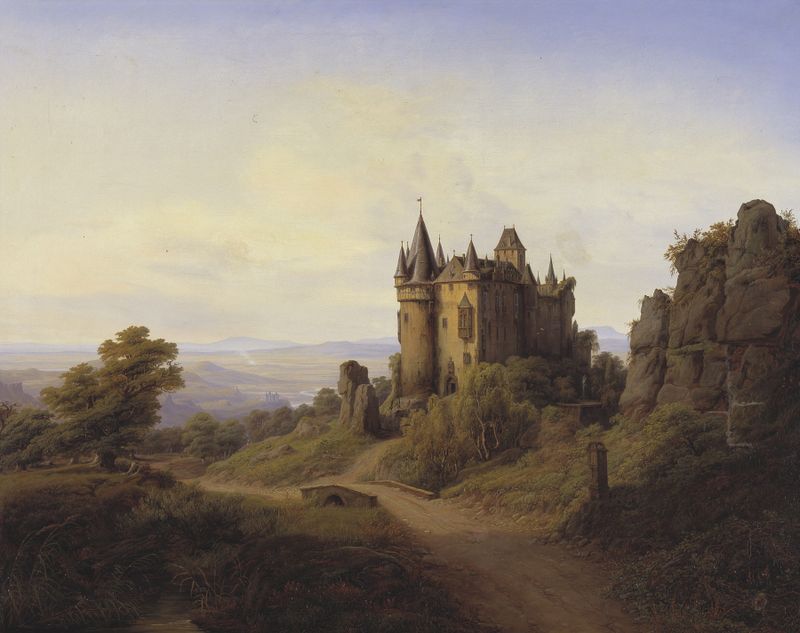
Slottet Büresheim ved Eifelfloden
Frederik Sødring
More Architecture Art
Browse all →
The statue of Liberty
Frédéric Auguste Bartholdi

View of Houses in Delft, Known as ‘The Little Street’
Johannes Vermeer

View of Houses in Delft, Known as ‘The Little Street’
Johannes Vermeer

The Cathedral in Rouen. The portal, Grey Weather
Claude Monet

The yellow house
Vincent van Gogh

The Church in Auvers-sur-Oise, View from the Chevet
Vincent van Gogh