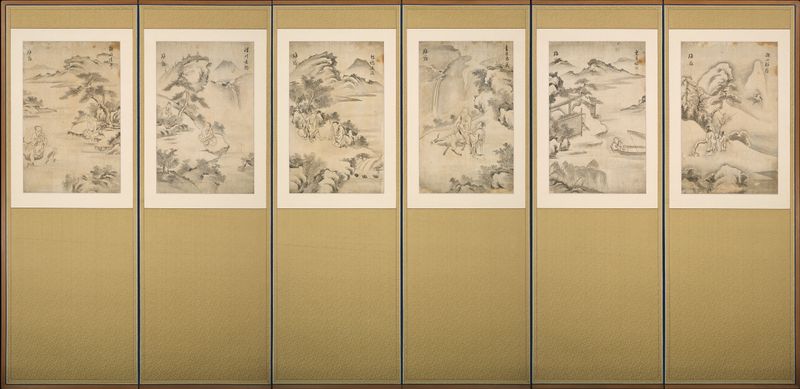
The Recluse Lin Bu (967-1028) Releasing Cranes at Mount Gu — History & Facts
In the stillness of time, moments linger, suspended between the brushstrokes and the viewer's gaze, whispering of destinies intertwined. As one stands before the work, they are invited to ponder the delicate balance of solitude and freedom, a realm where every detail speaks of profound longing. Look to the left at the serene figure of Lin Bu, his hands poised in a gentle gesture, releasing cranes into the open sky. The soft hues of blue and green create a tranquil backdrop, while the intricate patterns of the surrounding flora frame the composition, drawing the eye towards the ethereal birds in flight.
Notice how the painter employs delicate strokes to render the cranes, their wings almost shimmering with a sense of liberation — a stark contrast to the quiet, contemplative pose of the recluse. As you delve deeper, consider the symbolism embedded within this serene tableau. The cranes, often associated with longevity and freedom in Asian culture, juxtapose Lin Bu’s solitary existence, evoking a tension between aspiration and solitude. The fading landscape suggests the passage of time, inviting contemplation on the nature of destiny itself.
Is it a release from earthly ties or an embrace of a deeper, unseen connection to the universe? Chŏng Yusŭng painted this piece in the late 17th century during a period of introspection and cultural revival in Korea. As a member of the literati class, he navigated a landscape shaped by Confucian ideals and rising interest in nature-inspired art. This painting reflects not only his personal journey as an artist but also the broader shift towards expressing individuality and the inner self against the backdrop of a transforming society.