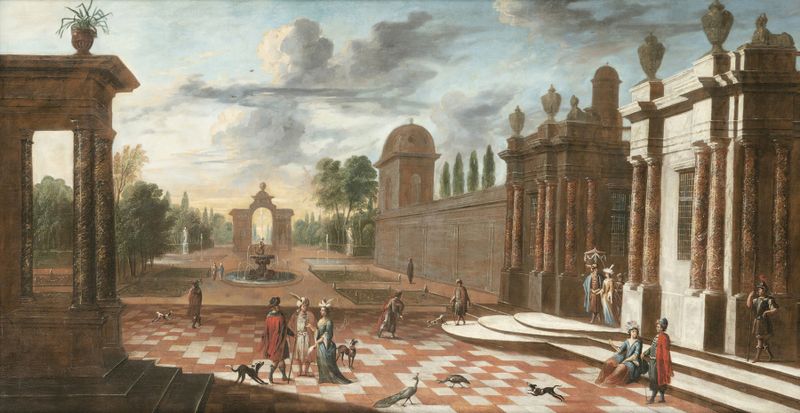
The return after the hunt — History & Facts
In a world rich with unuttered truths and fleeting moments, art serves as a vessel for the soul's silent stories. Look to the center of the painting, where a proud hunter stands, his gaze both fierce and contemplative, reflecting the weight of his triumph. Notice how the warm earthy tones envelop him, contrasting sharply with the cool, muted palette of the background. The meticulous details of his attire and the textured fur of the animals he has hunted draw the eye, as if inviting you to explore the relationship between man and nature.
The light dances upon the scene, illuminating the hunter's form and casting subtle shadows that evoke a sense of depth and mystery. As you delve deeper, notice the juxtaposition of life and death encapsulated in the work. The hunter’s stern expression mirrors an inner conflict—a celebration of his prowess tempered by the echoes of the lifeless creatures at his feet. This tension resonates with the viewer, prompting reflection on the moral complexities surrounding the act of hunting.
The subtle inclusion of background figures further enriches the narrative, hinting at a communal experience rooted in survival and tradition. At the time this piece was painted, Saeys was navigating a flourishing art scene marked by an increasing interest in naturalism and emotion. Working in the late 17th century, he embraced the techniques of realism while capturing the raw essence of human experience. The Dutch Golden Age was witnessing a transition, as artists like Saeys began to explore themes of identity and truth, both on canvas and in the broader world.