The Road to the Churchyard in Toledo — History & Facts
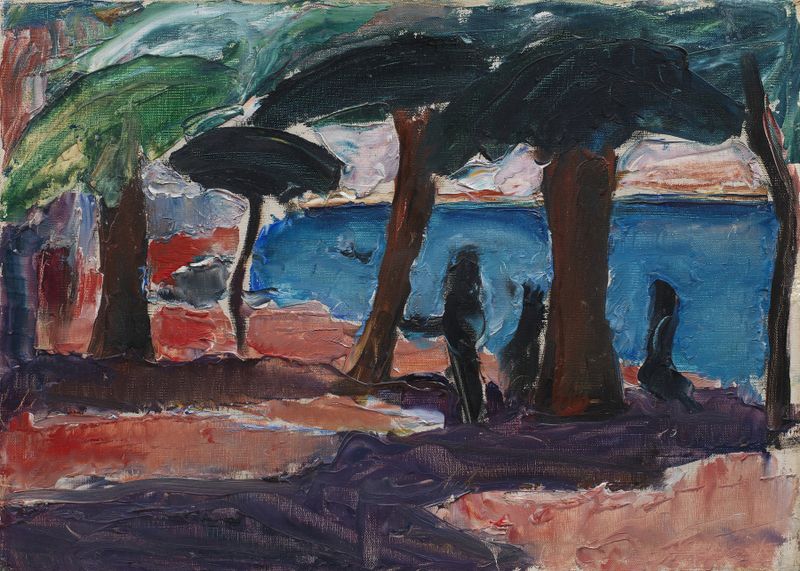
Could a single brushstroke hold eternity? In The Road to the Churchyard in Toledo, movement intertwines with stillness, as if time itself has paused just long enough to capture a fleeting moment. Look to the foreground, where the sweeping curve of the dirt path draws the eye into the heart of the composition. The gentle slope leads toward a churchyard, flanked by trees that sway delicately, their leaves painted with a rich palette of greens and browns. Notice how the warm light filters through the branches, casting dappled shadows on the path, inviting viewers to walk alongside the figures who tread its winding way.
Jerichau’s brushwork has a rhythmic quality, giving life to both the landscape and the emotions of the scene. Beneath the surface of this tranquil journey lies an undercurrent of tension. The figures, though seemingly serene, are isolated in their introspection, suggesting a deeper contemplation of life and death. The churchyard in the distance looms like a silent guardian, its presence heightening the contrast between the vibrancy of the living and the stillness of the eternal.
The path itself acts as a metaphor for the journey of life, leading not only to a physical destination but also hinting at existential questions about what lies beyond. Created in 1915, during a period of great upheaval in Europe, the artist found himself amidst the shadows of World War I, reflecting on themes of mortality and the human experience. Jerichau, who resided in Denmark, brought a unique sensitivity to his depictions of landscapes and figures, capturing profound moments of introspection and connection to the natural world.