
The Road to the Sea, and Skye — History & Facts
Can paint confess what words never could? In The Road to the Sea, and Skye, vibrant strokes of color invite the viewer on a journey toward renewal and rediscovery, as if the landscape breathes with the promise of rebirth. Look to the foreground, where a meandering path leads your eyes toward the vast expanse of sky meeting sea. Notice how the golden hues of the road, illuminated by sunlight, contrast with the cool blues and greens of the water and hills. Cadell’s brushwork creates a rhythmic harmony that guides your gaze, while the gentle undulation of the landscape hints at a deeper, emotional terrain waiting to be explored. The interplay of light and shadow evokes a sense of transience, suggesting moments of change that echo the cycle of nature.
The soft clouds overhead seem to cradle the land below, embodying both hope and nostalgia. Hidden within the tranquility are subtle hints of tension: the road, while inviting, also represents a journey fraught with uncertainties, as it leads beyond the familiar into the unknown. During the early 20th century, Cadell painted this piece amid the burgeoning Scottish Colorist movement, which sought to capture the vibrancy of light in the Scottish landscape. This era was marked by a growing interest in modernism and a departure from traditional representation, allowing artists like him to explore bold colors and emotional resonance.
Cadell's work reflects not only a personal connection to the natural world but also the zeitgeist of an artistic awakening in Scotland.
More Artworks by Francis Campbell Boileau Cadell
Browse all →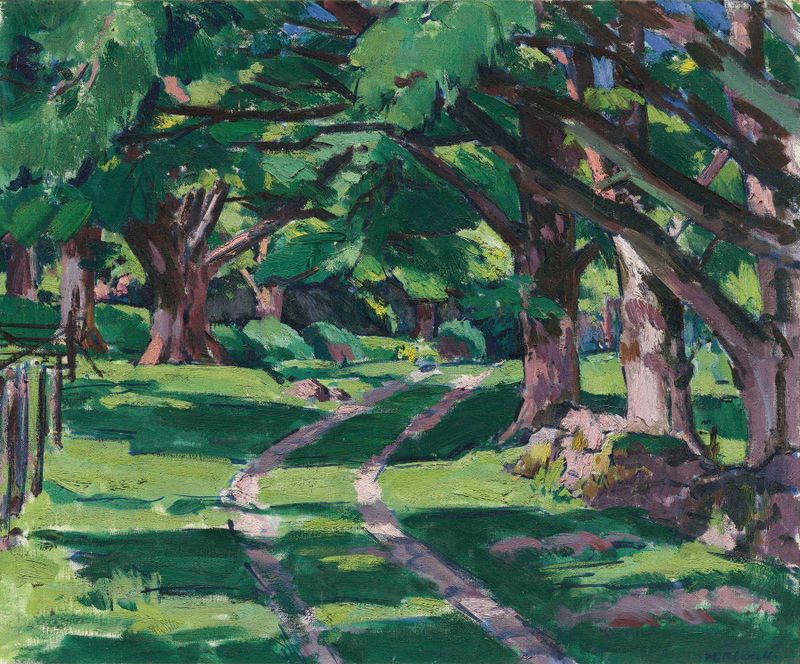
The Avenue, Auchnacraig
Francis Campbell Boileau Cadell

Island Of Rum From Iona
Francis Campbell Boileau Cadell

Iona, White Sands Looking East
Francis Campbell Boileau Cadell
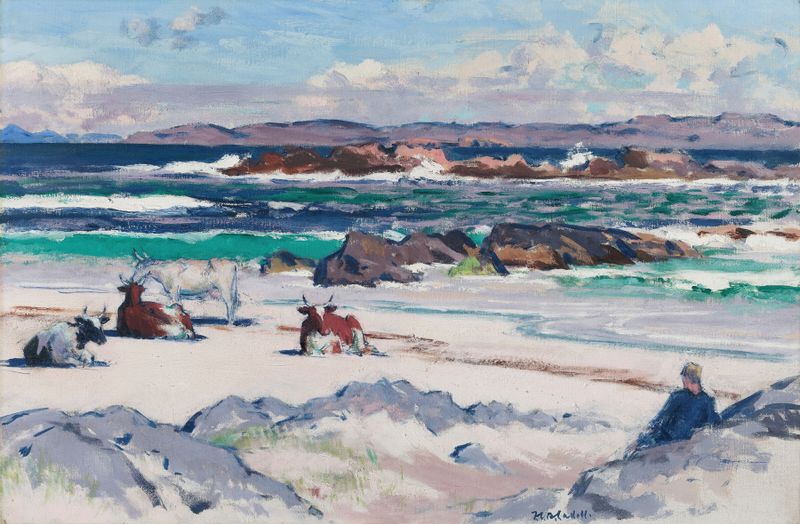
Cattle on the Shore, Iona
Francis Campbell Boileau Cadell
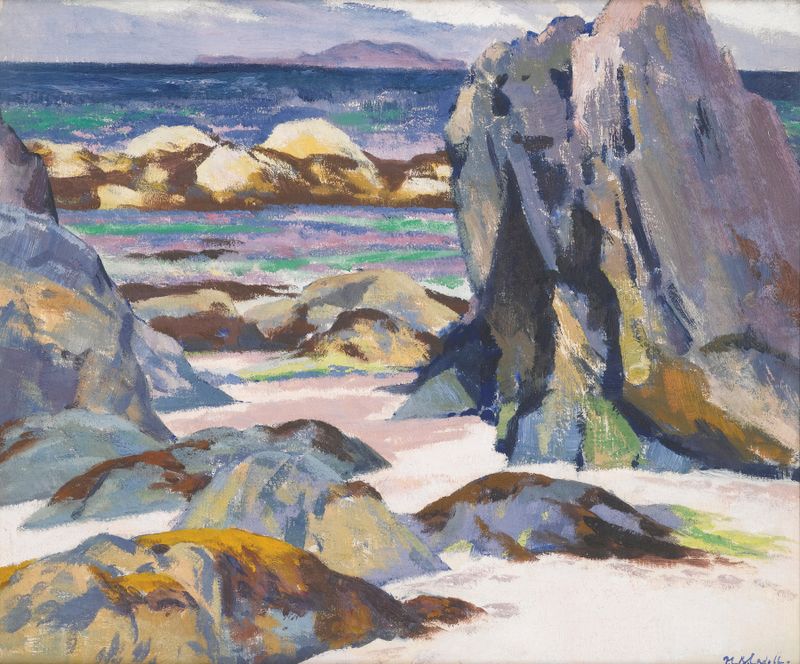
Lunga From Iona
Francis Campbell Boileau Cadell
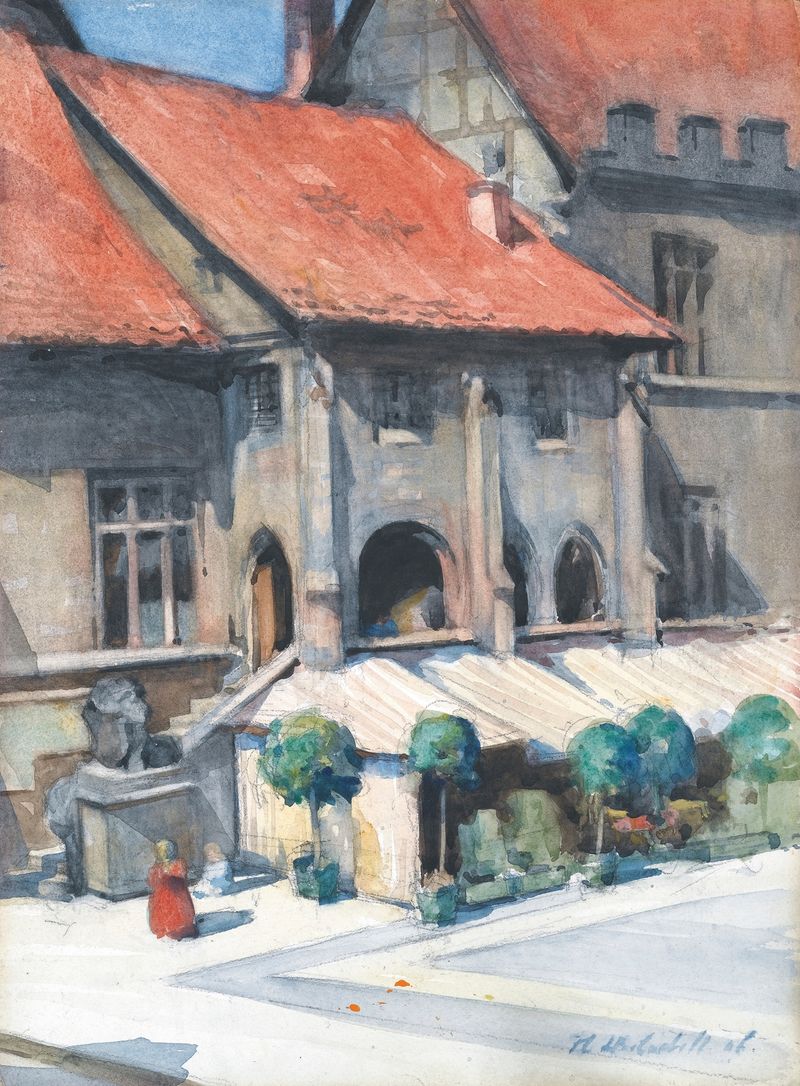
The Rathaus, Göttingen
Francis Campbell Boileau Cadell
Figures on a Village Path
Francis Campbell Boileau Cadell





