
The Roman Aqueduecct Aqua Vergine In The Courtyard Of No. 12 Via Del Nazareno — History & Facts
What if silence could speak through light? In The Roman Aqueduct Aqua Vergine In The Courtyard Of No. 12 Via Del Nazareno, you can almost hear the whispers of history echoing through the soft glow that bathes its crumbling structure. Look to the left at the intricate stone archways, their weathered surfaces telling tales of time. The light filters gently through the cracks, illuminating patches of green moss that cling to the edges, contrasting sharp lines of decay against the vibrant life force that seeks to reclaim its place.
Each brushstroke captures the interplay of shadow and illumination, inviting you to explore the depth of a scene that feels both abandoned and alive. The aqueduct stands as a poignant symbol of human achievement, now softened by the embrace of nature's relentless passage. Notice how the juxtaposition of the solid stone and the encroaching flora speaks to the inevitability of time, evoking a deep sense of nostalgia and loss. The subtle hues of ochre and muted greens reflect a world that once thrived, now at the precipice of dissolution, stirring within us a poignant understanding of permanence and ephemerality. Giovanni Lazzarini completed this work in 1823, at a time when neoclassicism was waning, giving way to romanticism's exploration of nature and the sublime.
Living in Rome, he was surrounded by the remnants of a grand civilization that had shaped culture for centuries. This period marked a growing fascination with the ruins of antiquity, as artists sought to capture the beauty and decay that accompanied the passage of time.
More Artworks by Giovanni Lazzarini
Browse all →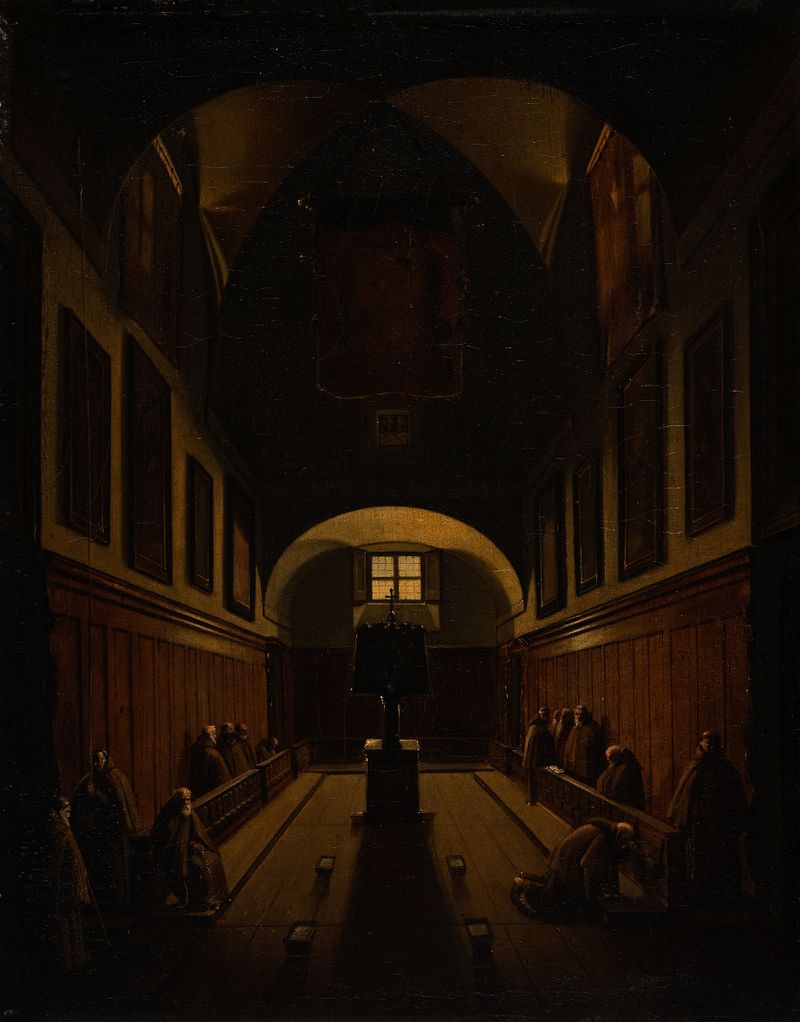
More Architecture Art
Browse all →
The statue of Liberty
Frédéric Auguste Bartholdi

View of Houses in Delft, Known as ‘The Little Street’
Johannes Vermeer

View of Houses in Delft, Known as ‘The Little Street’
Johannes Vermeer

The Cathedral in Rouen. The portal, Grey Weather
Claude Monet

The yellow house
Vincent van Gogh

The Church in Auvers-sur-Oise, View from the Chevet
Vincent van Gogh