
The Roman ruin in Schönbrunn — History & Facts
The haunting remnants of a once-glorious past beckon us to delve deep into the layers of memory and artifice, whispering secrets of a bygone era. Look to the left at the elegant archway, its weathered stones embracing the lush overgrowth. The rich greens juxtaposed with earthy browns and faded grays evoke a sense of nostalgia, while the light dances gently across the surfaces, illuminating the delicate imperfections. Take note of the soft blues in the sky, which cradle the structure, creating a harmonious backdrop that suggests both tranquility and decay.
This composition, anchored by balanced proportions, invites the viewer to wander through time, contemplating the beauty found in both ruin and restoration. Amidst this serene panorama lies a profound contemplation of transience. The juxtaposition of nature’s reclamation against human artistry speaks to the inevitable passage of time. The vines intertwining with the stones serve as a reminder that beauty lies not only in creation but also in the embrace of decay.
The soft play of light invites a moment of reflection on what endures and what fades, revealing an emotional depth that resonates with each viewer. Painted in 1892 while living in Vienna, the artist was at the forefront of a burgeoning movement that valued the interplay between nature and civilization. This period saw a growing interest in capturing the ephemeral quality of life, reflecting a world grappling with rapid industrial change. Influenced by the burgeoning Symbolist movement, the work encapsulates both personal and universal themes, revealing a deep respect for history while embracing the inevitability of time’s passage.
More Artworks by Carl Moll
Browse all →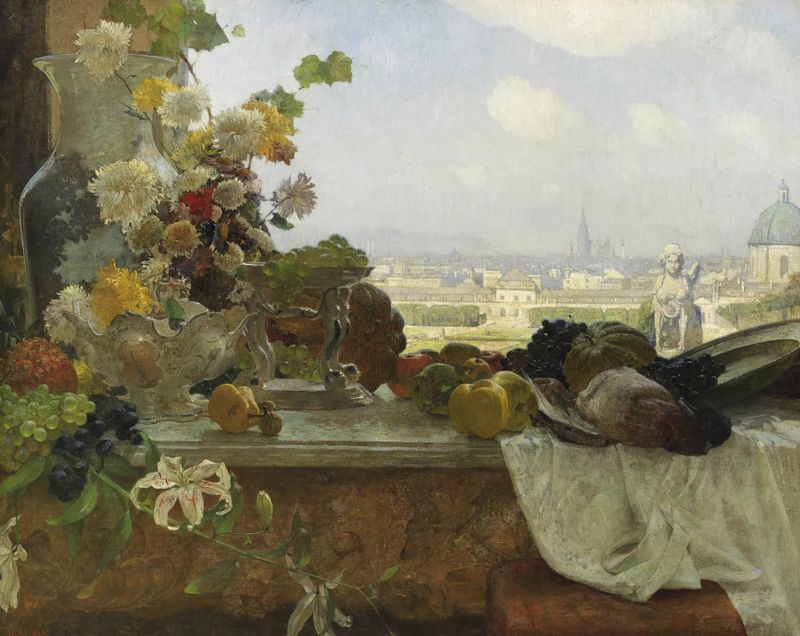
Blick vom Belvedere auf die Innere Stadt
Carl Moll

Garten in Döbling (Garden in Döbling, Vienna)
Carl Moll
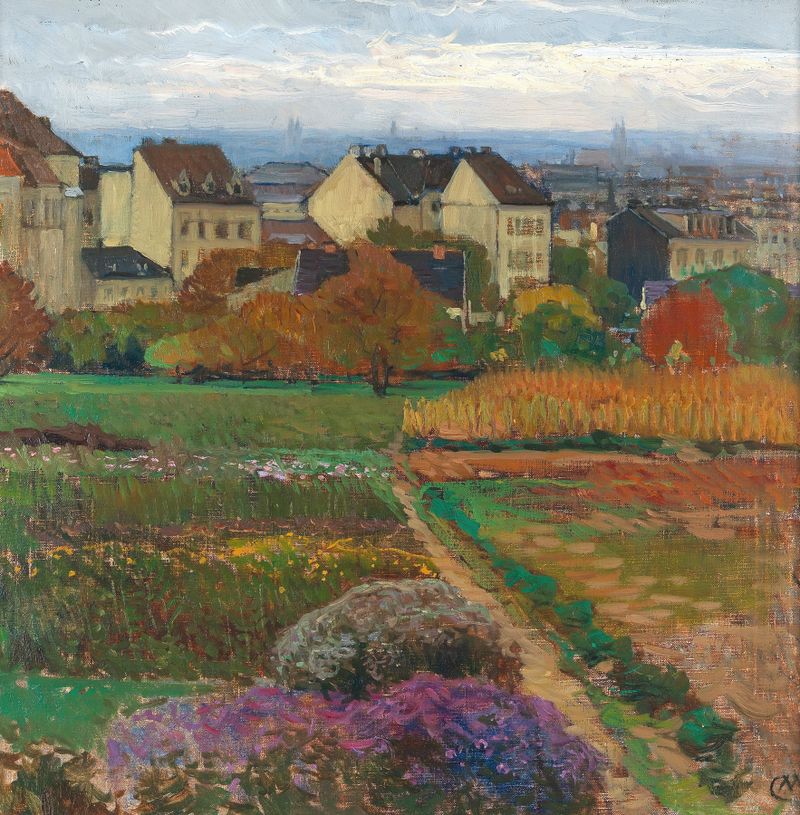
Döbling Wien
Carl Moll

Motiv aus dem Schloßpark in Jevisovice
Carl Moll
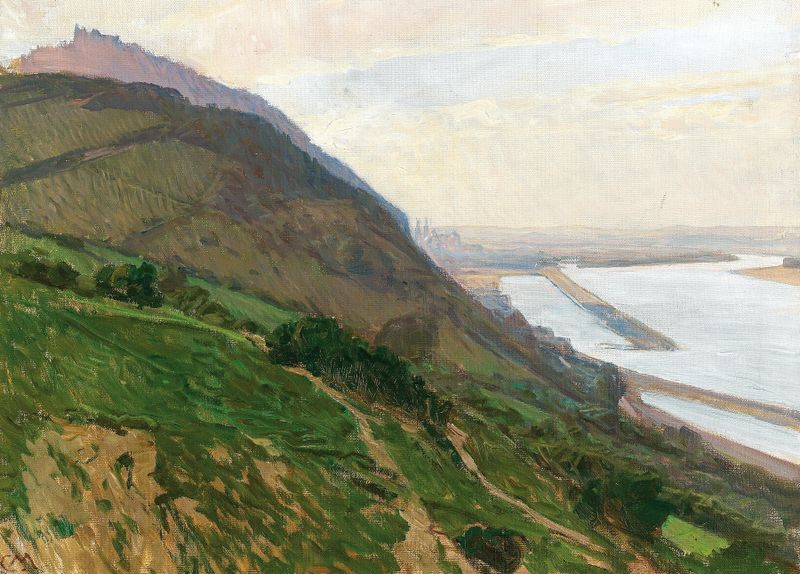
Donauansicht
Carl Moll
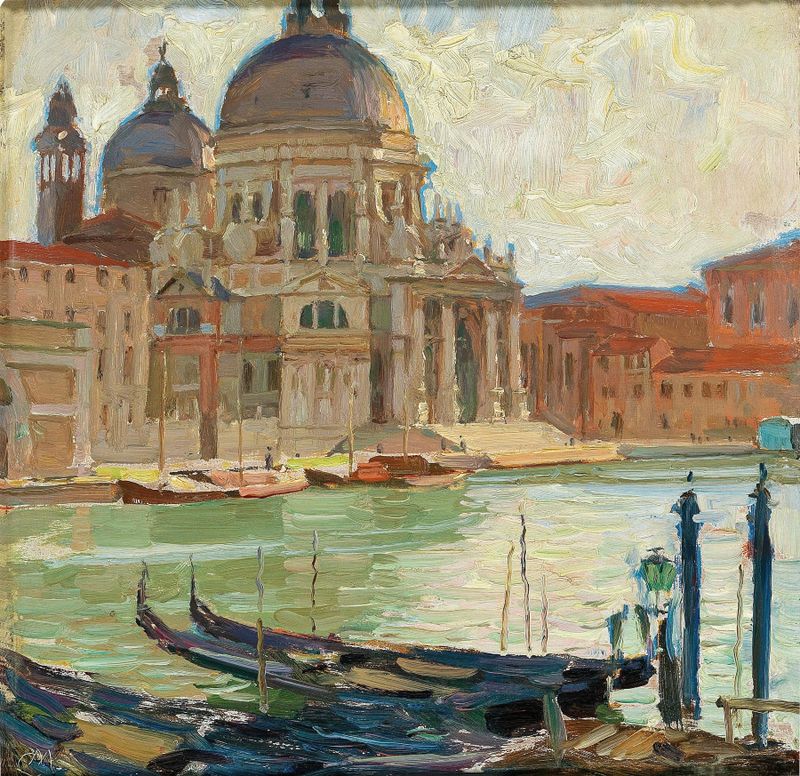
Kirche in Venedig
Carl Moll

Wassermühle in Goisern (nach Emil Jakob Schindler)
Carl Moll

Winter at Hohe Warte, Rothschild Gardens
Carl Moll

Römische Ruine in Schönbrunn
Carl Moll

Kirche St Michael in Heiligenstadt
Carl Moll
More Architecture Art
Browse all →
The statue of Liberty
Frédéric Auguste Bartholdi

View of Houses in Delft, Known as ‘The Little Street’
Johannes Vermeer

View of Houses in Delft, Known as ‘The Little Street’
Johannes Vermeer

The Cathedral in Rouen. The portal, Grey Weather
Claude Monet

The yellow house
Vincent van Gogh

The Church in Auvers-sur-Oise, View from the Chevet
Vincent van Gogh