The Shadow Dancers — History & Facts
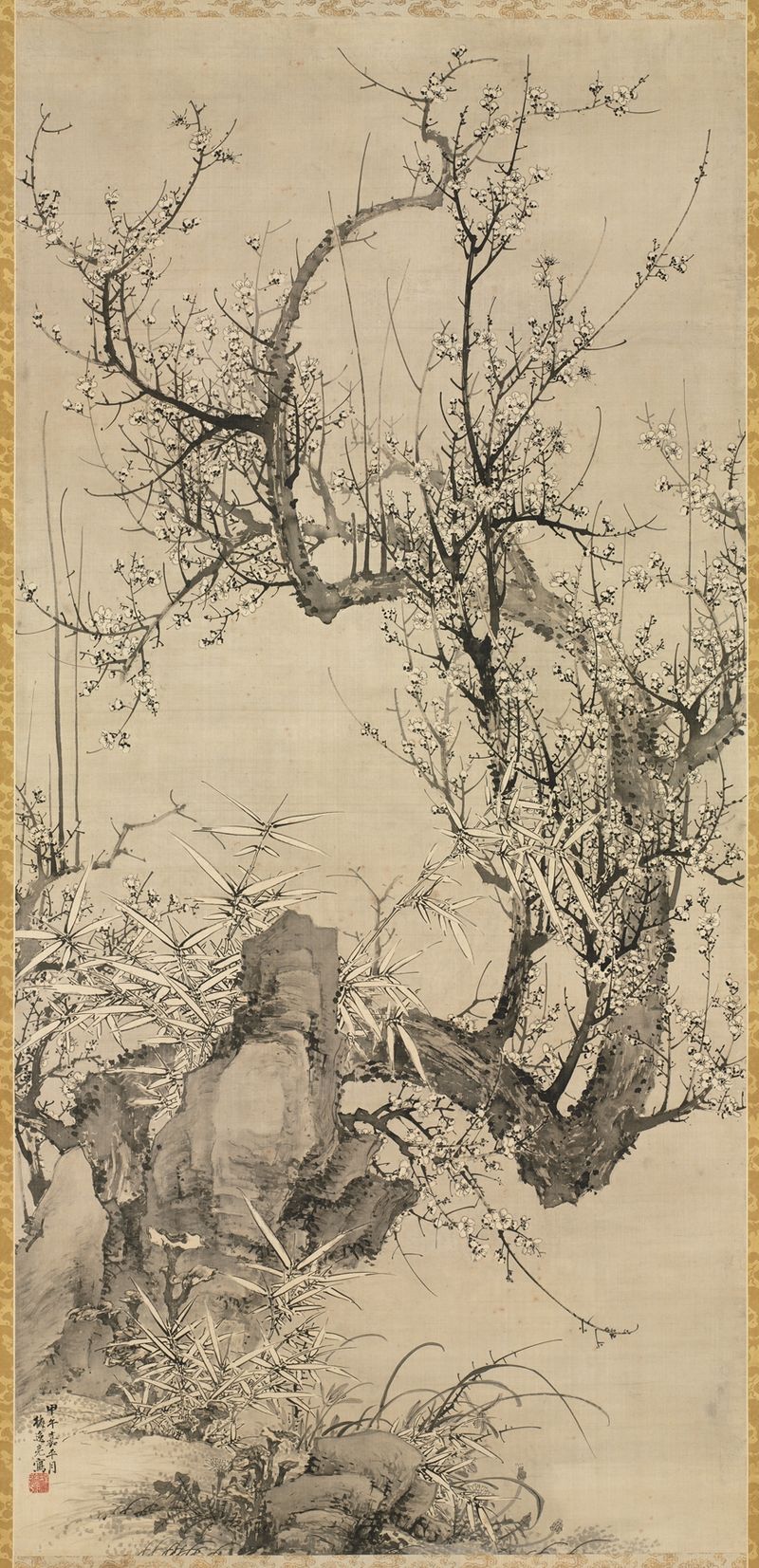
What secret hides in the quiet of the canvas? In The Shadow Dancers, rich hues whisper their own stories, inviting viewers into a world where color and emotion intertwine in an exquisite ballet. Focus on the interplay of vibrant greens and deep blues that dance across the surface, drawing your gaze to the delicate forms that move with an almost ethereal grace. Notice how the shadows deepen in the corners, creating a sense of intimacy as they cradle the figures, each one poised in a moment of suspended movement. The precision of brushwork reveals Baiitsu’s masterful technique, where every stroke contributes to the flowing rhythm of the dancers, rendering them both tangible and elusive. The composition speaks of contrasts—light and shadow, movement and stillness, joy and melancholy.
The fleeting expressions on the dancers' faces hint at stories untold, alluding to the fragility of human emotion under the weight of tradition. Each dancer is more than a figure; they embody the tension between societal expectations and the desire for personal freedom, a duality that resonates with the viewer on a deeper level. In the early 1800s, Yamamoto Baiitsu was navigating the complexities of a rapidly changing Japan, where traditional art forms were both celebrated and challenged. Created during a time of cultural introspection, this work reflects the artist’s deep engagement with the nuances of color and form, capturing a moment that resonates with the spirit of his era while also reaching beyond it to touch the universal.