The Sixth Day — History & Facts
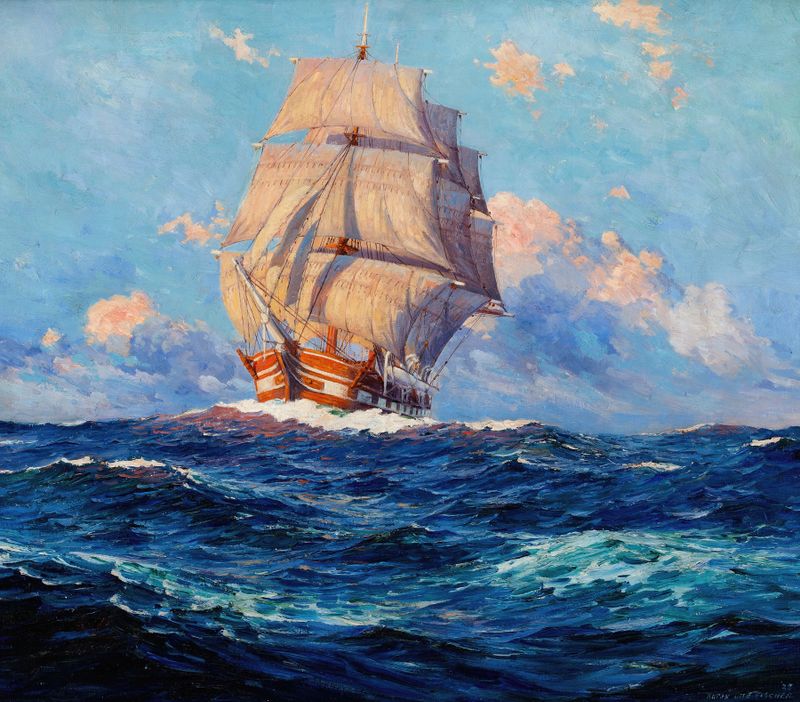
Can beauty exist without sorrow? In Anton Otto Fischer's The Sixth Day, the interplay of light and shadow evokes a poignant sense of wonder, inviting the viewer to ponder the coexistence of joy and melancholy in our lives. Look to the center of the composition where a radiant sun filters through billowy clouds, illuminating a serene landscape of lush greens and tranquil waters. The artist’s deft brushwork captures a fleeting moment of harmony, with gentle ripples disturbing the glassy surface of the lake. The vibrant palette creates a dreamlike quality, while the meticulous detailing of the foreground draws attention to the delicate balance between the natural world and the ethereal light that bathes it. Upon closer inspection, emotional tensions simmer beneath the surface.
The juxtaposition of serene beauty and potential turmoil is palpable, as the surrounding dark clouds loom ominously in the background, hinting at impermanence. Subtle contrasts between light and shadow suggest not only the fragility of existence but also the awe-inspiring power of nature to evoke deep reflection within us. In 1914, Fischer created this work during a period marked by great upheaval in the world, as the onset of World War I loomed on the horizon. Living in the United States, he was influenced by both the changing tides of modern art and the narratives of nature that surrounded him.
This painting reflects his ability to capture the sublime, offering a moment of escape and contemplation amid a chaotic era.