
The Southeast Prospect of Hampton Court, Herefordshire — History & Facts
In the delicate strokes of The Southeast Prospect of Hampton Court, a legacy unfurls, inviting us to explore the intricate dance between nature and architecture. It beckons the viewer to ponder how history is painted onto the canvas of existence. Begin by looking to the center of the composition, where the stately Hampton Court stands resolute against a backdrop of lush greenery. Notice how the sunlight cascades down upon the manicured gardens, igniting a symphony of greens and golds that breathe life into the scene.
The meticulous detailing of the building’s façade contrasts with the organic forms surrounding it, revealing Knyff’s keen eye for balance between the structured and the natural. As your gaze wanders, take in the winding paths that suggest movement and exploration, entwined with subtle shadows that hint at the passage of time. The stillness of the architecture juxtaposed with the vibrancy of the foliage evokes a sense of harmony, while the distant hills serve as a reminder of both the vastness of nature and the fleeting nature of human endeavors. Here, Knyff illuminates the tension between permanence and transience, capturing a moment that transcends its own era. Leonard Knyff likely created this piece in the late 17th century, a time when the Baroque style was flourishing across Europe.
Working in England, Knyff was immersed in the landscape tradition, responding to the growing interest in topographical views that celebrated both nature and manmade structures. This painting reflects not only his artistic evolution but also the changing perceptions of land ownership and the significance of noble estates in a period marked by transformation and legacy.
More Artworks by Leonard Knyff
Browse all →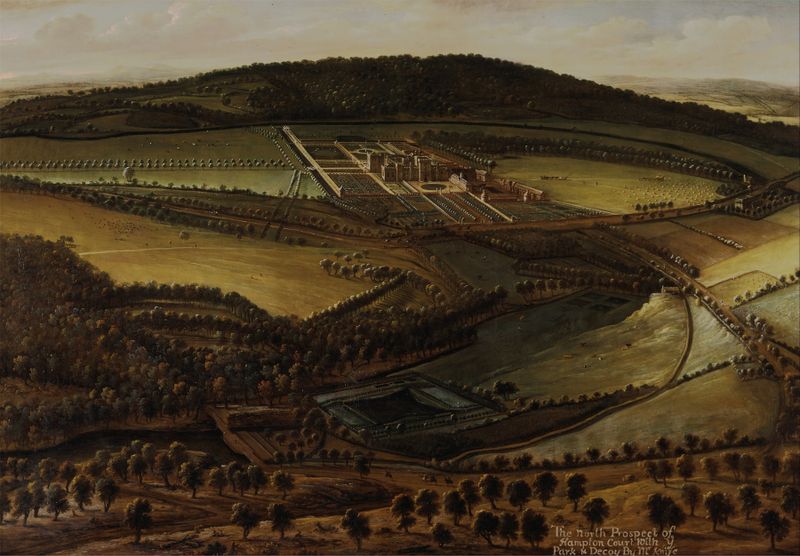
More Architecture Art
Browse all →
The statue of Liberty
Frédéric Auguste Bartholdi

View of Houses in Delft, Known as ‘The Little Street’
Johannes Vermeer

View of Houses in Delft, Known as ‘The Little Street’
Johannes Vermeer

The Cathedral in Rouen. The portal, Grey Weather
Claude Monet

The yellow house
Vincent van Gogh

The Church in Auvers-sur-Oise, View from the Chevet
Vincent van Gogh