The Spuiwater And Delftsche Vaart, Rotterdam — History & Facts
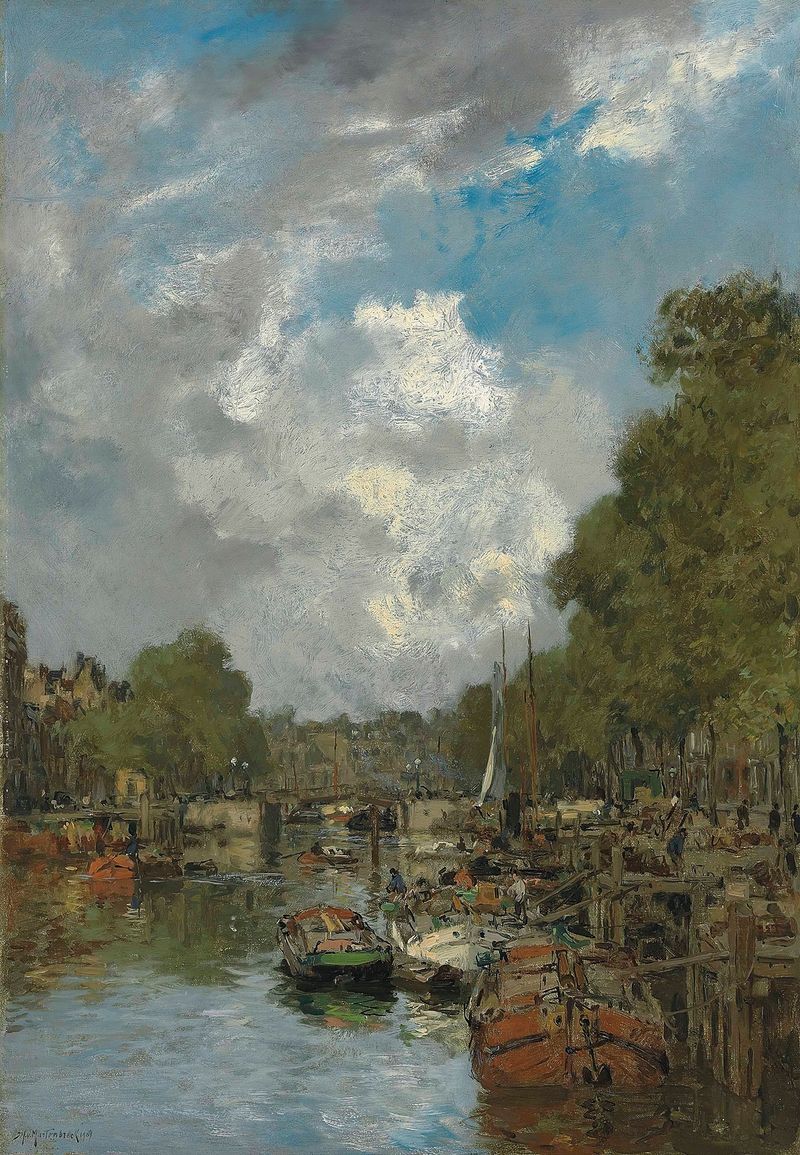
What if beauty was never meant to be finished? In a world defined by uncertainty, the vibrant brushstrokes of this masterpiece invite contemplation on the fleeting nature of perfection. First, look to the left, where the shimmering waters of the Spuiwater reflect the hues of a dusky sky, blending soft oranges and deep blues. Notice how the painter's technique captures the fluidity of water, each stroke lending movement to the scene. The composition draws your eye along the river, leading to the distant boats gently bobbing, while a subtle interplay of light and shadow enhances the tranquil ambiance. Digging deeper, you might find a contrast between the serene water and the solid architecture lining its banks.
The sturdy structures symbolize permanence against the backdrop of an ever-shifting landscape. This duality echoes the artist's own life during a tumultuous period, where beauty seemed lost yet somehow persisted amidst the chaos. Each brushstroke resonates with an emotional undercurrent, suggesting that even moments of stillness can harbor a complex narrative. In 1942, Johan Hendrik Van Mastenbroek painted this piece while living in occupied Netherlands.
This period was marked by hardship and artistic struggle, as many sought to find solace and meaning through their art. The use of vibrant colors and dynamic compositions reflects a departure from the somber tones of earlier works, signifying a yearning for hope and resilience during challenging times.