
The Storm — History & Facts
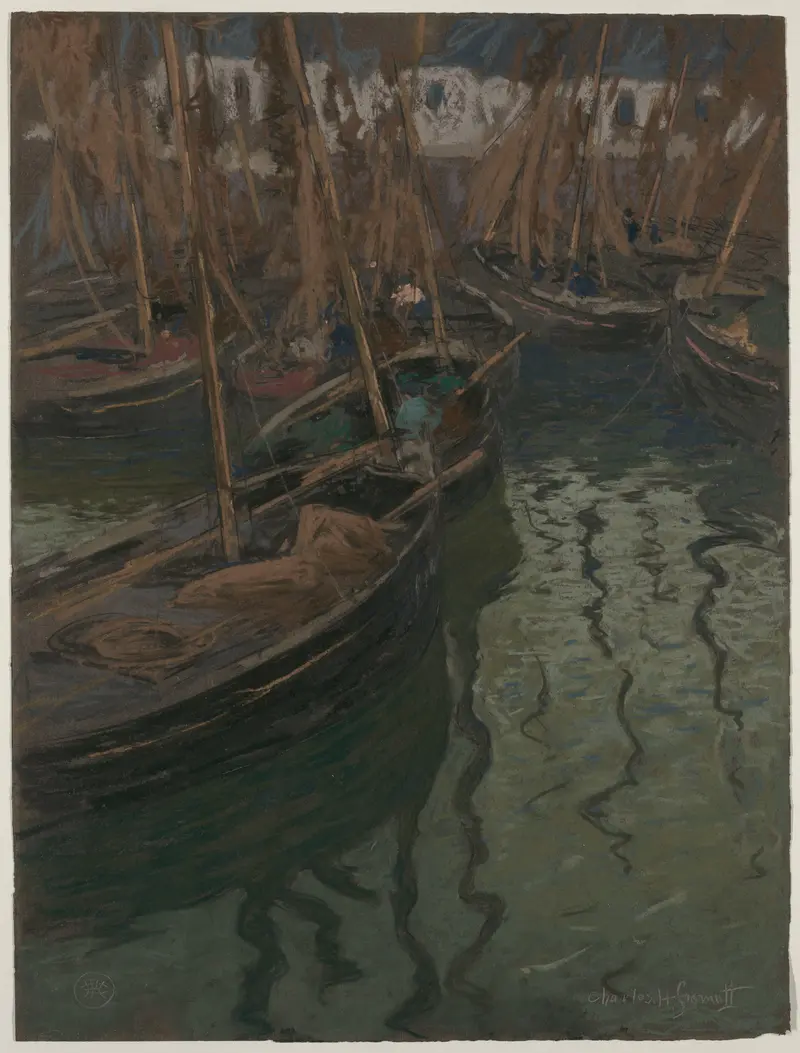
Could a single brushstroke hold eternity? In The Storm, Charles Fromuth encapsulates the fleeting ecstasy of nature, inviting viewers to lose themselves in its tempestuous beauty. Focus first on the vibrant blues and grays swirling across the canvas; they pulse with an energy that captures the essence of chaos. Notice how the painter has used bold, expressive strokes to delineate the tumultuous sky, creating a dramatic contrast with the serene horizon. The lighter hues at the bottom suggest a glimmer of hope amidst the impending turmoil, while the dark clouds seem to coil and twist as if alive, drawing the eye upward into the storm's embrace. The interplay between light and shadow conveys tension – a struggle between tranquility and ferocity.
Look closely at the jagged edges where the clouds meet the light; they reveal the raw power of nature, yet also hint at a deeper connection to the sublime. This duality speaks to human emotions, oscillating between fear and exhilaration, suggesting that even within chaos, there exists a sense of awe and wonder. In 1908, Fromuth was immersed in the vibrant art scene of Pennsylvania, where he painted The Storm. His dedication to capturing atmospheric effects was influenced by both Impressionism and the emerging modernist movements.
At this time, artists were beginning to break from traditional forms, allowing for greater expression of emotion and perception, mirroring the dynamic energy of the world around them.
More Artworks by Charles Fromuth
More Landscape Art

The Starry Night
Vincent van Gogh

View of Delft
Johannes Vermeer

Water Lilies
Claude Monet

The Grand Canal, Venice, looking north-west from the Ca' Corner to the Ca' Contarini degli Scrigni, with the campanile of Santa Maria della Carità
Canaletto

Windsor Castle
Canaletto

The Grand Canal looking North-East from the Palazzo Dolfin-Manin to the Rialto Bridge
Canaletto