The storm — History & Facts
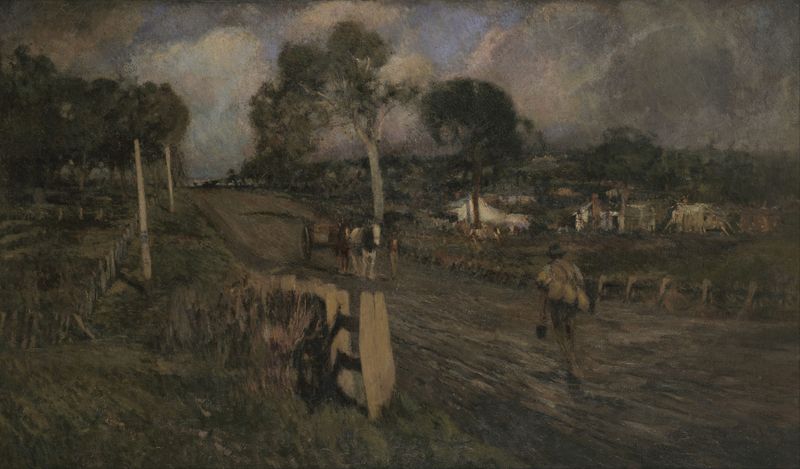
In Walter Withers’ The Storm, the tension between chaos and serenity emerges, inviting contemplation on the nature of rebirth that follows tumult. Focus on the swirling clouds that dominate the upper section of the canvas, alive with deep blues and grays. Their tumultuous movement encapsulates a tempest ready to unleash its fury. The horizon, painted with softer hues of gold and amber, hints at the dawn of a new day, contrasting the dark drama above.
The trees, bending under the weight of the wind, speak to resilience amidst nature’s fury. Each brushstroke, whether frenzied or gentle, conveys a psychological dance between turmoil and the promise of renewal. Delve deeper, and you'll find the emotional tension residing in the interplay of light and shadow. The storm clouds threaten, yet the golden light at the horizon—the rebirth—whispers of hope and restoration.
The trees, while seemingly fragile, embody strength, capturing the viewer's attention to the delicate balance between vulnerability and endurance. Together, these elements reflect the dual nature of existence, where beauty often emerges from struggle. In 1896, Withers painted this work during a pivotal time in the Australian art scene, marked by an increasing appreciation for the Impressionist movement. Living in Melbourne, he engaged with the evolving artistic dialogues that sought to capture the essence of the Australian landscape.
This period was marked by a quest for identity in art, as artists like Withers explored themes of nature’s power and beauty, laying the groundwork for future generations.