The Stubble Field — History & Facts
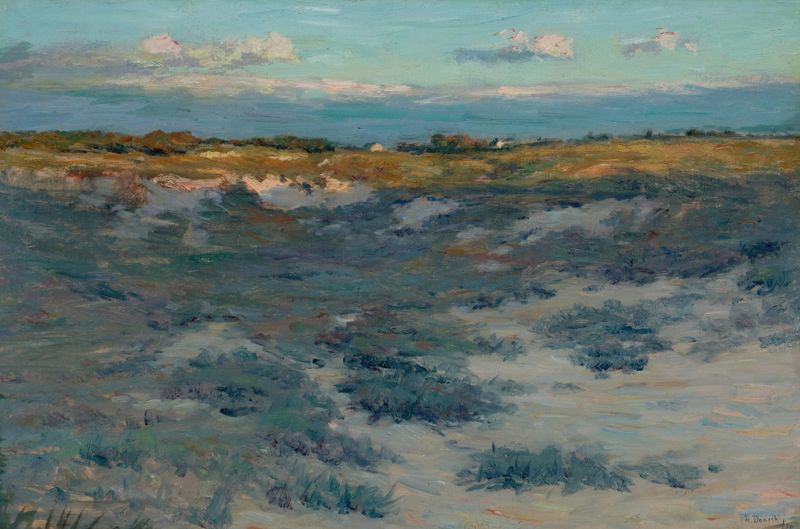
In the stillness of the stubble field, a narrative unfolds, cloaked in the quiet aftermath of harvest. The remnants of golden wheat lie scattered, whispering tales of labor and loss, while ominous shadows loom over the landscape, hinting at an unseen violence that has just taken place or is yet to come. Focus first on the textured surface, where the strokes of paint create a tactile quality that invites the viewer to run their fingers across the canvas. Notice the way the muted browns and yellows interplay with patches of deep green, echoing the earth's struggle to recover.
The horizon draws the eye with its gentle sweep, while a sky heavy with gray clouds seems to press down upon the scene, suffusing it with an air of unease. Each brushstroke serves not only to depict the field but also to suggest an emotional weight that transcends the physical. Beneath this pastoral facade lies a tension between life and death, creation and destruction. The field, once vibrant with growth, now stands as a stark reminder of the cycle of nature, evoking both a sense of peace and foreboding.
The emptiness of the landscape can be perceived as a canvas of lost potential, where stories of toil are muted by the silence of what remains, hinting at a violence not immediately visible but felt deeply within the viewer's conscience. Henry Golden Dearth painted this piece around 1909, during a time when agricultural landscapes were becoming a favored subject for artists seeking to capture the American experience. Living in a rapidly industrializing world, he found solace and significance in the rural environment of New England, where the struggle of man against nature was a poignant reflection of the societal changes surrounding him. This artwork encapsulates a moment in the artist's life, marked by a desire to immortalize the fleeting beauty of the land while acknowledging the darker undercurrents woven through its fabric.