
The Temple at Dendur, Nubia — History & Facts
Where does light end, and longing begin? In the stillness of time, a moment of rebirth unfolds—a glorious echo of ancient grandeur captured in vivid strokes and soft hues. Look to the right at the majestic columns that rise like sentinels, each adorned with hieroglyphics whispering secrets of the past. Notice how the warm glow of the sun filters through the archways, illuminating the stone with a golden hue that brings it to life. The serene water in the foreground reflects the structure, creating a mirror that blurs the line between reality and memory, inviting the viewer into a serene dialogue between the now and the eternal. Hidden within this frame lies an emotional tension between permanence and transience.
The grandeur of the temple suggests an unyielding strength, yet the gentle ripples of the water remind us that all things are fleeting. The vivid colors contrasting against the muted earth tones evoke the idea of cultural rebirth, hinting at the stories and lives intertwined with this sanctuary. Each detail, from the intricate carvings to the play of light, pulls the viewer into a deeper contemplation of history and identity. In 1848, this piece emerged from the hands of a celebrated artist during a transformative period in art, marked by a growing fascination with ancient civilizations.
Living in London, the artist was influenced by the Romantic movement, which emphasized emotion and the sublime beauty of history. This work reflects both his travels through Egypt and a broader artistic yearning to capture the essence of lost worlds, as the West began to rediscover the richness of ancient cultures.
More Artworks by David Roberts
Browse all →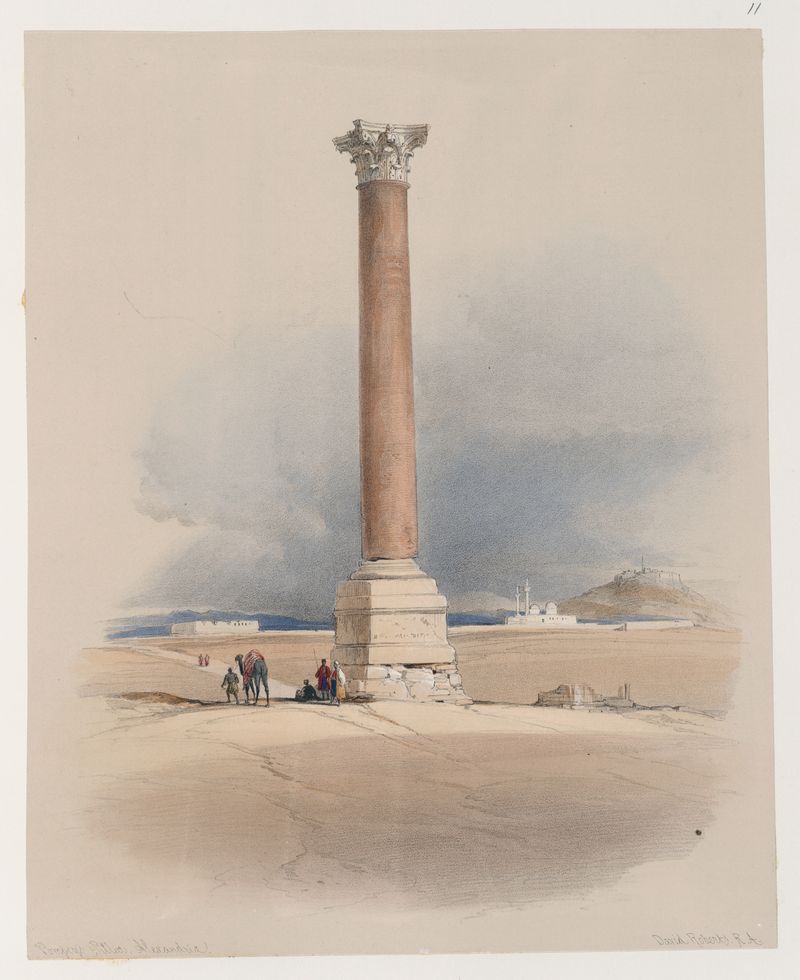
Pompey’s Pillar, Alexandria.
David Roberts

Approach to the Fortress of Ibrim.
David Roberts

Karnac [Karnak]. Nov. 29th, 1838.
David Roberts
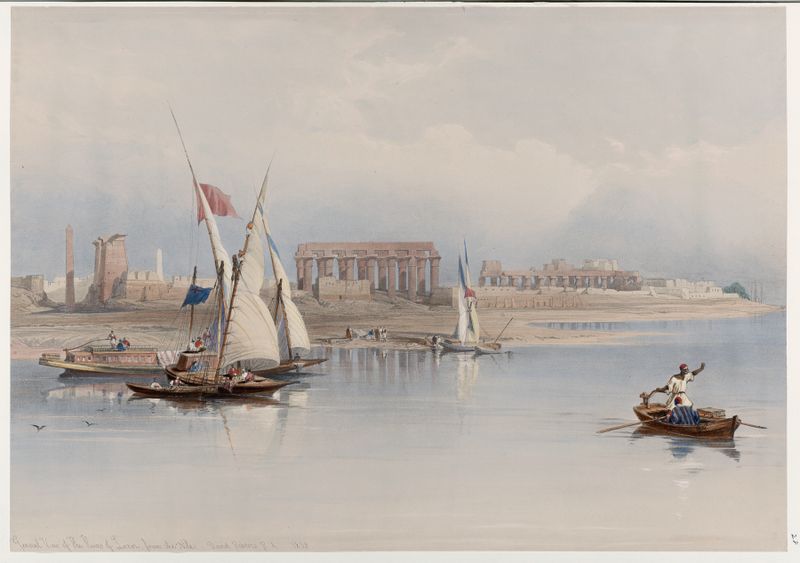
General view of the ruins of Luxor, from the Nile. 1838.
David Roberts

Statues of Memnon at Thebes, during the inundation.
David Roberts

Entrance to the tombs of the kings of Thebes. Bab-el-Malouk [Bîbân al-Mulûk].
David Roberts

The Fortress of the Alhambra, Granada
David Roberts
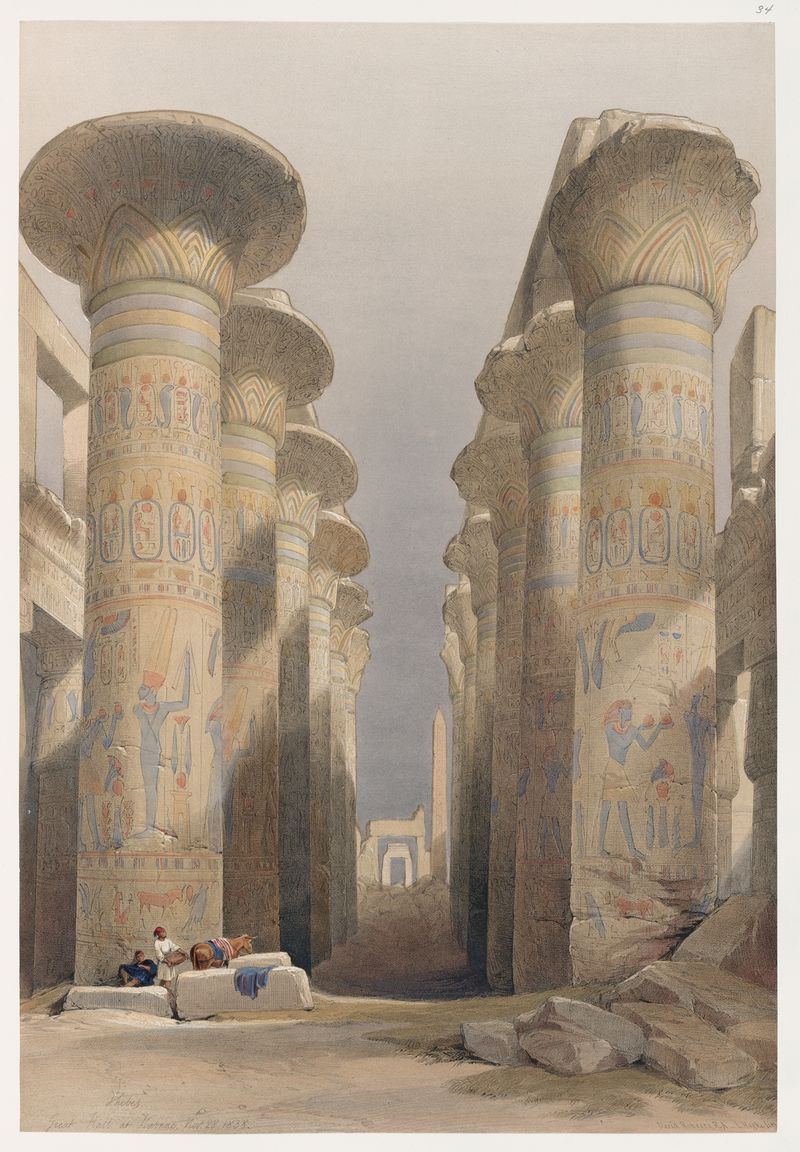
Thebes. Great Hall at Karnak. Nov. 28, 1838.
David Roberts
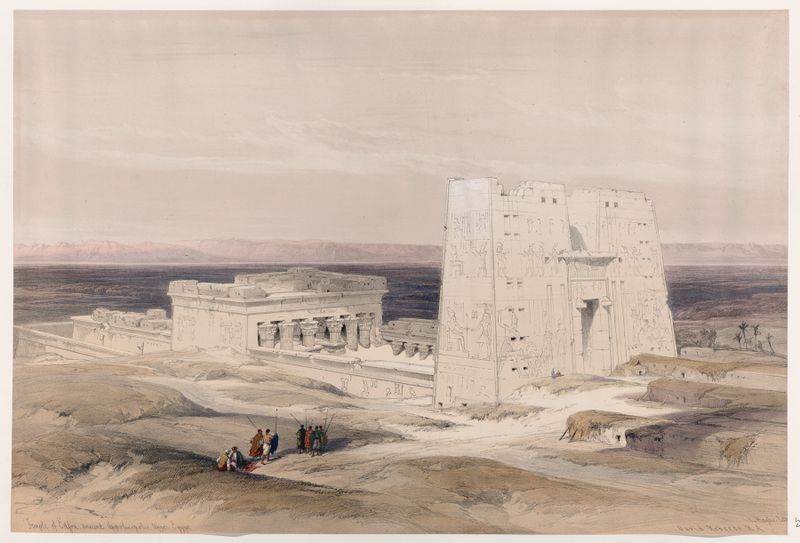
Temple of Edfou [Idfû], ancient Appolinopolis, Upper Egypt.
David Roberts

Temple of Kalabshee [Kalabsha, Kalâbishah], Nubia. Nov. 1838.
David Roberts
More Architecture Art
Browse all →
The statue of Liberty
Frédéric Auguste Bartholdi

View of Houses in Delft, Known as ‘The Little Street’
Johannes Vermeer

View of Houses in Delft, Known as ‘The Little Street’
Johannes Vermeer

The Cathedral in Rouen. The portal, Grey Weather
Claude Monet

The yellow house
Vincent van Gogh

The Church in Auvers-sur-Oise, View from the Chevet
Vincent van Gogh