
The Temple of Baalbec — History & Facts
Did the painter know this moment would outlive them? Captured in a single frame is a vision of grandeur and ruin, a testament to both the madness of time and the resilience of beauty. Look to the left at the towering columns that stand almost defiantly against the blue sky. Their intricate carvings tell stories of a past civilization, etched in stone and shadows. The warm hues of ochre and burnt sienna contrast vividly with the cool blues of the sky, highlighting the interplay of light and shadow across the ruins.
Each brushstroke breathes life into the ancient stones, inviting viewers to trace their fingers along the weathered surfaces, imagining the hands that once fashioned them. Yet, there’s an unsettling tension within this scene. The juxtaposition of the temple’s former glory against its current decay speaks to the madness of ambition and the inevitable passage of time. With every crumbling stone, one can sense the weight of history pressing in, as if the very structure mourns its lost worshippers.
The encroaching landscape hints at nature's reclamation, a reminder that all empires falter, and beauty, though fleeting, leaves a lasting imprint on the earth. In 1839, while traveling through the Middle East, David Roberts was captivated by the remains of ancient civilizations. This period marked a significant shift in European art, as the fascination with the East spurred a wave of romanticism and nostalgia. The artist's journey reflected a quest for understanding and documentation, as Europe grappled with its own identity amid industrial expansion and colonial pursuits.
The Temple of Baalbec stands as a resolute symbol of that pursuit, forever echoing the dialogues of history.
More Artworks by David Roberts
Browse all →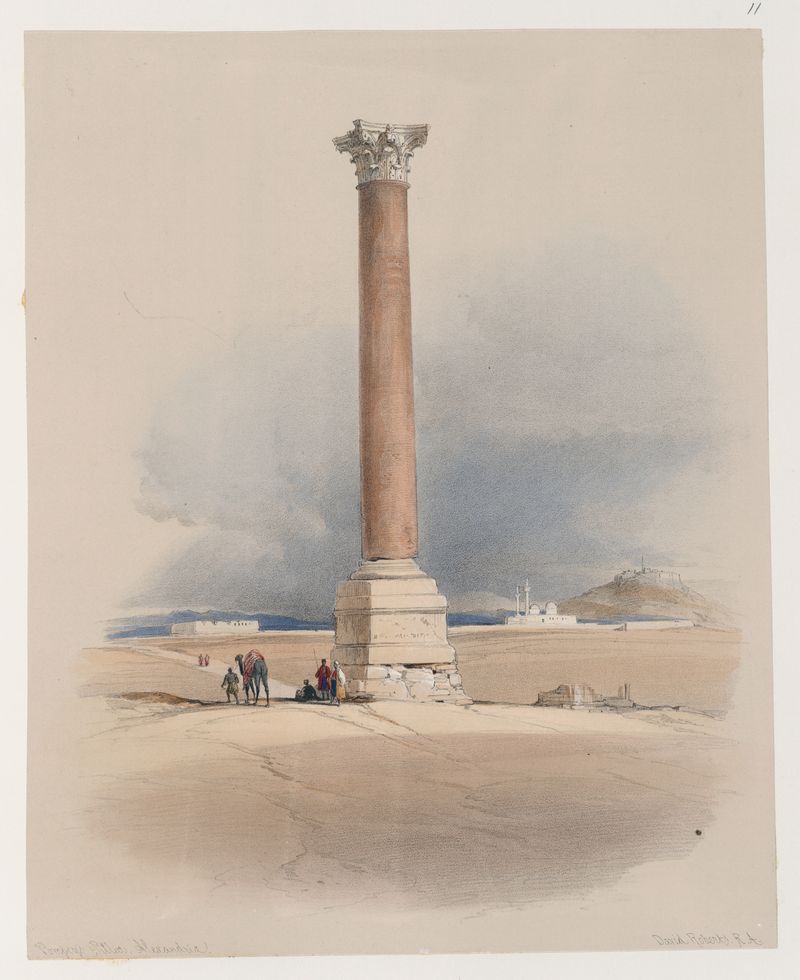
Pompey’s Pillar, Alexandria.
David Roberts

Approach to the Fortress of Ibrim.
David Roberts

Karnac [Karnak]. Nov. 29th, 1838.
David Roberts
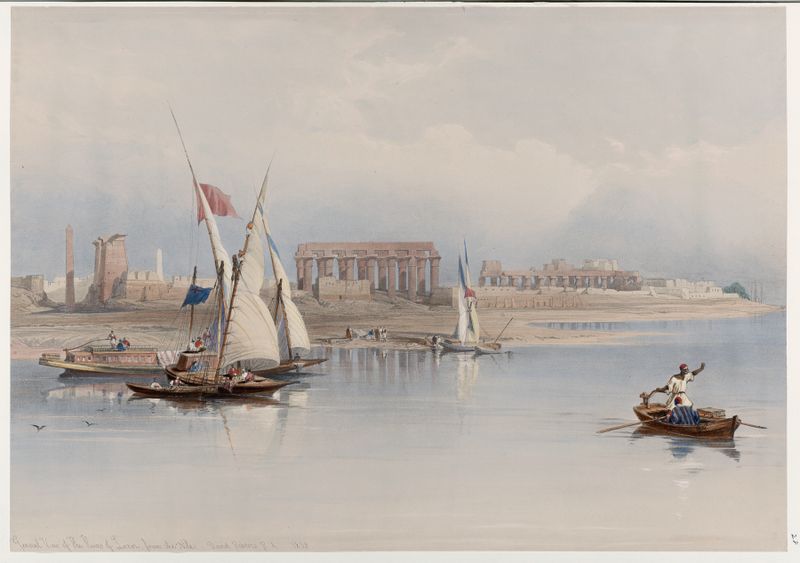
General view of the ruins of Luxor, from the Nile. 1838.
David Roberts

Statues of Memnon at Thebes, during the inundation.
David Roberts

Entrance to the tombs of the kings of Thebes. Bab-el-Malouk [Bîbân al-Mulûk].
David Roberts

The Fortress of the Alhambra, Granada
David Roberts
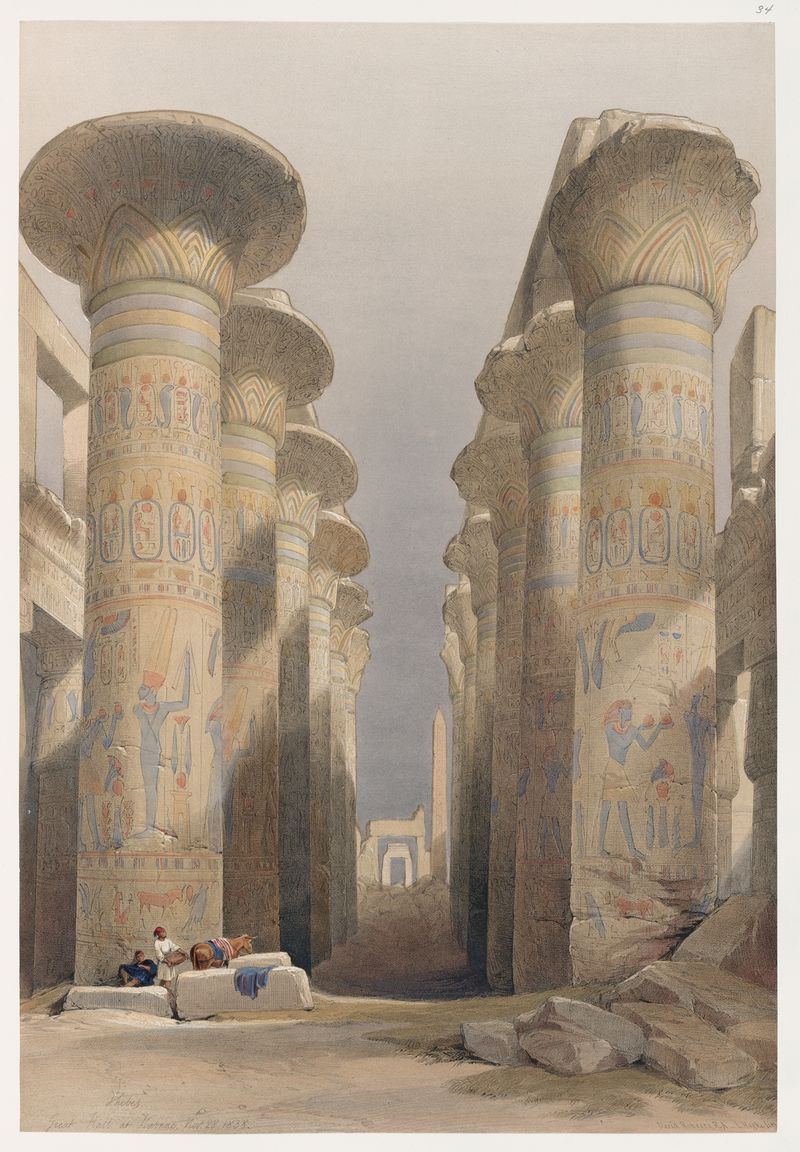
Thebes. Great Hall at Karnak. Nov. 28, 1838.
David Roberts
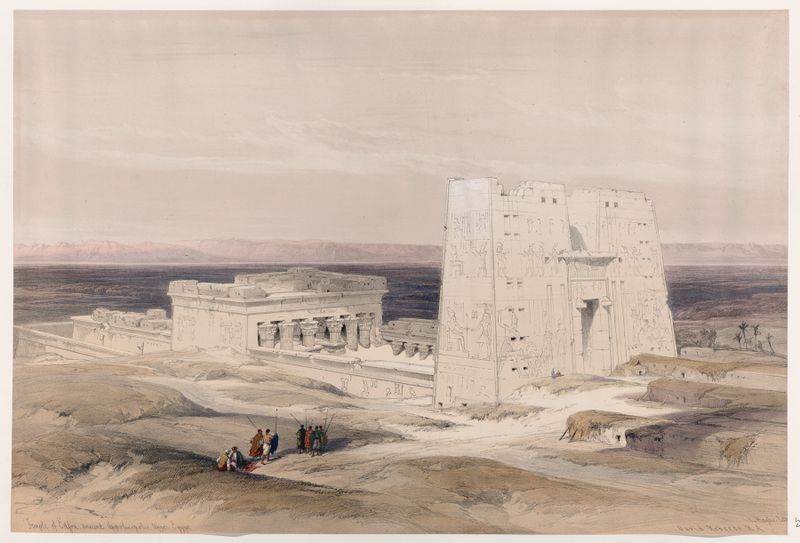
Temple of Edfou [Idfû], ancient Appolinopolis, Upper Egypt.
David Roberts

Temple of Kalabshee [Kalabsha, Kalâbishah], Nubia. Nov. 1838.
David Roberts
More Architecture Art
Browse all →
The statue of Liberty
Frédéric Auguste Bartholdi

View of Houses in Delft, Known as ‘The Little Street’
Johannes Vermeer

View of Houses in Delft, Known as ‘The Little Street’
Johannes Vermeer

The Cathedral in Rouen. The portal, Grey Weather
Claude Monet

The yellow house
Vincent van Gogh

The Church in Auvers-sur-Oise, View from the Chevet
Vincent van Gogh