The Thirties — History & Facts
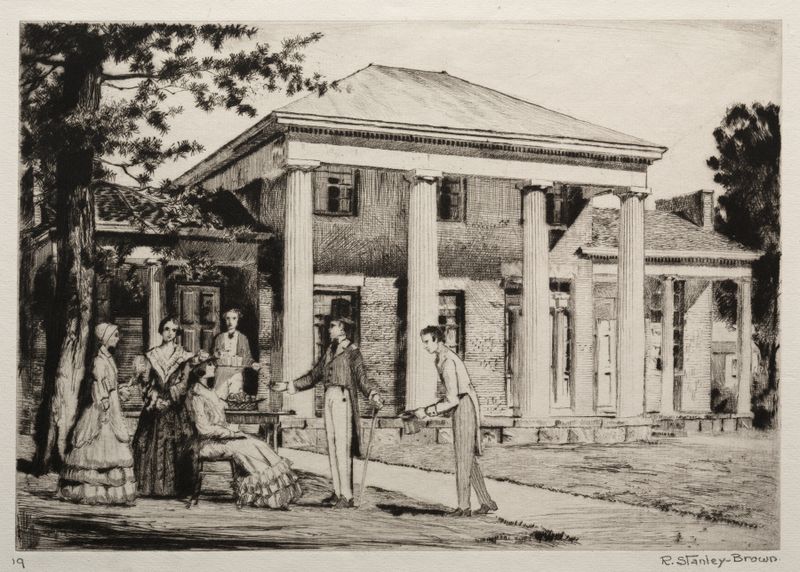
Is this a mirror — or a memory? In The Thirties, grief hangs like a heavy fog, softening the edges of reality and revealing the haunting beauty of what was lost. Look to the center of the canvas where muted tones of gray and sepia swirl together, evoking a sense of nostalgia. The hazy figures, almost ghostly, drift between the shadows, their forms blending into the background. Notice how the soft light cascades down, creating an ethereal glow that seems to illuminate both the sorrow and the solace found in remembrance, inviting the viewer to linger in a moment suspended in time. The delicate interplay of light and shadow suggests a deeper emotional landscape, one where longing and loss intertwine.
The figures, shrouded in ambiguity, serve as vessels for collective memory, embodying the unresolved grief that lingers in the air. Each brushstroke captures not just a visual representation but the heavy-hearted weight of history, reflecting on personal and shared moments of joy now tinged with sadness, a reminder of the passing of time. Created during a period of profound change, The Thirties emerged from the hands of Rudolph Stanley-Brown somewhere between 1909 and 1925. This was a time marked by upheaval in the art world, where modernism began to challenge traditional forms.
As he grappled with his own experiences—both personal losses and the broader societal shifts—Stanley-Brown sought to articulate the complexities of memory and emotion, bridging the gap between the past and the present in his evocative work.