
The town hall in Veere — History & Facts
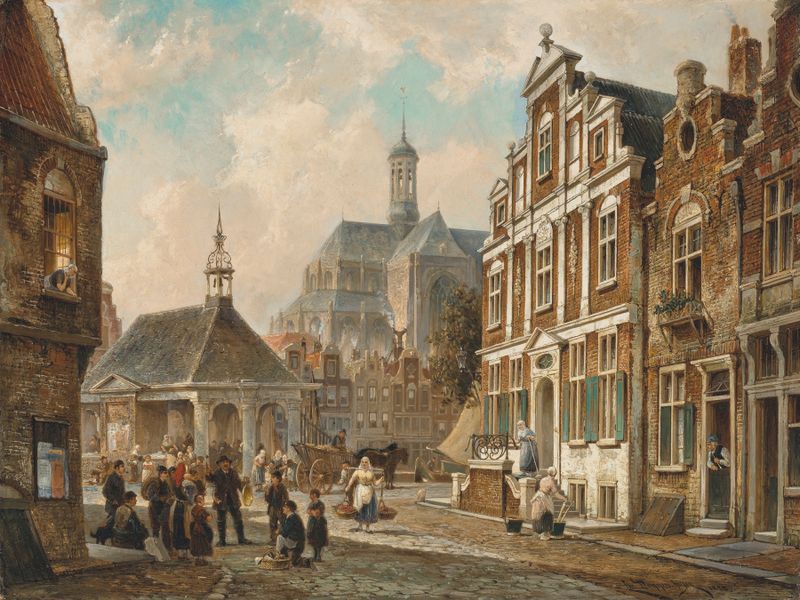
Focus first on the vibrant hues that dominate the canvas. Look to the rich greens that envelop the town hall, contrasting sharply with the soft blues of the sky. Notice how the play of light brings the building to life, wrapping it in a warm embrace.
The brushstrokes create a rhythm, leading your eye around the composition, from the textured façade of the town hall to the inviting glimmers reflected in the nearby water. Delve deeper and you’ll find a dance of contrasts in this piece. The solid, imposing architecture of the town hall stands steadfast against the fluidity of the sky and water, symbolizing the interplay between permanence and transience. The reflection in the water not only mirrors the structure but also suggests a duality—what is real and what is ephemeral, inviting viewers to ponder the nature of existence itself.
The artist’s vibrant palette breathes life into the scene, evoking a sense of serene beauty amid the chaos of everyday life. In 1883, Cornelis Christiaan Dommelshuizen painted this work while living in the Netherlands, a period marked by a burgeoning interest in capturing the essence of place through color and light. Influenced by the Dutch landscape and the Impressionist movements making waves across Europe, he sought to encapsulate the charm of local architecture with a fresh perspective. This was a time of artistic exploration, where the boundaries of traditional representation were beginning to blur, allowing for a more expressive and emotive approach to the natural world.
More Artworks by Cornelis Christiaan Dommelshuizen
Browse all →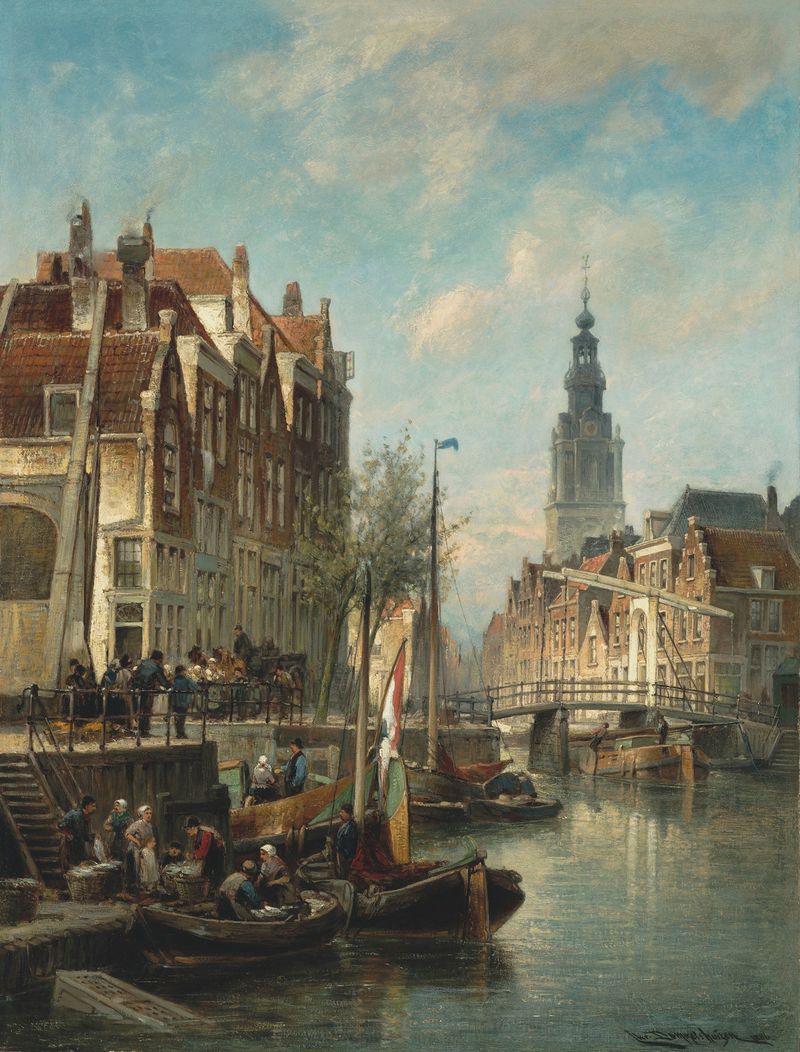
More Architecture Art
Browse all →
The statue of Liberty
Frédéric Auguste Bartholdi

View of Houses in Delft, Known as ‘The Little Street’
Johannes Vermeer

View of Houses in Delft, Known as ‘The Little Street’
Johannes Vermeer

The Cathedral in Rouen. The portal, Grey Weather
Claude Monet

The yellow house
Vincent van Gogh

The Church in Auvers-sur-Oise, View from the Chevet
Vincent van Gogh