
The Upper Rangitikei — History & Facts
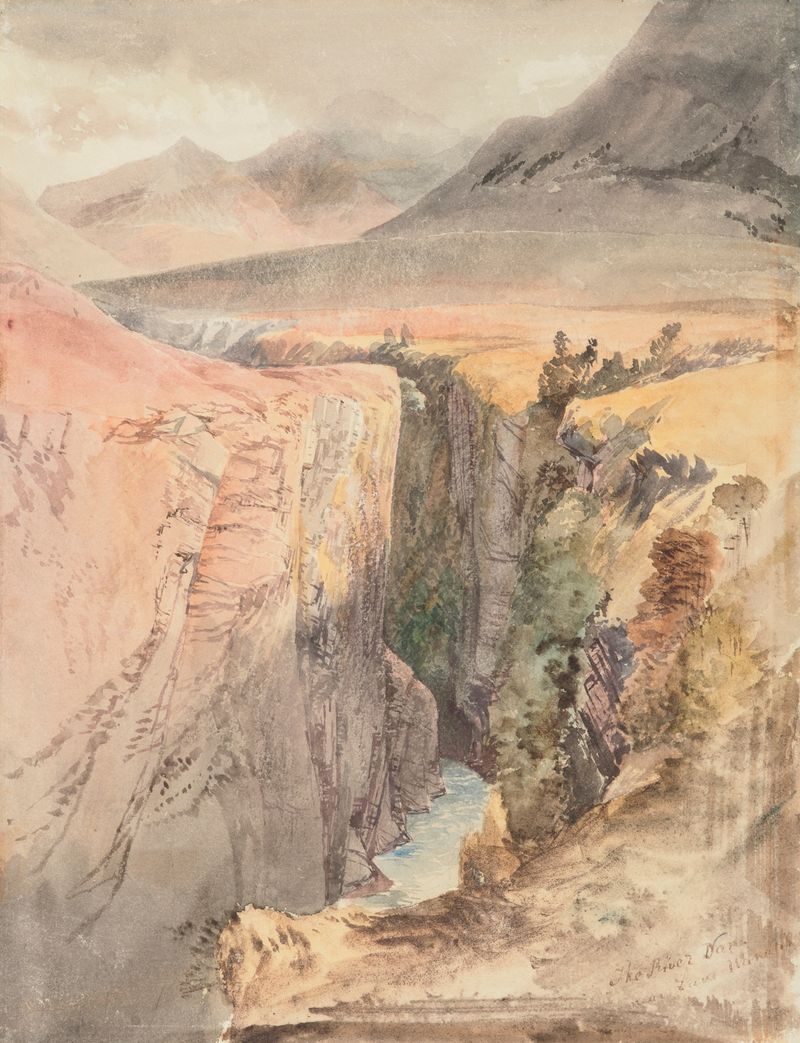
This paradox dances through the brushstrokes of an artist who captures the sublime beauty of nature entwined with an undercurrent of violence. Look to the foreground, where deep greens and browns dominate, reflecting the earth's raw power. Notice how the formidable mountains loom in the background, their jagged peaks kissed by an ethereal light that seems to break through the clouds. Chevalier’s sweeping brushwork invites your eye to traverse the landscape, pulling you into the expanse of the horizon.
The contrasting hues evoke a sense of both peace and foreboding, as if the beauty of this untouched land belies the tumultuous forces that shape it. Delve deeper into the painting's details, and you may find whispers of tension. The rushing river, a vibrant ribbon of blue, cuts through the scene, symbolizing both life and destruction. Each wave reflects a flickering light, mirroring the duality of nature's serenity and its violent undercurrents.
The scattered clouds, heavy and ominous, suggest change; they linger like a silent foreboding, hinting at nature's unpredictability and the potential for chaos lurking within the landscape's beauty. In 1868, Chevalier was navigating the complexities of life in Australia, where he had settled after leaving his native Europe. The art world was shifting, with the embrace of realism gaining momentum, and the artist sought to capture the unique essence of the Australian landscape while reflecting on broader existential themes. The Upper Rangitikei emerged during this period of exploration, revealing not only the awe-inspiring beauty of a new world but also the inherent violence intertwined within its making.
More Artworks by Nicholas Chevalier
Browse all →
Coast near Dunedin
Nicholas Chevalier
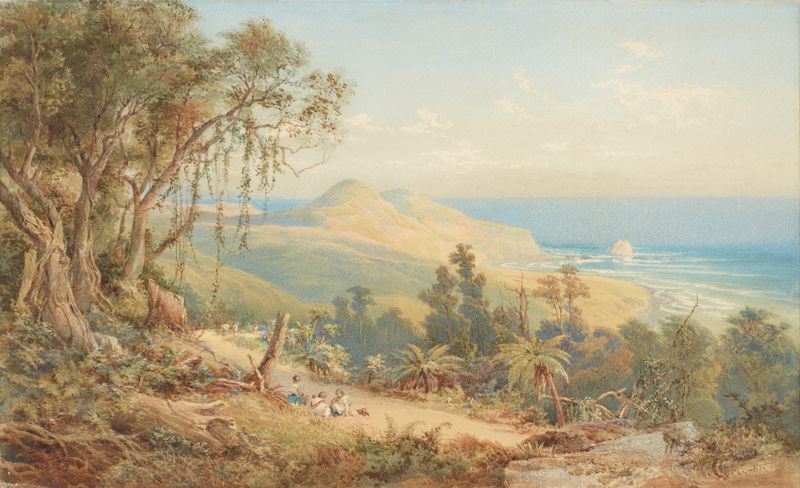
Sandfly Bay, Otago
Nicholas Chevalier

Buckler Burn at the head of Wakatipu Lake
Nicholas Chevalier

Mr MacKellar’s Station, the Waimea Plains, Southland
Nicholas Chevalier
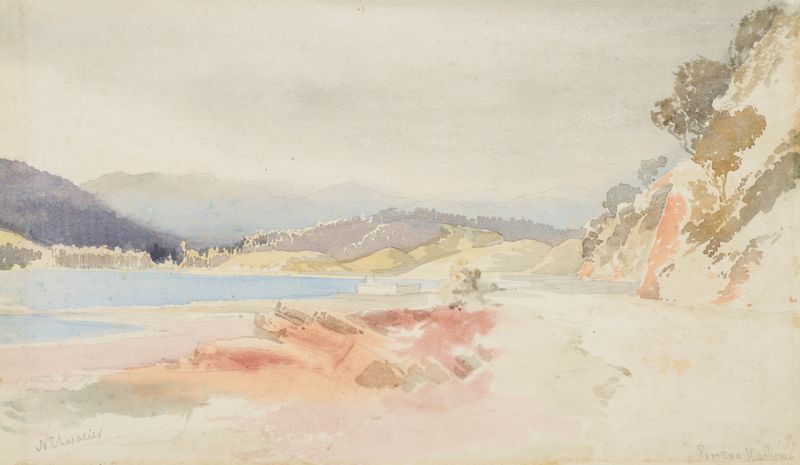
Porirua Harbour
Nicholas Chevalier
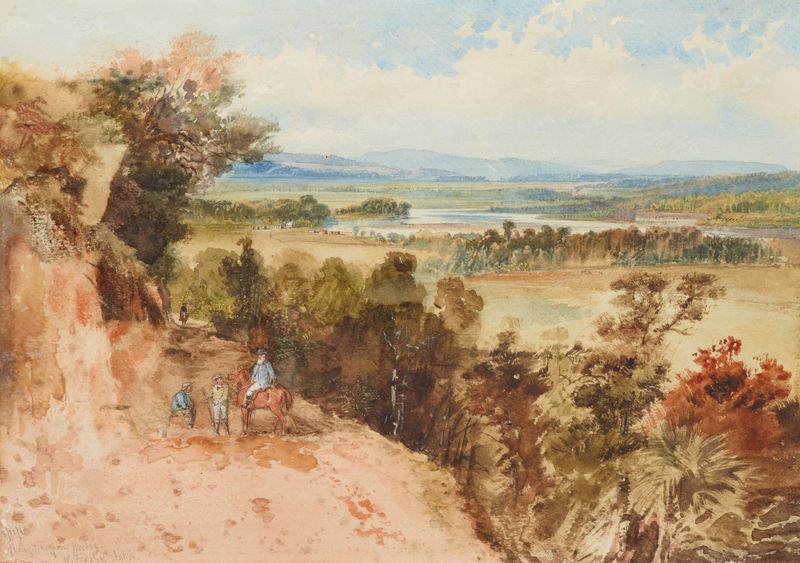
Rangitikei from Westoe, W. Fox Esq’s Station
Nicholas Chevalier
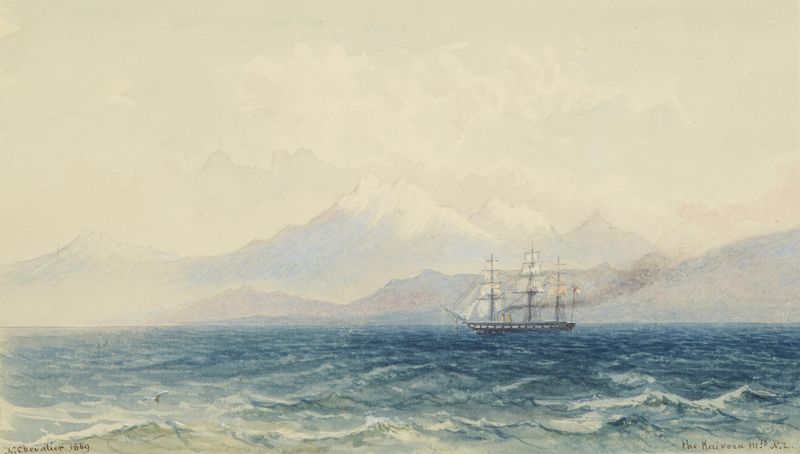
The Kaikoura Mountains, N.Z.
Nicholas Chevalier

Upper Hutt Valley
Nicholas Chevalier

The Tararua Mountains and the Waipoua River
Nicholas Chevalier
The River Von, near Lake Wakatipu
Nicholas Chevalier





