
The Vijverberg, The Hague, in Winter, with Prince Maurits and his Retinue in the Foreground — History & Facts
What secret hides in the quiet of the canvas? In a world where decay looms as an uninvited guest, Adam van Breen captures a moment suspended in time, unveiling the delicate balance between nature and human presence. Look to the swirling blues and whites of the icy pond, where the stillness echoes the chill of winter. The composition guides your gaze to the figures in the foreground, adorned in elaborate garments, their postures suggesting camaraderie yet shrouded in an unspoken tension. Notice how the muted palette of the landscape contrasts sharply with the vibrant colors of the noble retinue, highlighting their transient vitality against the looming decay of the season. The painting resonates with deeper reflections on time and mortality.
The lively figures seem to enjoy a moment of splendor, yet they are surrounded by the cold grip of winter, an inevitable reminder of nature’s cycles and the fragility of life. The frozen surface of the water serves as a metaphor for the passage of time, preserving both the beauty and the decay that comes with it. The distant trees, bare and stark against the sky, remind us that even the most vibrant moments will eventually succumb to winter’s chill. In 1618, the artist was working in The Hague, a period marked by political turbulence and the decline of the Dutch Golden Age.
Amidst this backdrop of shifting fortunes, van Breen sought to portray the nobility in their splendor, while simultaneously reflecting the inevitable decay that life encompasses. This work emerges as both a celebration and a contemplation, marrying the beauty of human achievement with the quiet truths of nature’s cycles.
More Artworks by Adam van Breen
Browse all →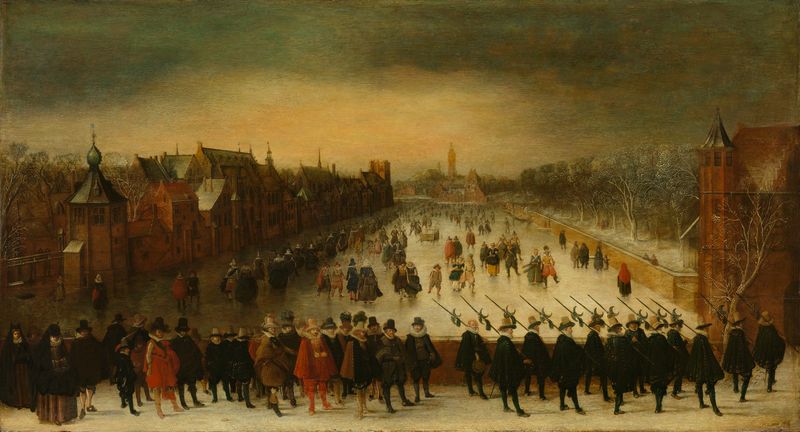
The Vijverberg, The Hague, in Winter, with Prince Maurits and his Retinue in the Foreground
Adam van Breen
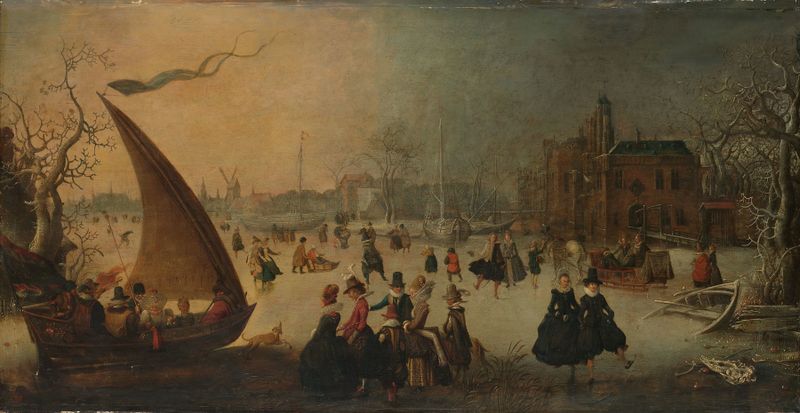
Landscape with frozen Canal, Skaters and an Ice-Boat
Adam van Breen
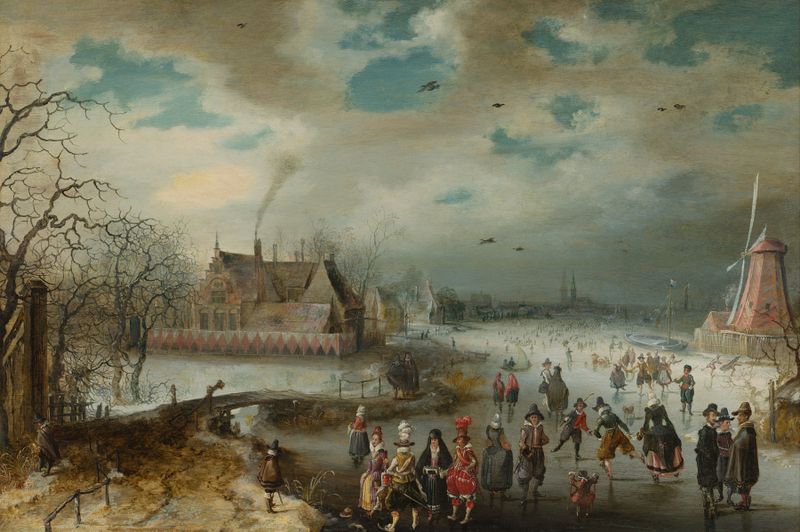
Skating on the Frozen Amstel River
Adam van Breen

Winter Landscape with Skaters
Adam van Breen

Paysage d’hiver avec patineurs et chasseurs, une ville dans le lointain
Adam van Breen
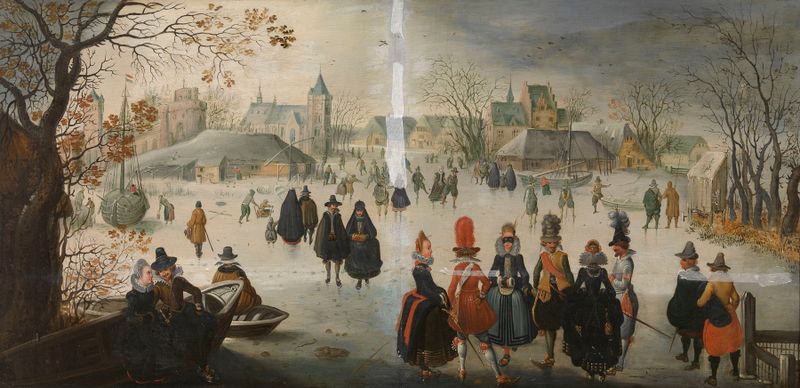
Landscape with Skaters
Adam van Breen





