The Village of Rosporden (Finistere) — History & Facts
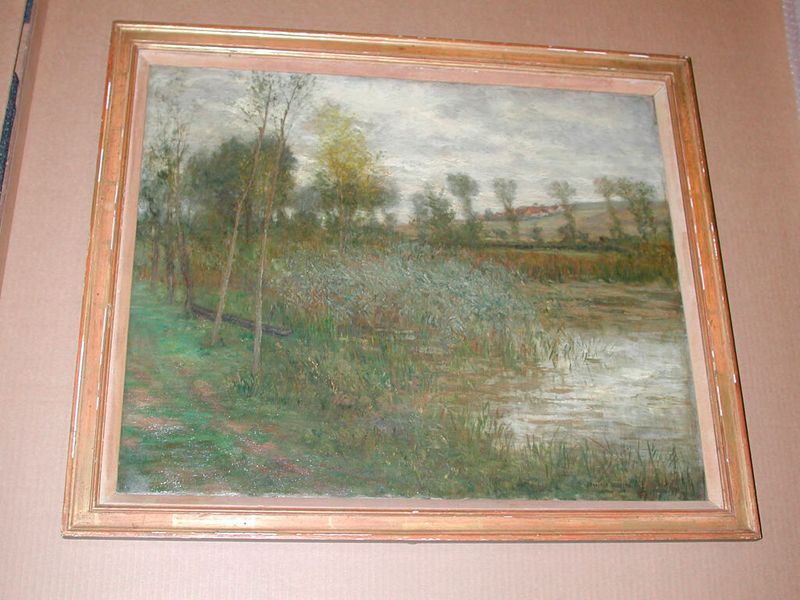
In the gentle embrace of a rural landscape, the essence of transcendence emerges, revealing a quiet, intimate dialogue between nature and spirit. Look to the left at the azure-hued sky, where soft clouds drift lazily, casting delicate shadows over the verdant fields below. Notice how Maufra’s brushwork conveys a sense of movement, with strokes that breathe life into the undulating hills. The palette is a medley of greens, blues, and earthy tones, effortlessly merging to create a harmonious atmosphere that invites contemplation.
The village, nestled in the foreground, stands as a testament to human existence against the vastness of nature, each house whispered into the fabric of the landscape. The interplay of light and shadow reveals deeper meanings within this seemingly tranquil scene. The distant mountains, partially shrouded in mist, suggest an unreachable ideal, evoking feelings of longing and aspiration. Meanwhile, the sturdy, quaint structures of the village anchor the viewer, symbolizing stability amidst the ephemeral beauty of the natural world.
This contrast between permanence and impermanence reflects the complexities of rural life, inviting one to ponder the balance between human endeavor and the eternal cycles of nature. In 1911, Maufra was immersed in the picturesque landscapes of Brittany, influenced by the Impressionist movement yet striving for a personal language. This period marked a growing interest in color theory and light, as artists sought to capture the fleeting qualities of their environments. It was a time of artistic exploration, where Maufra's work began to transcend mere representation, inviting viewers into a serene contemplation of the rural experience.