The Village of Sannois — History & Facts
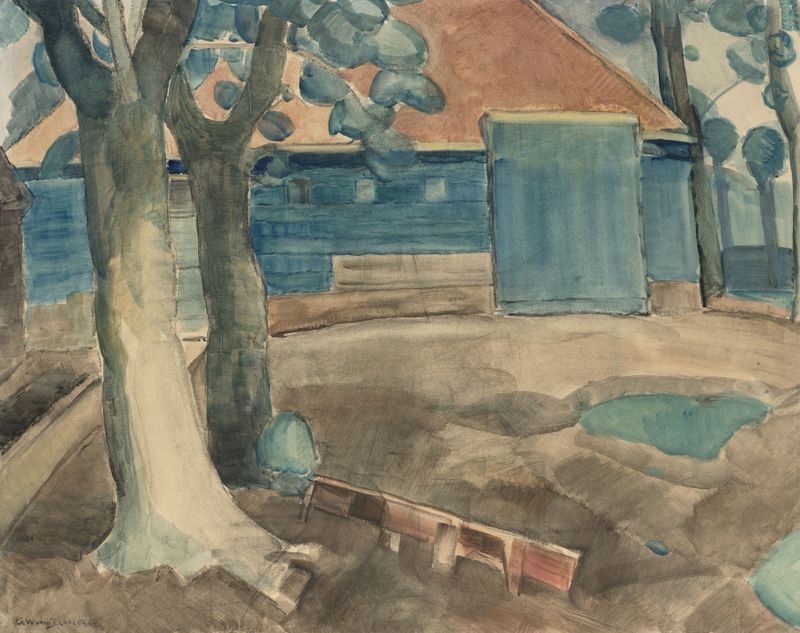
What secret hides in the quiet of the canvas? Each brushstroke whispers tales of divinity, beckoning the viewer to contemplate the sacredness of the ordinary. Focus on the gentle curve of the horizon in The Village of Sannois, where soft greens kiss the cerulean sky. The village, nestled comfortably amidst nature, radiates warmth as the sun descends, casting long shadows that stretch across the fields. Notice how the artist employs rich, earthy tones to evoke tranquility, while lively dabs of color illustrate the buildings’ textures, inviting you to explore this serene landscape with every glance. As you delve deeper, become aware of the contrast between the village’s stillness and the vibrant life that surrounds it.
The juxtaposition of shadow and light symbolizes the divine’s presence amid daily existence, suggesting a world where the sacred intertwines with the mundane. In the distance, the faint outline of mountains hints at an unreachable divinity, while the quietude of the village embodies humanity’s yearning for connection to something greater. Gerrit van Blaaderen painted this work between 1910 and 1914, during a period marked by an exploration of Post-Impressionism and a move toward more introspective landscapes. Living in the Netherlands, he was influenced by the changing art world that embraced new techniques and colors.
This painting reflects his desire to capture the beauty and spirituality hidden in everyday life, as artists began to seek deeper meanings beyond mere representation.