
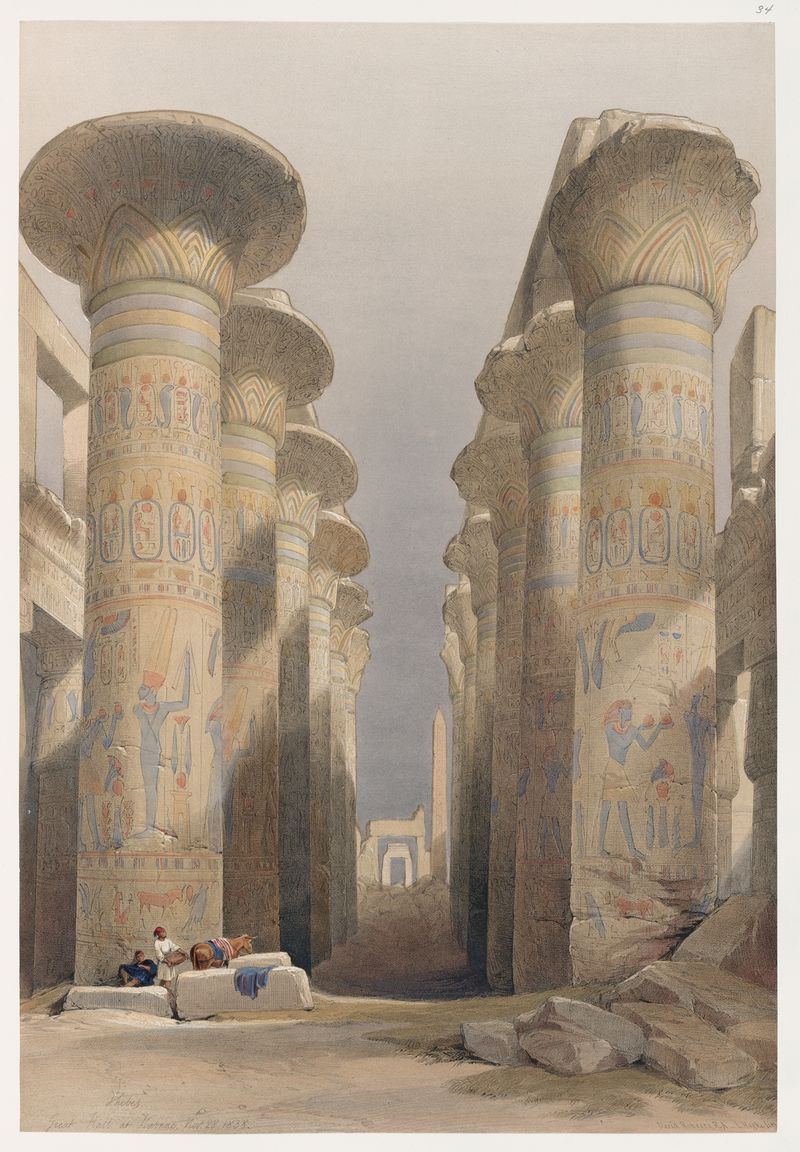
Thebes. Dec. 4th, 1838. — History & Facts
It holds the whispers of time, capturing not just an image but the echoes of civilization long past. In the stillness of created moments, the past intertwines seamlessly with the present, beckoning us to witness a story frozen yet alive. Look to the foreground where ancient ruins rise majestically under the golden hue of a setting sun. The finely painted details of crumbling columns and fragmented stones invite the eye to explore the texture of decay, contrasting sharply with the vivid blue of the sky.
Roberts employs a palette that melds earth tones with bursts of color, creating a vibrant scene that breathes life into the remnants of Thebes, suggesting both beauty and transience. Beneath the surface lies a deeper narrative of lost grandeur and the inexorable passage of time. The juxtaposition of light and shadow echoes the duality of existence — the vibrancy of life overshadowed by the inevitability of decay. Notice also the inclusion of distant figures, small yet significant, representing humanity's ongoing relationship with history and its monuments.
They serve as a poignant reminder of our fleeting presence against the backdrop of monumental time. David Roberts painted this work between 1846 and 1849 during his travels in Egypt, a period marked by his fascination with ancient cultures. As a prominent figure in the Romantic movement, he sought to capture the emotional resonance of landscapes and architecture. At that time, Europe was enthralled by Egyptology, and his works contributed to a growing interest in the ancient world, reflecting both personal exploration and broader cultural currents of discovery and nostalgia.
More Artworks by David Roberts
Browse all →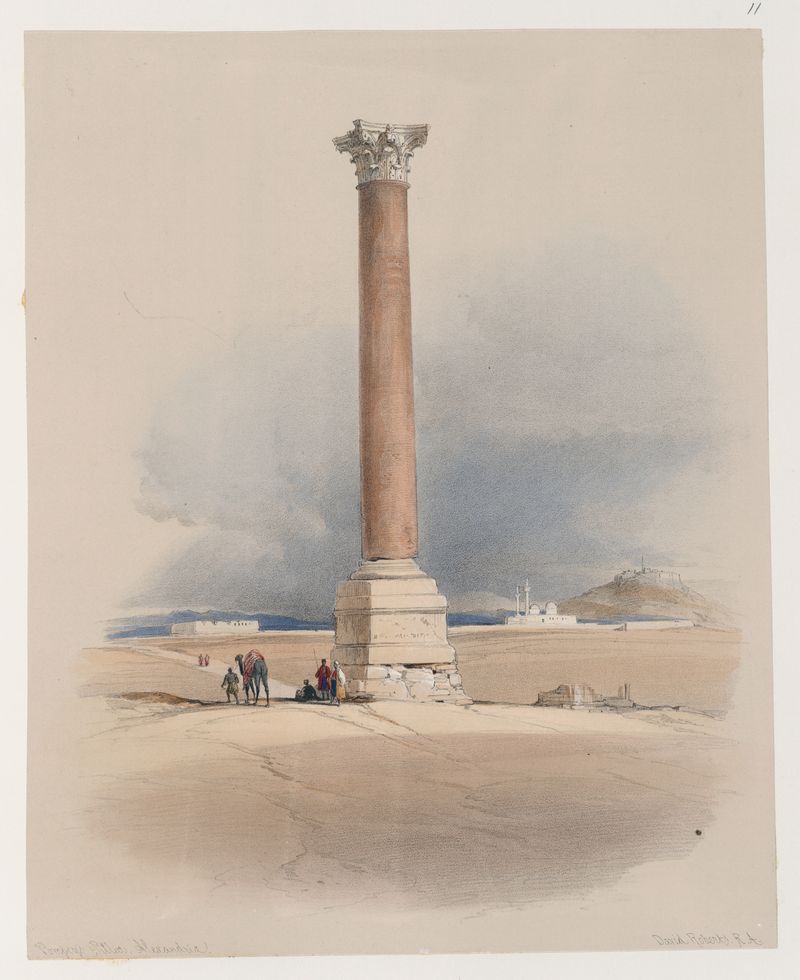
Pompey’s Pillar, Alexandria.
David Roberts

Approach to the Fortress of Ibrim.
David Roberts

Karnac [Karnak]. Nov. 29th, 1838.
David Roberts
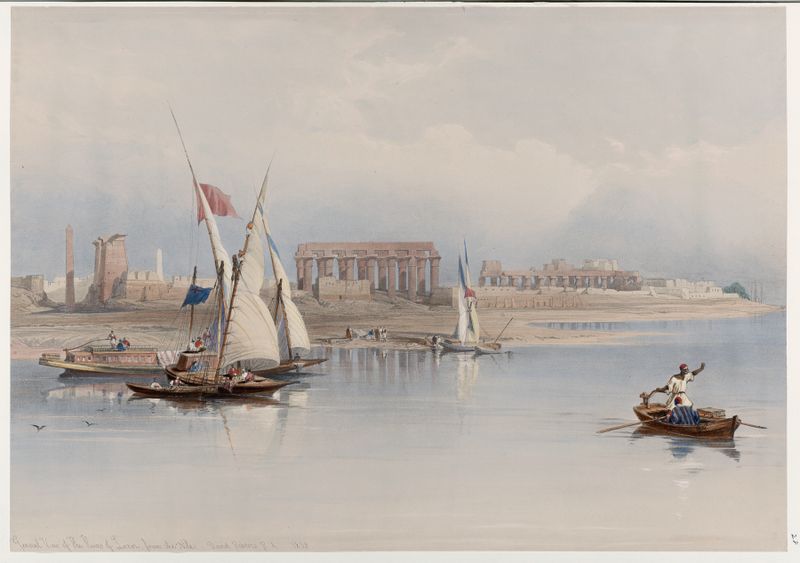
General view of the ruins of Luxor, from the Nile. 1838.
David Roberts

Statues of Memnon at Thebes, during the inundation.
David Roberts

Entrance to the tombs of the kings of Thebes. Bab-el-Malouk [Bîbân al-Mulûk].
David Roberts

The Fortress of the Alhambra, Granada
David Roberts
Thebes. Great Hall at Karnak. Nov. 28, 1838.
David Roberts
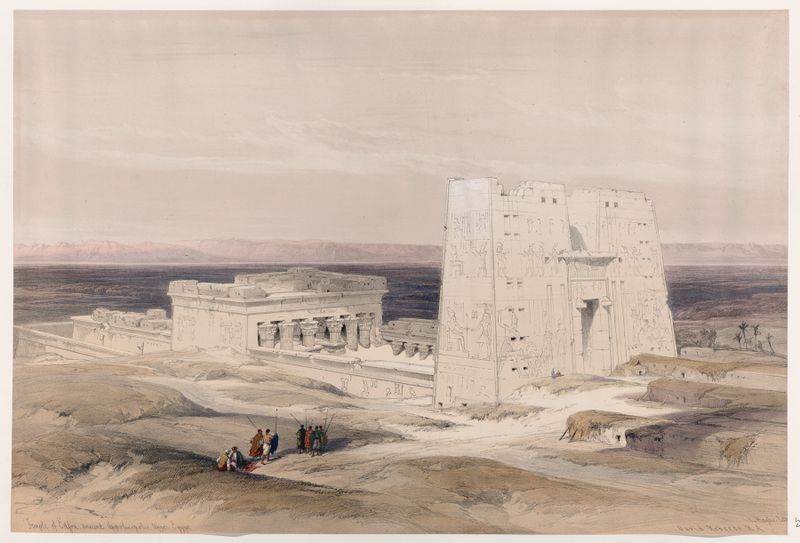
Temple of Edfou [Idfû], ancient Appolinopolis, Upper Egypt.
David Roberts

Temple of Kalabshee [Kalabsha, Kalâbishah], Nubia. Nov. 1838.
David Roberts





