Thornbury Castle, Gloucestershire — History & Facts
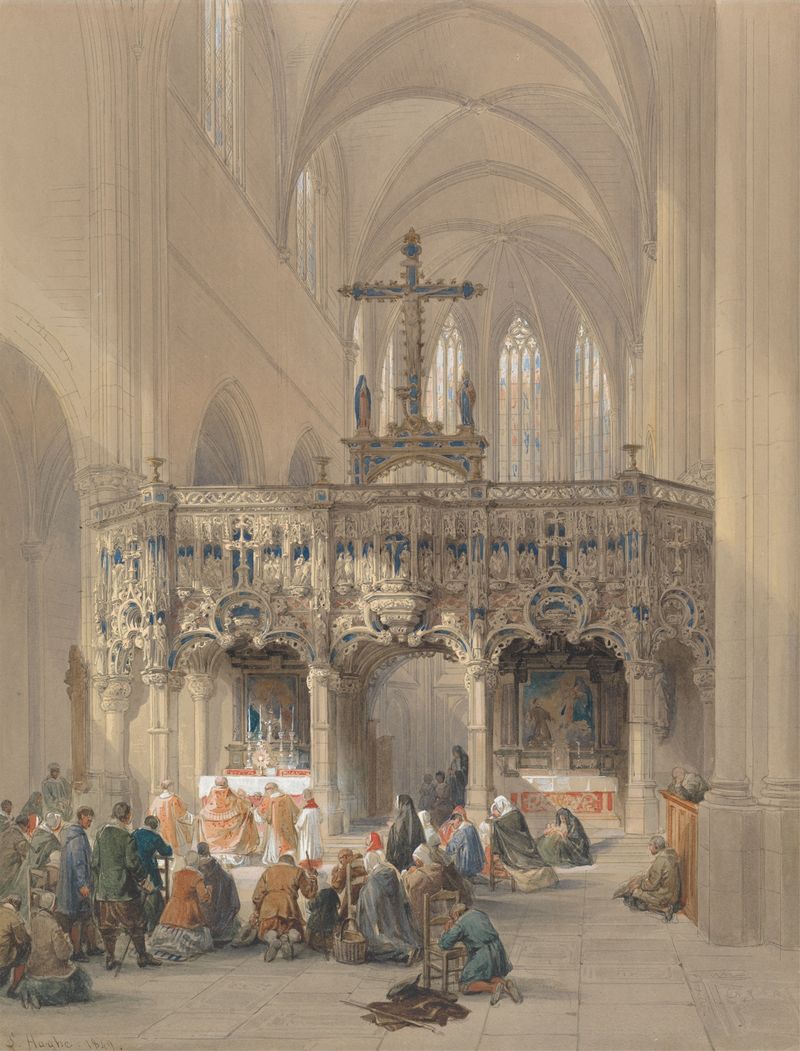
Could beauty survive in a century of chaos? The question lingers in the air, echoing through the arches and stone walls of a once-mighty castle, now a silent witness to the passage of time. Look to the left at the imposing structure, its weathered stones rising resolutely against the backdrop of a muted sky. Notice how the earthy tones of ochre and umber dominate, suggesting both decay and endurance. The artist skillfully captures the interplay of light and shadow, illuminating the castle’s battlements while leaving parts shrouded in mystery, evoking a sense of solemn nostalgia. As your gaze wanders, discover the delicate details: the creeping ivy that clings to the ancient walls, a tender reminder of nature’s relentless grasp.
This juxtaposition of human endeavor and the inevitable decay of time speaks to the tension between permanence and transience. The horizon hints at a vast landscape, perhaps symbolizing the broader story of history—both beautiful and tragic—as it unfolds beyond the castle’s crumbling façade. Louis Haghe created this piece between 1823 and 1835 while in England, a time marked by industrial revolution and societal shifts. It reflects the Romantic era's fascination with nature, history, and the sublime, as artists sought to capture the essence of their surroundings amidst rapid change.
Haghe's work fell within a broader movement that sought to elevate the mundane and reveal beauty in the forgotten, all while grappling with the chaos of contemporary life.