Three Water Buffaloes and a Calf under a River-side Tree — History & Facts
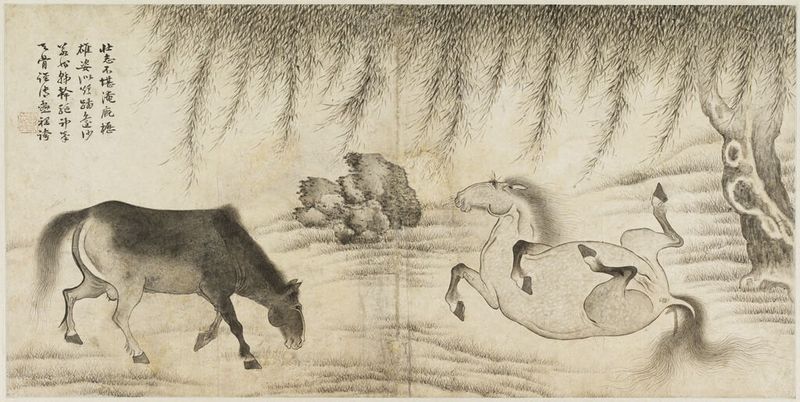
In that stillness, creation unfolds, and in this late 18th-century masterpiece, the essence of life breathes through the gentle forms of nature. Focus your gaze on the serene trio of water buffaloes, their thick, dark bodies contrasting beautifully against the subtle hues of the earth and foliage. The artist's careful brushwork allows the viewer to trace the textured outlines of their hides, while dappled sunlight filters through the leaves overhead, casting soft shadows that dance across the ground. The calf, nestled close to its mother, embodies innocence and warmth, inviting a sense of peace amidst the lush surroundings. Yet, there’s an emotional tension beneath the surface.
The water buffaloes, symbols of labor and steadfastness, evoke the farmer’s reliance on nature, while the shaded tree stands as a guardian, hinting at the fragility of life and the passage of time. The quiet scene encapsulates a moment of tranquility, yet one can't help but sense the looming challenges of existence—an intricate balance between work, nurture, and the relentless march of time. Kim Ik-chu painted this scene during a period when Korean art was transitioning into new styles, blending traditional elements with the influences of Western techniques. Working at a time marked by socio-political upheaval, he sought refuge in the depiction of rural life, emphasizing harmony with nature through his art.
This painting reflects not just an idyllic moment but the artist's deep connection to the land and its rhythms amidst the changing tides of history.