
Tiroler Haus — History & Facts
What if beauty was never meant to be finished? In the dance of brushstrokes and colors, the essence of movement transcends the canvas, inviting the viewer to ponder the fleeting nature of existence. Look to the center where vibrant hues collide, revealing an intricate structure that suggests life within its walls. Notice how the angular shapes create a dynamic rhythm, as if the Tiroler Haus itself is alive, swaying gently in a breeze only the artist can perceive. Hollenstein’s use of color—a blend of earthy browns and vivid greens—imbues the scene with an organic vitality, while the textured strokes evoke an almost tactile sensation, drawing you deeper into the pulse of the scene. Hidden beneath the surface, there lies a dialogue between stability and change.
The house, a symbol of permanence, contrasts sharply with the lively brushwork that surrounds it, suggesting that even the most solid structures are subject to the whims of time. The interplay of light and shadow further enhances this tension, creating an ephemeral quality that invites reflection on the balance between the immovable and the transient. During the time this work emerged, Hollenstein was deeply engaged with the evolving landscape of modern art, where traditional forms were being questioned and redefined. The precise date of creation eludes us, but the exploration of movement and emotional resonance in her work aligns with the broader trends of the late 20th and early 21st centuries, which sought to capture the nuances of experience rather than fixate on the finality of form.
More Artworks by Stephanie Hollenstein
Browse all →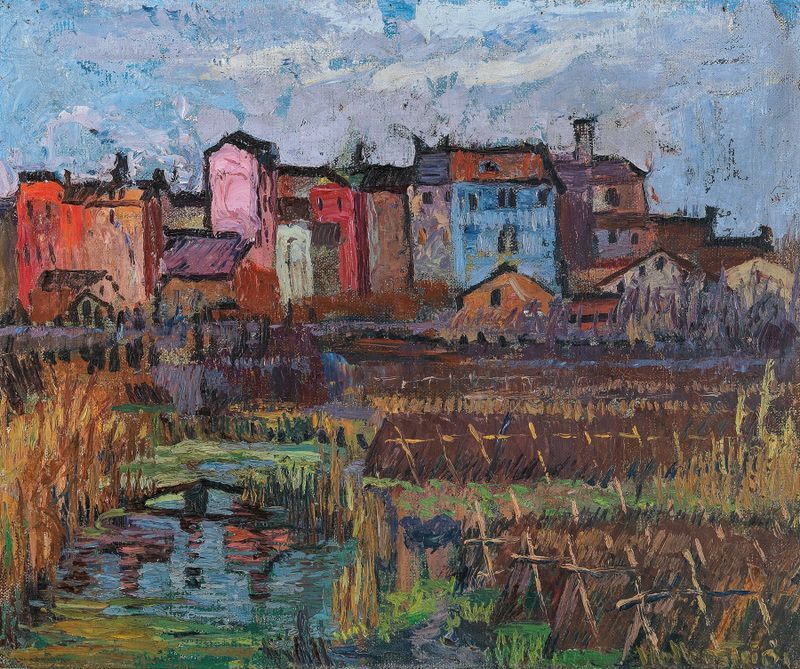
More Architecture Art
Browse all →
The statue of Liberty
Frédéric Auguste Bartholdi

View of Houses in Delft, Known as ‘The Little Street’
Johannes Vermeer

View of Houses in Delft, Known as ‘The Little Street’
Johannes Vermeer

The Cathedral in Rouen. The portal, Grey Weather
Claude Monet

The yellow house
Vincent van Gogh

The Church in Auvers-sur-Oise, View from the Chevet
Vincent van Gogh