Tivoli, near Rome — History & Facts
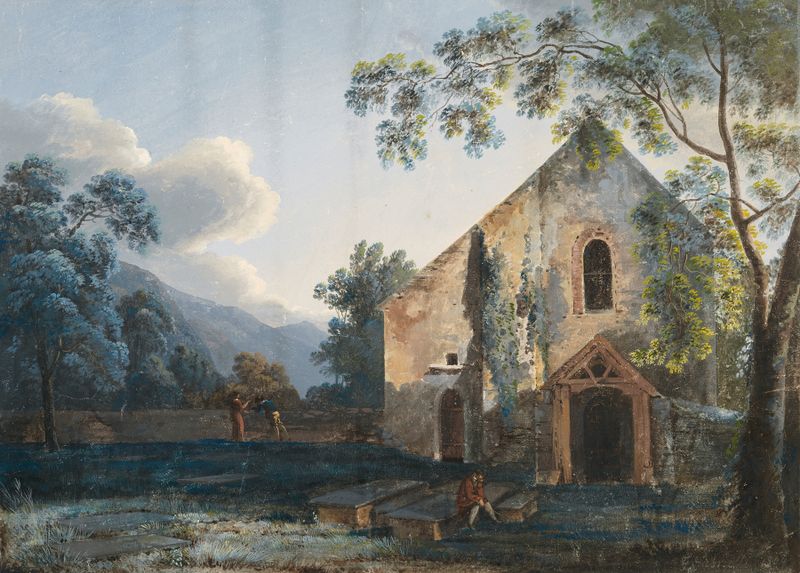
Who listens when art speaks of silence? In Tivoli, near Rome, the whispers of decay intertwine with the lush beauty of a landscape that evokes both nostalgia and transience. Look to the foreground, where crumbling ruins rise against the soft undulations of the hills. The muted earth tones, punctuated by hints of verdant green, create a contrasting tapestry that captures the essence of time's passage. Notice how the brushwork suggests the texture of both stone and foliage, revealing Gabrielli’s meticulous attention to detail.
The horizon is gently illuminated, suggesting the fading light of day, inviting the viewer to linger in this moment of quiet reflection. Amidst the natural splendor, the remnants of civilization convey a deeper narrative — the inevitable cycle of growth and decay. The dilapidated structures serve as a poignant reminder of humanity's impermanence, their strength diminished yet still echoing the grandeur of the past. Coupled with the serene water in the distance, this duality hints at a fleeting beauty that is ever-present, fostering an emotional resonance of longing that transcends the canvas. Gabrielli painted Tivoli, near Rome during a time when the artistic world was grappling with romantic notions of nature versus the encroaching industrial age.
Active in the late 18th century, the artist’s works reflected a deep connection to the landscapes of Italy, capturing the sublime beauty and melancholic decay that characterized his surroundings. This painting stands as a testament to his ability to encapsulate the complexities of the human experience in relation to the natural world.