
Tonquédec — History & Facts
Could a single brushstroke hold eternity? In Tonquédec, the transformation of the ordinary into the sublime unfolds quietly, inviting the viewer to linger in its embrace. Look to the left at the soft, muted hues that wash over the landscape, where gentle greens and blues blend seamlessly into one another, evoking the tranquility of the Breton countryside. The brushwork, loose yet deliberate, captures the essence of nature with a fluidity that suggests movement—a breeze brushing through the trees, the whisper of water against stone. Notice how the light filters through the branches, illuminating the scene and drawing your gaze toward the tranquil river, its surface shimmering like a thousand tiny mirrors reflecting the sky above. Delve deeper into the emotional undertones of this work.
The juxtaposition of the calm river and the dense, protective foliage surrounding it hints at a dialogue between solitude and connection, nature and humanity. The choice of colors and movement not only celebrates the landscape but also suggests a transformation within—an invitation to pause and reflect on one's place within the natural world. Each stroke feels like a moment captured in time, a reminder of the fleeting beauty that surrounds us. In 1894, Maxime Maufra painted Tonquédec during a period marked by the burgeoning Impressionist movement.
Living in Brittany, he was inspired by the region's stunning vistas and vibrant light. As artists began to embrace a more spontaneous style, Maufra contributed to this shift, seeking to convey the emotional essence of his surroundings through his unique interpretation of color and form.
More Artworks by Maxime Maufra
Browse all →
Le pont de l’Isle-Adam ou le Vieux pont
Maxime Maufra

Féérie nocturne: Exposition Universelle Paris 1900
Maxime Maufra
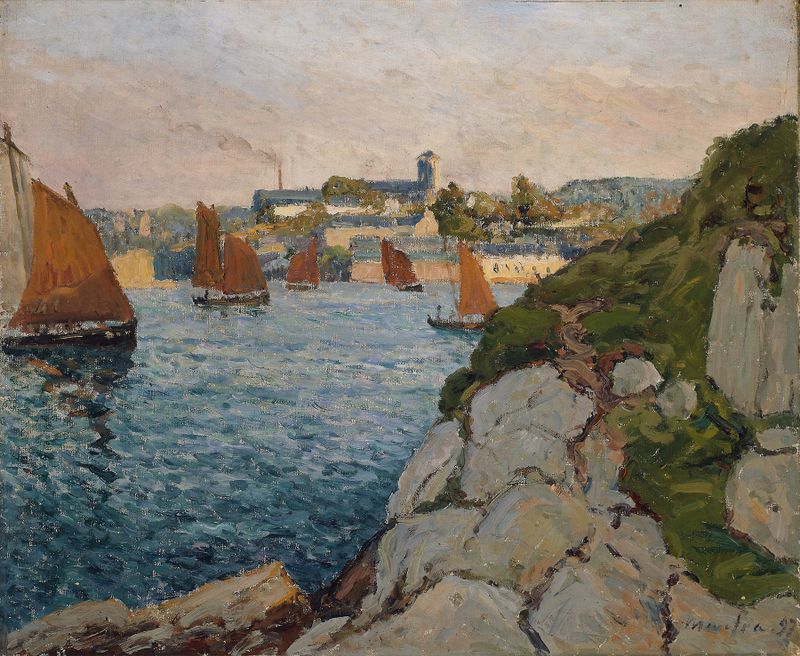
Douarnenez in Sunshine
Maxime Maufra
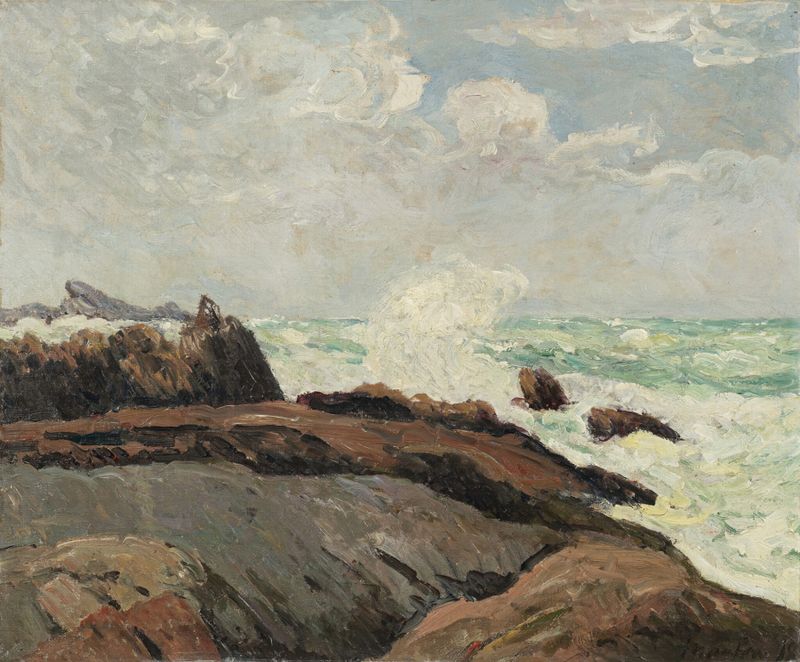
Mer forte à Saint-Guénolé Penmarc’h
Maxime Maufra

Marée Basse À La Plage De Port-Blanc, Presqu’île De Quiberon
Maxime Maufra
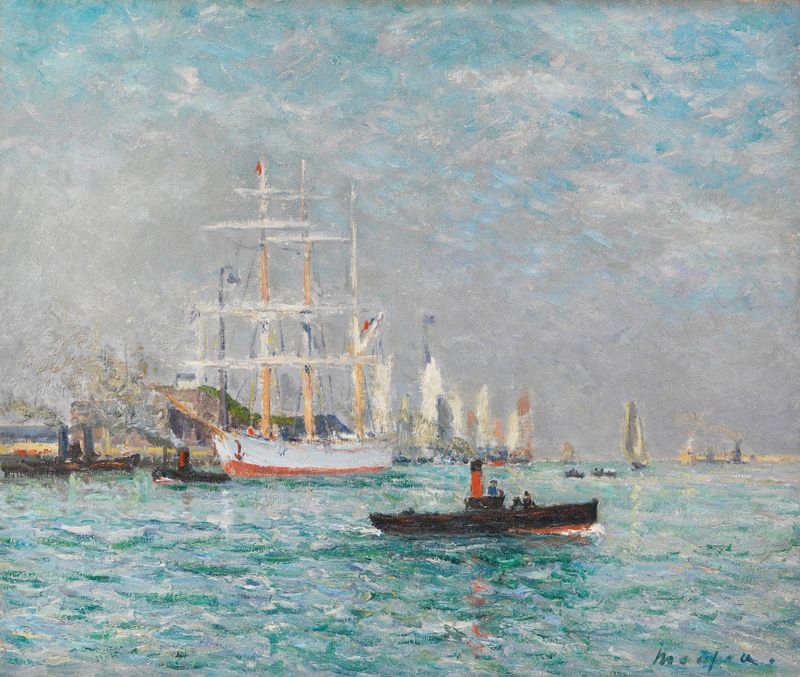
Entré d’un trois-mats, Le Havre
Maxime Maufra

Les rochers du château de Dinan, Morgat, Novembre 1903
Maxime Maufra
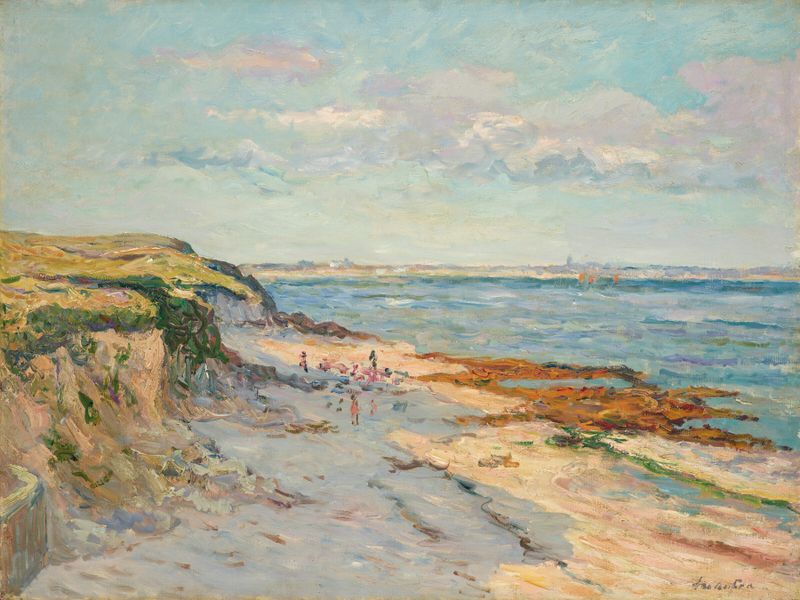
La Plage de Kerhostin, Morbihan
Maxime Maufra
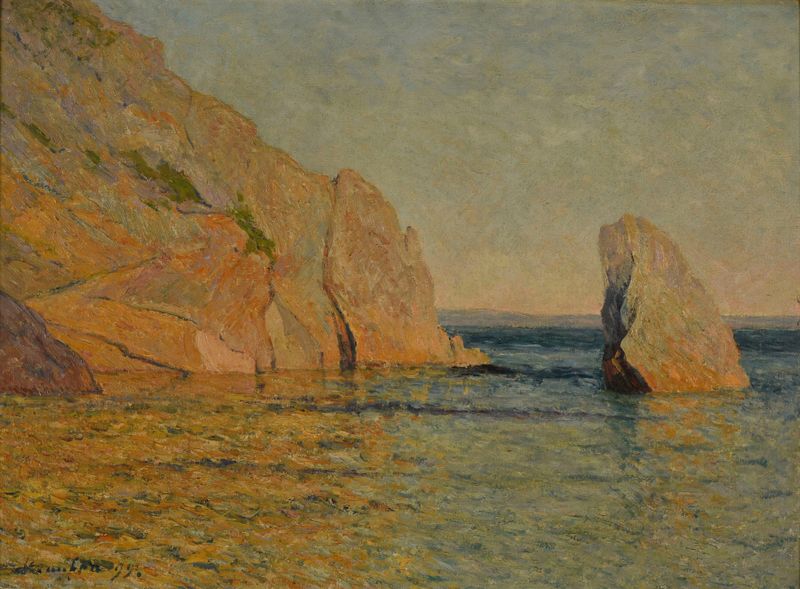
Rochers au soleil couchant
Maxime Maufra
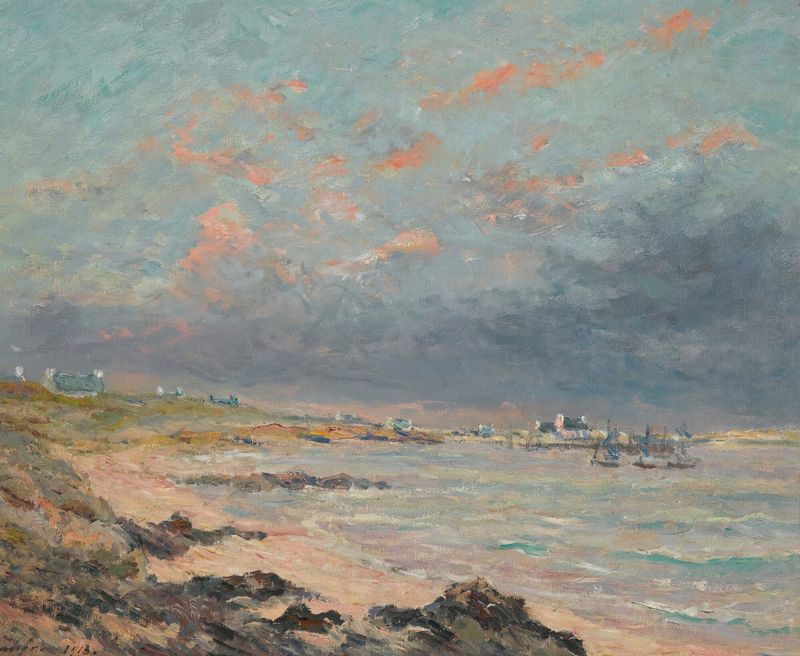
Soir D’orage À Kerhostin
Maxime Maufra





