
Town dock in summer — History & Facts
In Town dock in summer, decay whispers softly, revealing the passage of time through both nature and human endeavor. The painting invites us to reflect on what remains when the vibrant life of summer begins to fade. Look to the left at the gentle interplay of light and shadow on the water’s surface, where the ripples seem to dance in quiet conversation with the boats bobbing at the dock. Notice the muted palette; earthy browns and soft blues dominate, suggesting warmth but also a nostalgic embrace of the inevitable decline.
The structures along the shore, worn yet steadfast, echo a story of resilience, while the wispy clouds overhead paint a languid sky, hinting that even the brightest days will yield to twilight. Beneath the surface of this serene summer scene lies the tension of impermanence. The crumbling dock, with its splintered wood and weathered textures, serves as a metaphor for life’s fragility, evoking feelings of longing and introspection. The stillness of the water suggests a moment suspended in time, yet it is underpinned by the knowledge that change is always at hand, subtly reminding us of the beauty found in decay. In 1850, Salomon Leonardus Verveer, a prominent figure in Dutch landscape painting, created this work while living in a time of artistic transition.
The Romantic movement was giving way to Realism, and Verveer found himself captivated by the scenes of everyday life. His experiences in the bustling ports of the Netherlands shaped his artistic vision, merging the picturesque with a deeper commentary on humanity’s relationship with nature.
More Artworks by Salomon Leonardus Verveer
Browse all →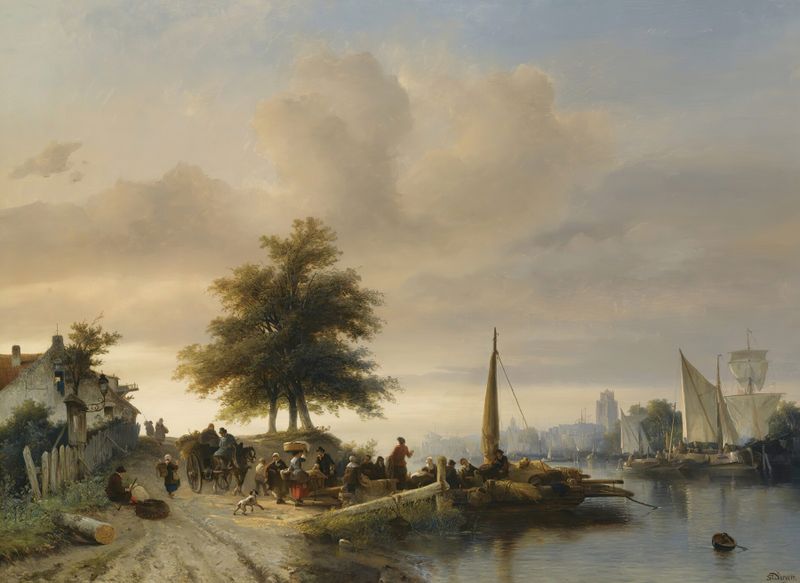
The Ferry On The Maas Near Dordrecht
Salomon Leonardus Verveer
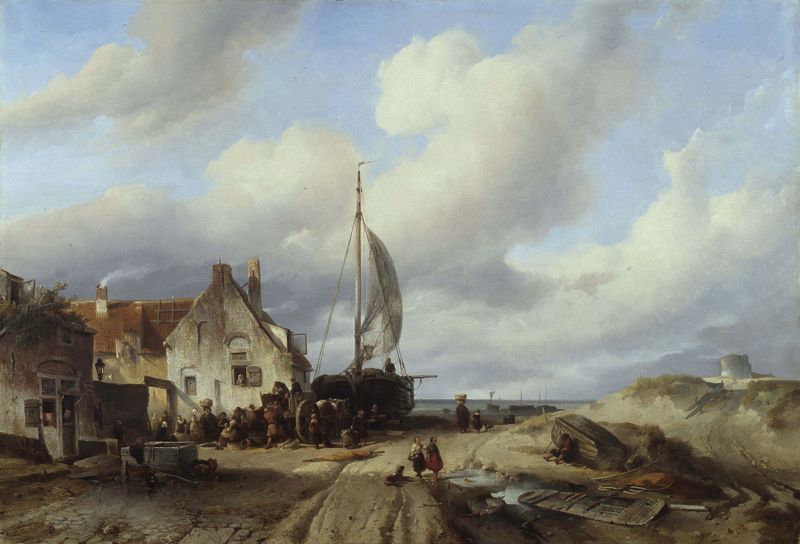
Katwijk aan Zee
Salomon Leonardus Verveer
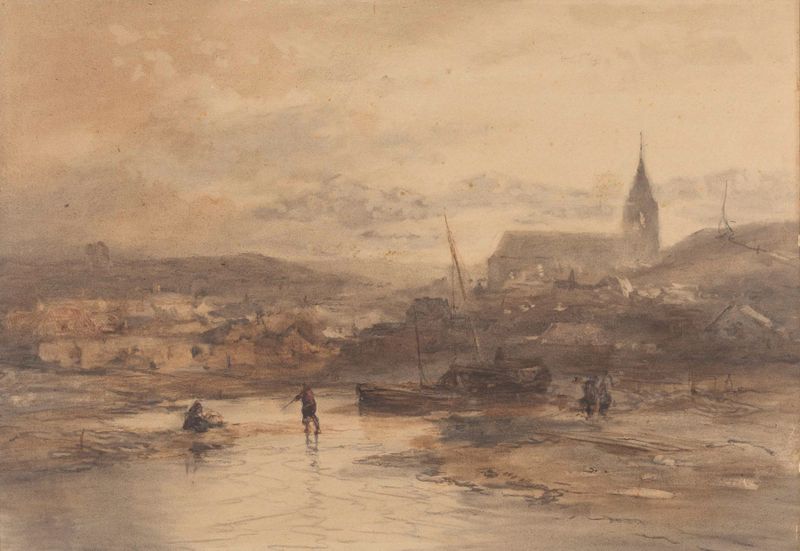
Landschap met kerk
Salomon Leonardus Verveer

Scène animée au bord d’un fleuve en Hollande
Salomon Leonardus Verveer

Imaginary View based on the Kolksluis, Amsterdam
Salomon Leonardus Verveer

Houses at the Edge of a Village in the Dunes
Salomon Leonardus Verveer





