Town on fire — History & Facts
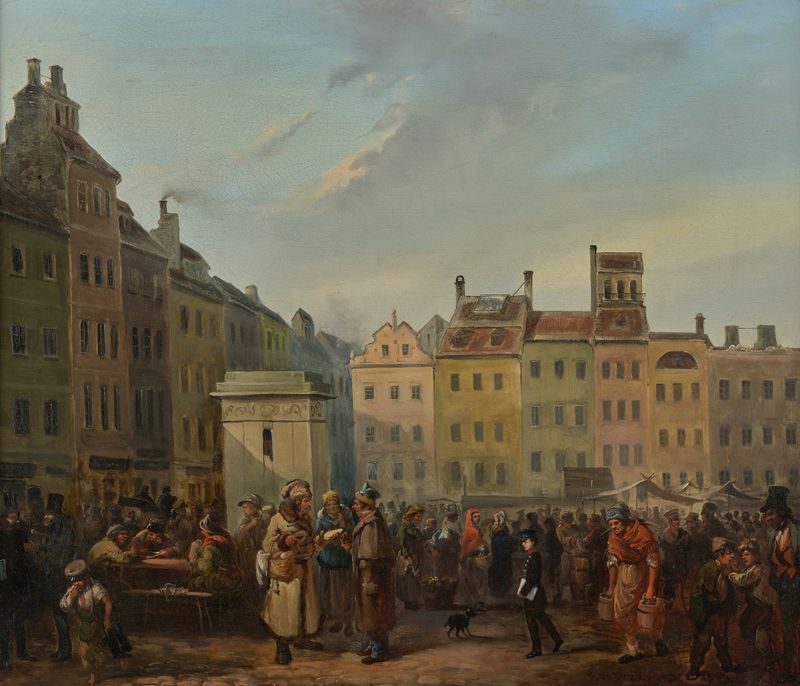
Where does light end, and longing begin? In the heart of chaos, we find an unsettling truth woven through the flames and shadows. Look to the left, where the vibrant oranges and deep reds of the fire dance against the cool, darkened sky. The sharp contrast draws you into the scene, instilling a mix of urgency and despair. Notice how the architecture, now twisted and consumed, stands defiantly against the enveloping heat, its dark outlines punctuating the burning landscape.
Each brushstroke reveals not just destruction but the poignant fragility of life, as flickers of hope are swallowed by the encroaching darkness. This painting resonates with themes of vulnerability and resilience. The figures fleeing the inferno are rendered with a rawness that captures their panic and desperation, while the chaotic smoke spiraling upward suggests an invisible connection to the sublime. The flames, though terrifying, illuminate the faces of the townsfolk, portraying a moment of raw humanity caught between loss and survival.
Thus, the work invites contemplation of the truth lurking beneath devastation, where pain and beauty coexist. In 1868, when this work was painted, Kostrzewski was navigating the turbulent currents of post-partition Poland, reflecting a nation grappling with its identity amid loss. The political landscape weighed heavily on artists of his time, and their works often conveyed both personal and collective turmoil. This period marked a shift in the visual language of art, as the Romantic movement influenced the portrayal of emotional depth and nationalistic themes, leaving an indelible mark on the creative journey of artists like Kostrzewski.