Town view, Bogneux — History & Facts
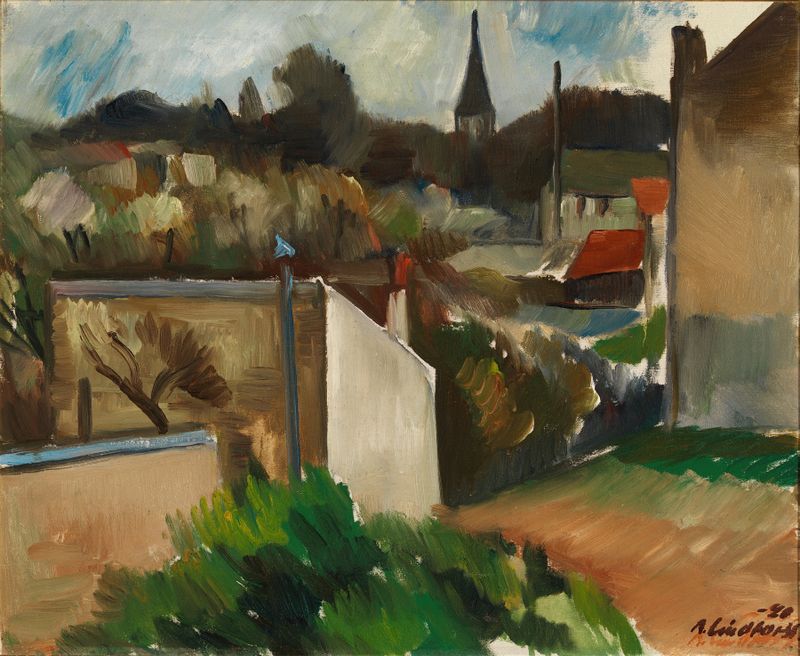
Did the painter know this moment would outlive them? In Town View, Bogneux, a fleeting glimpse of life is captured with remarkable precision and poignant revelation. Look to the left at the gently sloping rooftops, their warm tones harmonizing with the soft hues of dusk. The vibrant sky, a mesmerizing blend of oranges and purples, casts a serene glow over the quaint houses, inviting viewers to linger. Notice how the brushstrokes vary in texture — the smooth strokes of the sky contrast with the rougher, more textured surfaces of the buildings, adding depth and life to the scene.
Each element, from the distant silhouette of trees to the glistening path in the foreground, beckons for attention, weaving a tapestry of tranquil existence. Delve deeper and uncover the emotional tension nestled within the painting. The juxtaposition of light and shadow suggests a world caught between day and night, symbolizing the transition not just of time, but of life itself. The viewer is drawn to the lone figure walking along the path, evoking a sense of solitude amid the idyllic setting.
This figure, though small, embodies the universal journey of existence — a reminder of the preciousness of fleeting moments, ultimately connecting the viewer to the artist's vision. Anton Lindforss painted Town View, Bogneux in 1920 while residing in Sweden, a time when the world was recovering from the upheaval of the First World War. The era marked a shift in artistic expression, as many artists began to explore new perspectives and techniques. Lindforss, influenced by the beauty of his surroundings and the changing landscape of society, crafted this work to reflect both the serenity of rural life and an underlying awareness of impermanence.