Travelers Driving a Troika After the Rain — History & Facts
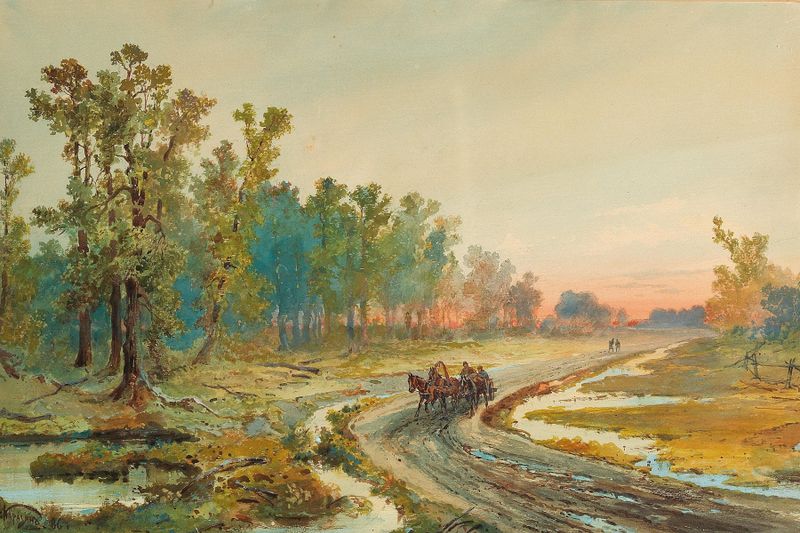
What if beauty was never meant to be finished? In the fleeting delight of youth and innocence, we often find the truest essence of our existence captured in moments just like this one. Focus on the bright, glistening surfaces within Travelers Driving a Troika After the Rain. The composition pulls your gaze toward the troika—a three-horse sled—gliding through the fresh puddles, reflections shimmering like broken glass. Notice the way the muted earth tones of the background contrast with the vibrant colors of the horses, their strength amplified by the gentle light filtering through the clouds.
The figures, wrapped in warm furs, appear both determined and carefree, embodying the harmony between nature's beauty and human endeavor. Beneath the surface lies a tension between movement and stillness. The rain, now passed, is a metaphor for cleansing, as it brings a renewed vibrancy to the earth and the travelers alike. The air is thick with the anticipation of adventure, yet there’s an underlying sense of nostalgia, hinting at the fleeting nature of such innocent moments.
Each splash of water seems to whisper the stories hidden behind the laughter, reminding us that joy is often temporary, yet profoundly impactful. Nikolai Nikolaevich Karazin painted this scene in 1902, a time when Russian art was undergoing significant evolution amid social and political changes. Living in St. Petersburg, he was inspired by the beauty of Russian landscapes and the everyday lives of its people.
During this period, artists sought to capture the essence of the Russian spirit, blending realism with an ethereal quality, which resonates deeply in this work.